Ursids – a pre-Christmas meteor shower that sometimes springs surprises.
| Main Activity Dates | Dec 17–25 |
| Peak Dates | Dec 22–23 |
| Peak ZHR | 10 |
| Best Observation Period | Before moonrise 22/23 Dec |
| Visibility | Visible all night |
| Moonlight Issues | Yes, nearly Full Moon |
Shower details – Radiant: 14:28 +74.8° – ZHR: 10 – Velocity: medium – 32km/sec – Parent Object: 8P/Tuttle
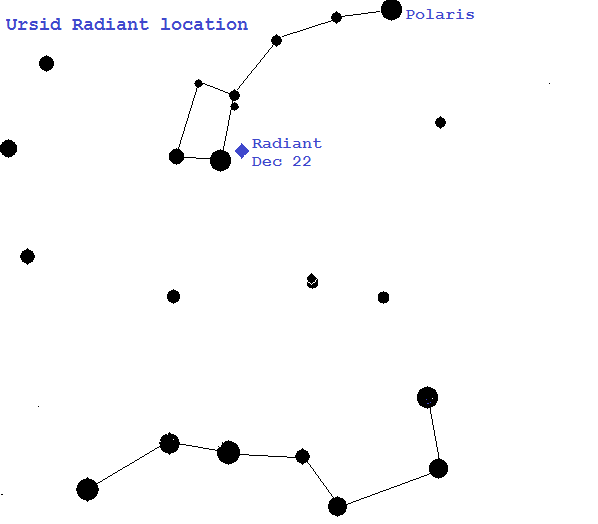
Ursid activity can be seen from approx Dec 17–25, with peak rates likely on Dec 22–23. The radiant (see the chart below) lies close to the star beta Ursae Minoris (Kochab), is circumpolar from the UK and is highest in the sky late in the night. In consequence of being circumpolar, it is strictly a northern hemisphere event.
Enhanced Ursid rates have been seen on several occasions, including in 2014. However, no significant enhanced activity has currently been predicted. The Ursid meteor shower is linked to periodic comet 8P/Tuttle, but there has been no correlation seen between the timing of enhanced Ursid activity and perihelion returns of the parent comet.
The Moon is well away from the radiant, and circumstances for the Ursids are reasonable though after moonrise it will get worse.