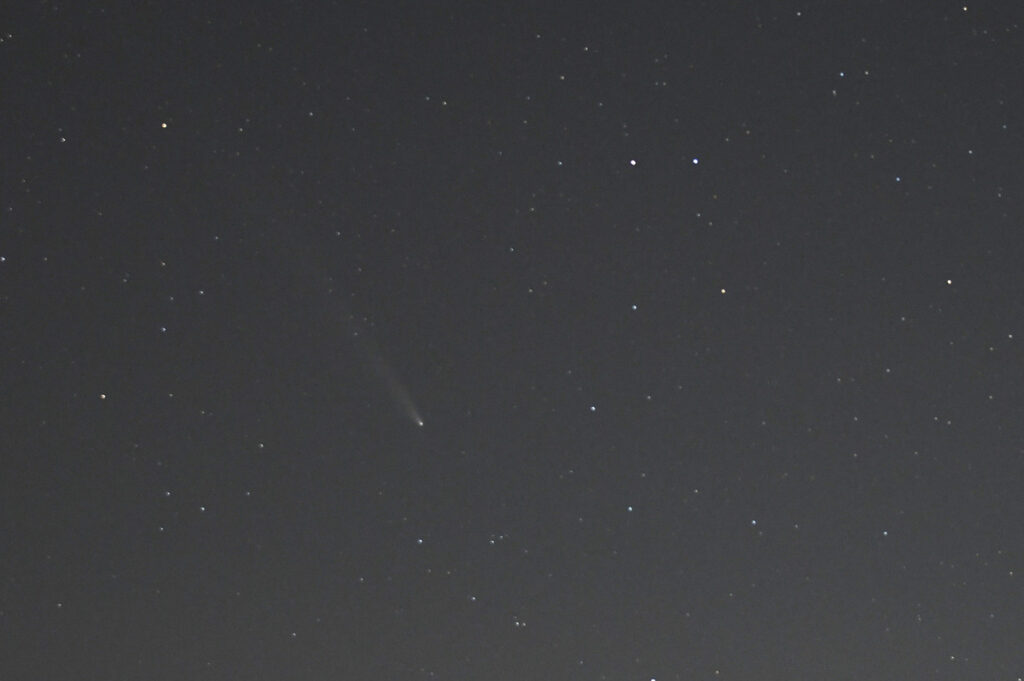
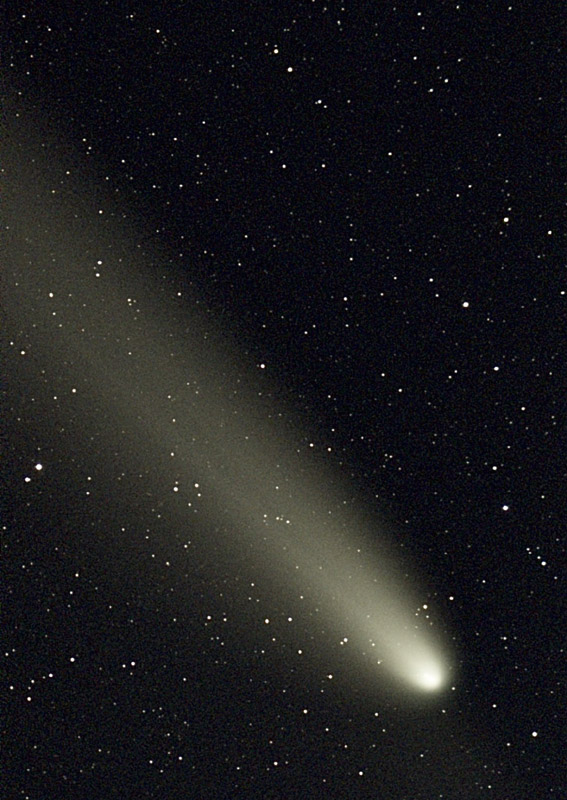
Comet 2023 A3 Tsuchinshan-ATLAS is becoming visible in the evening sky in the UK during October 2024. Following its closest approach to the Sun on 27 September the comet will fade as it climbs into the evening sky but should be visible with binoculars or photography if you know where to look. But where exactly should you look?
Although the comet is closest to Earth on 12 October, it will remain visible throughout October and may even be better visible after its closest approach as it will then appear in darker skies. To start with it will only be visible shortly after sunset, but after about 14 October it will be visible for more than an hour, although still low down, so you’ll need a good horizon to the south-west to be able to see it. Here’s a map of its positions during October 2024.

What to look for
Bear in mind that the comet will appear as a stationary fuzzy object, and that any tail might not be easily visible by eye. If you see something that you think is a comet, moving quickly through the sky, it’s most likely to be an aircraft with a condensation trail. Although the comet is moving quickly through space, it is at least 70 million km away even at its closest, so the movement is only visible from night to night.
Although the comet is predicted to be about as bright as Arcturus on 12 October, this figure is for its total brightness and its appearance with the naked eye when low in the twilight sky will be very much fainter as its light is spread over a much larger area. A lot also depends on the clarity of the atmosphere at the time – the typical milky UK sky doesn’t help. Later in October when the comet is higher up and in a darker sky its predicted total brightness will be around magnitude three, which is about as bright as the faintest star in the Plough.
Some phone sky apps will show the comet and will help you to find it, as long as their direction sensors are accurate. You might be able to see Venus, which is very bright but low down, which will help you find the right part of the sky, and also Arcturus, which is one of the brightest stars in the sky. Binoculars will help, and in many cases a photo on your phone will show the object better than the naked eye.
Also take into account that objects in this part of the sky are setting, so don’t leave it too late to start looking. Don’t try looking when the Sun is in the sky, as viewing the Sun directly can risk eye damage.
During the second half of October as the comet appears in a darker sky you can look somewhat later in the evening, still using Arcturus as your guide.
Photographing the comet
Good quality phone cameras may show the comet better than you can see with the naked eye. A conventional camera used with an exposure time of a few seconds may also reveal the comet as well as a significant tail. For the best results you’ll need a telephoto lens setting, ideally with the camera tracking the comet on a suitable tracking mount aligned on the north celestial pole, or using a modern smart telescope that automatically aligns itself on the sky before taking time exposures.
Comet Gallery 12 October
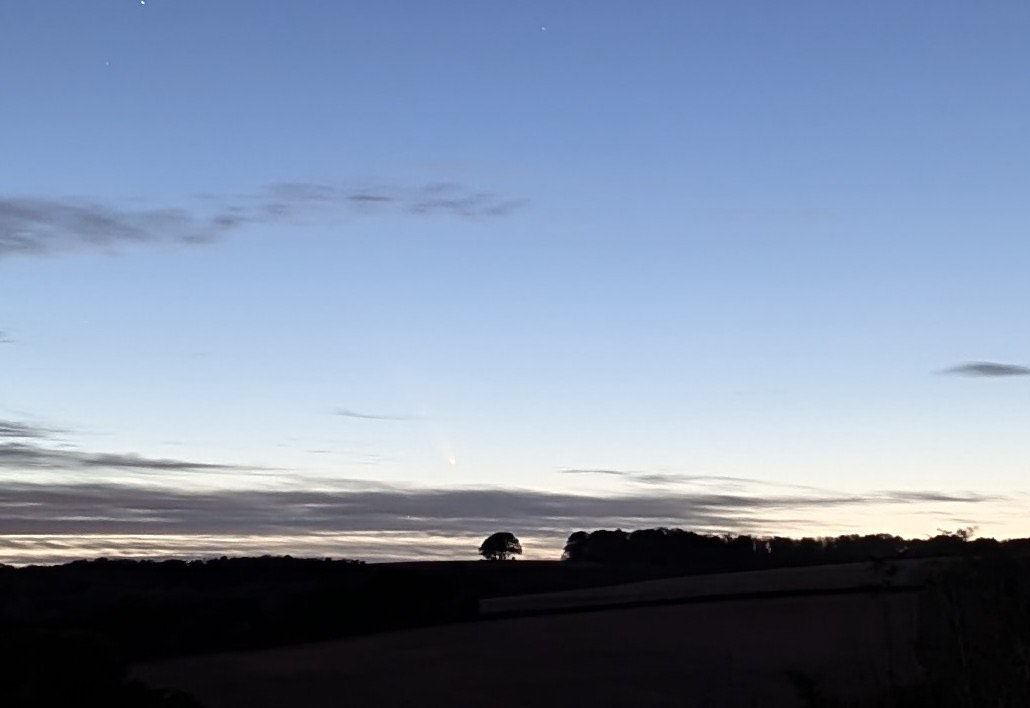
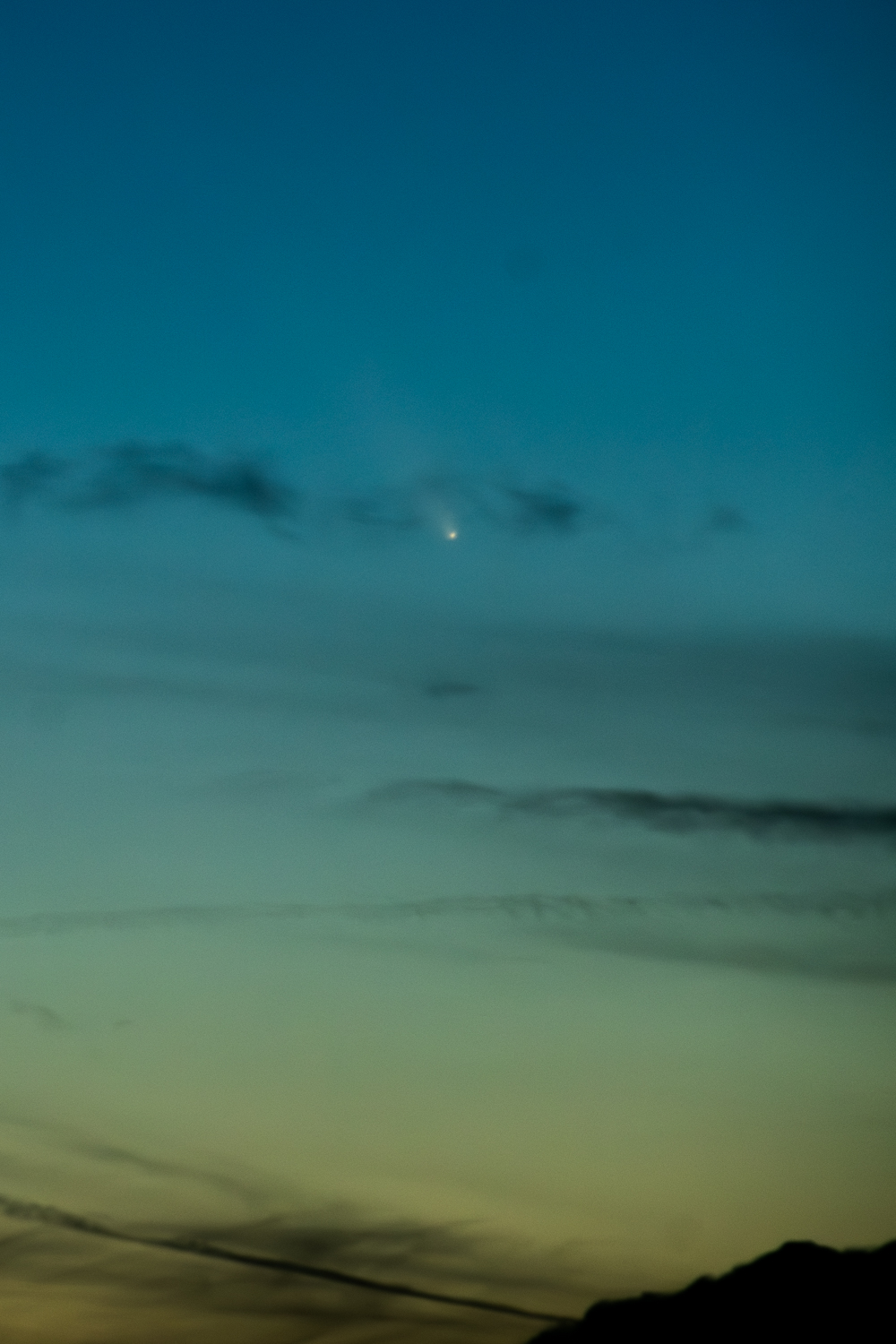
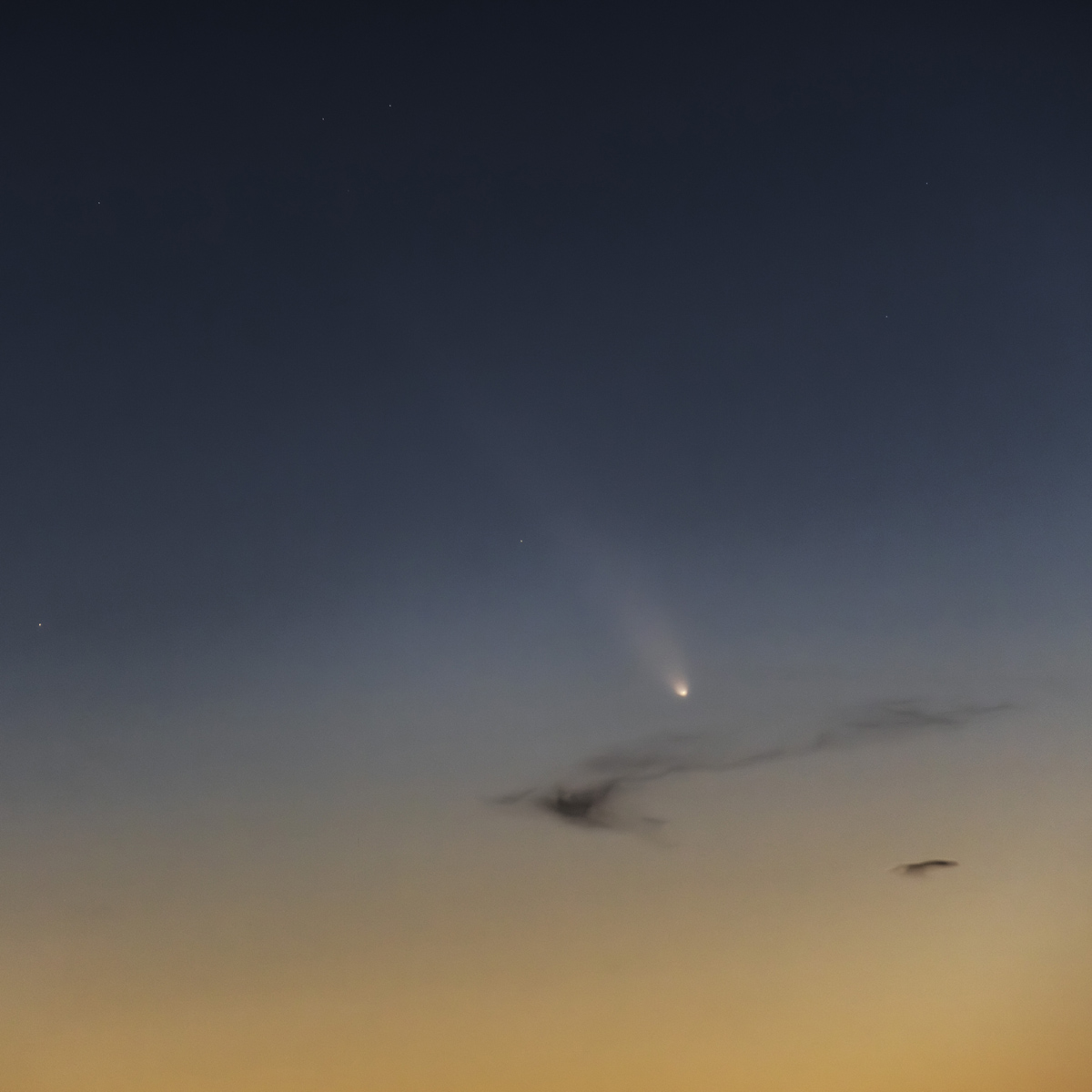
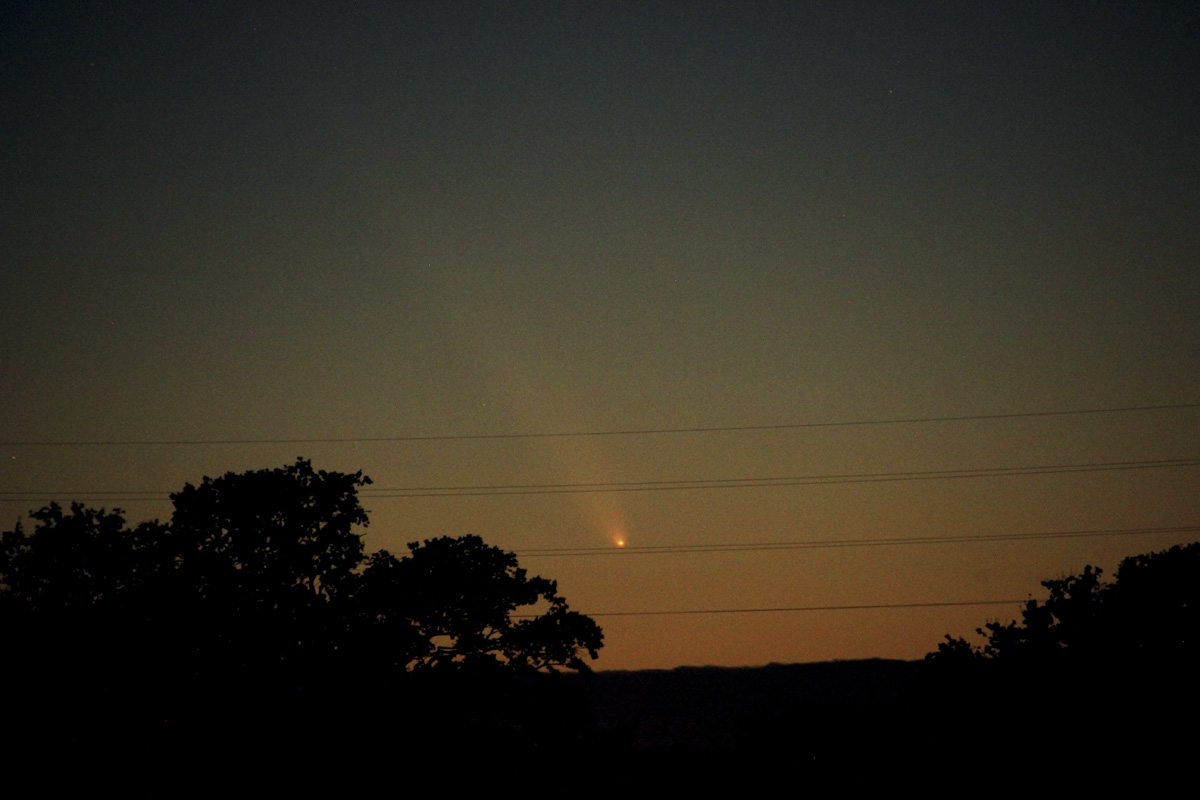

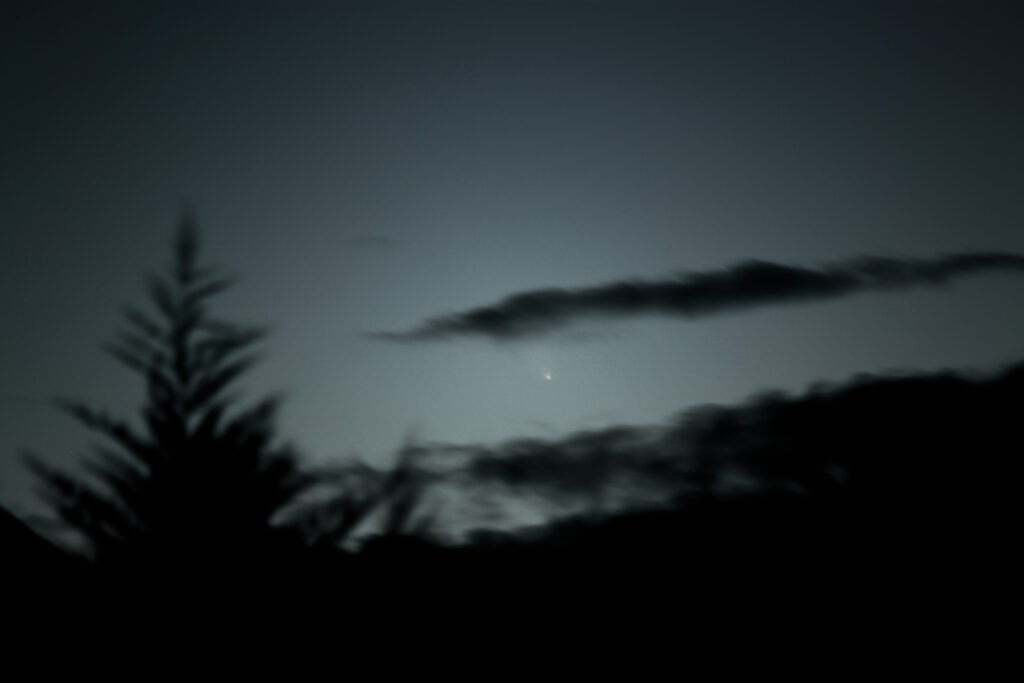
17 October

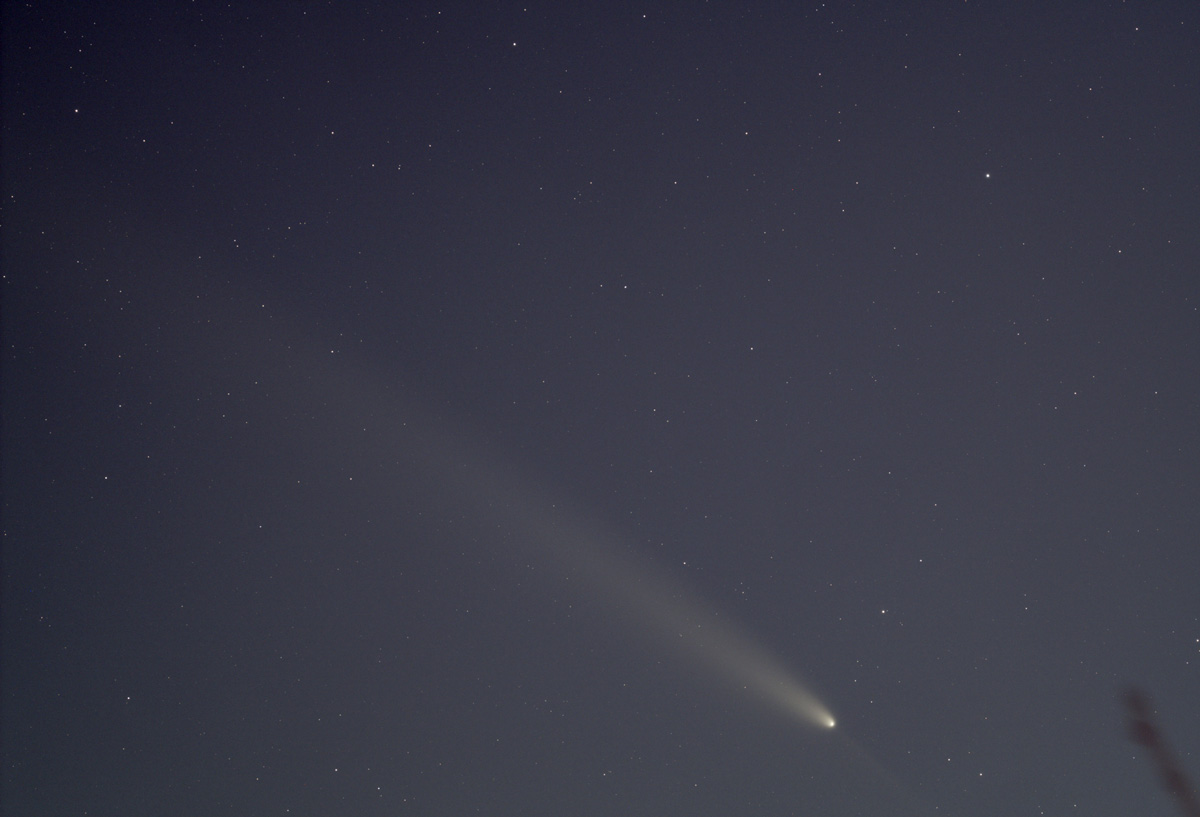
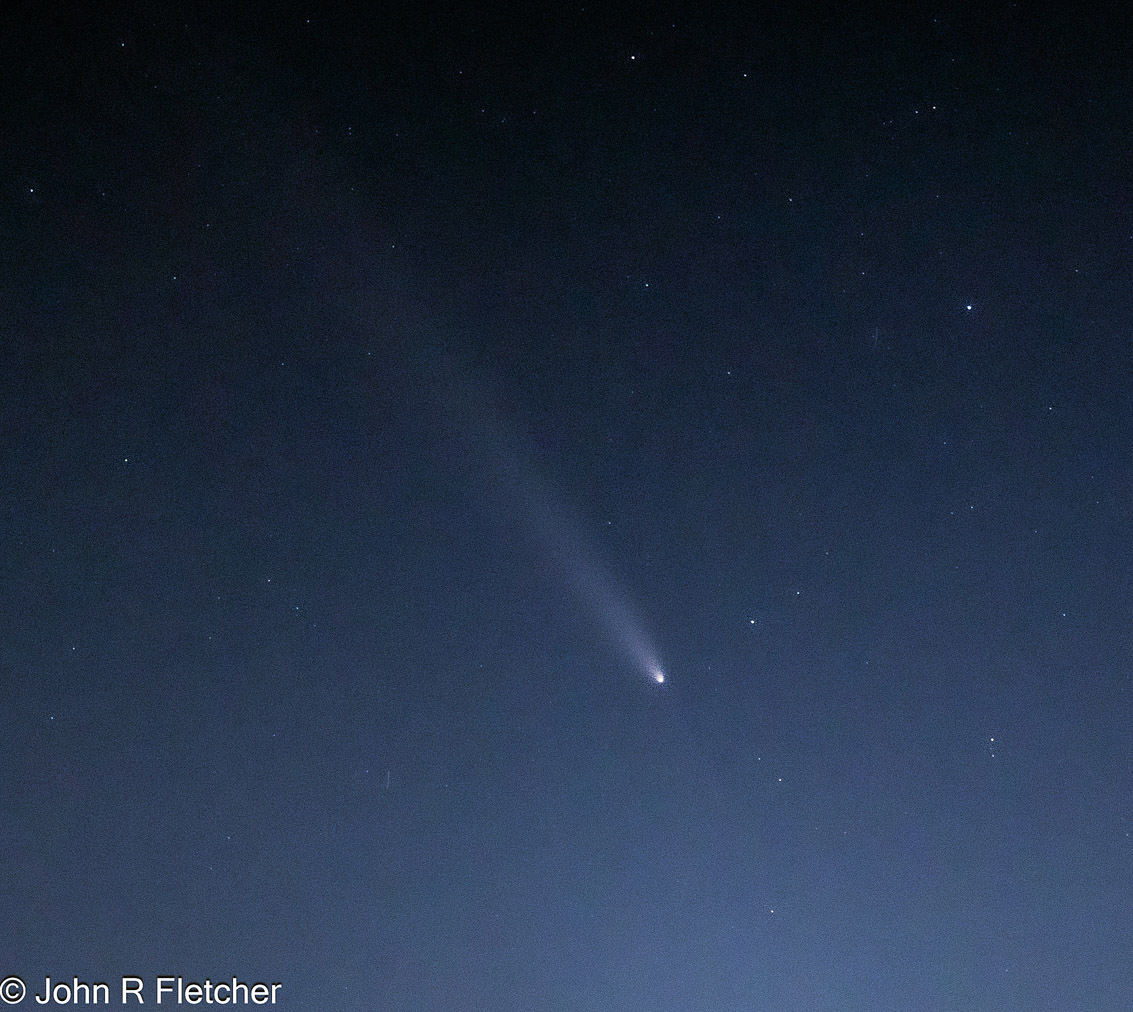
19 October
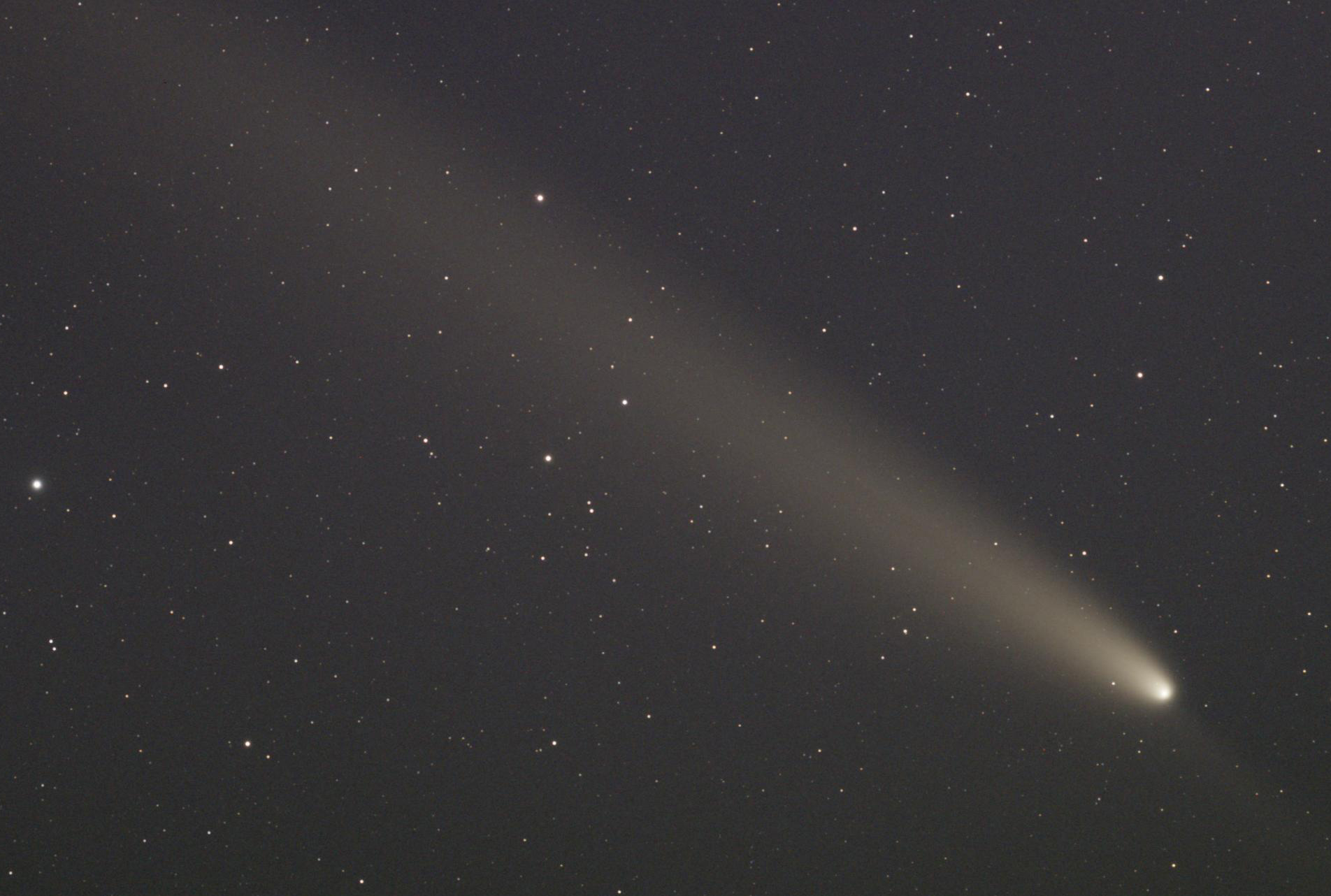
22 October