
First sightings of the comet from the UK since perihelion the day before.
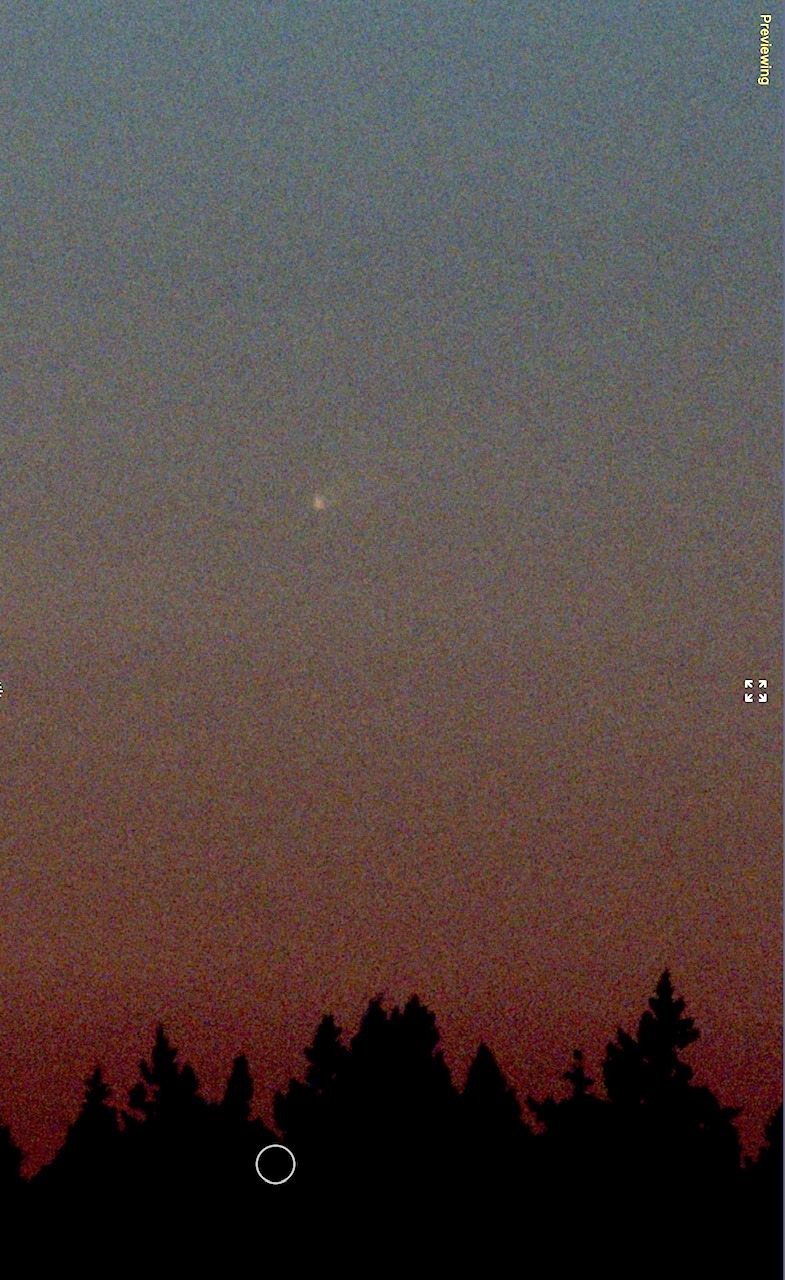
Comet C/2023 A3 Tsuchinshan-ATLAS has been imaged on Fri 28 September by at least two observers in the UK, including me. This was effectively the first day that the comet was high enough to image and potentially observe and although neither observer was able to see it in binoculars or small telescopes. However, photography has been able to tease out the comet and some of its coma and tail from the murk low on eastern horizon.
With the comet only rising at 06:03 BST from my observing site at Knowlton in Dorset, it was always going to be an early start to the day. The sky had been inky black and crystal clear only an hour earlier, with good transparency all the way to the horizon. However, the breaking dawn revealed a band of murky haze through which the comet would rise in the east, shortly before the Sun itself made an appearance.
Taking my SeeStar S50 with me, I set it up, aligned and focussed it on nearby Regulus well before dawn. Then I waited with my Helios 10 x 70 binoculars to sight the comet as it appeared above the horizon. At the appointed time, the SeeStar duly swung to the comet, but plate-solving and 10-second imaging was clearly not going to be possible in a bright sky at such a low altitude.
However, peering into my iPad, I was able to see the bright nucleus and a wisp of a tail on the preview screen. These images on this page are simply screenshots of what the SeeStar was seeing in real time. By 06:15 the sky was too bright and the comet quickly disappeared in daylight.
Despite very careful, slow sweeping along the horizon and despite knowing exactly where the comet was, I was unable to spot it with the binoculars. Perhaps the haze was just too much for my sleepy eyes.
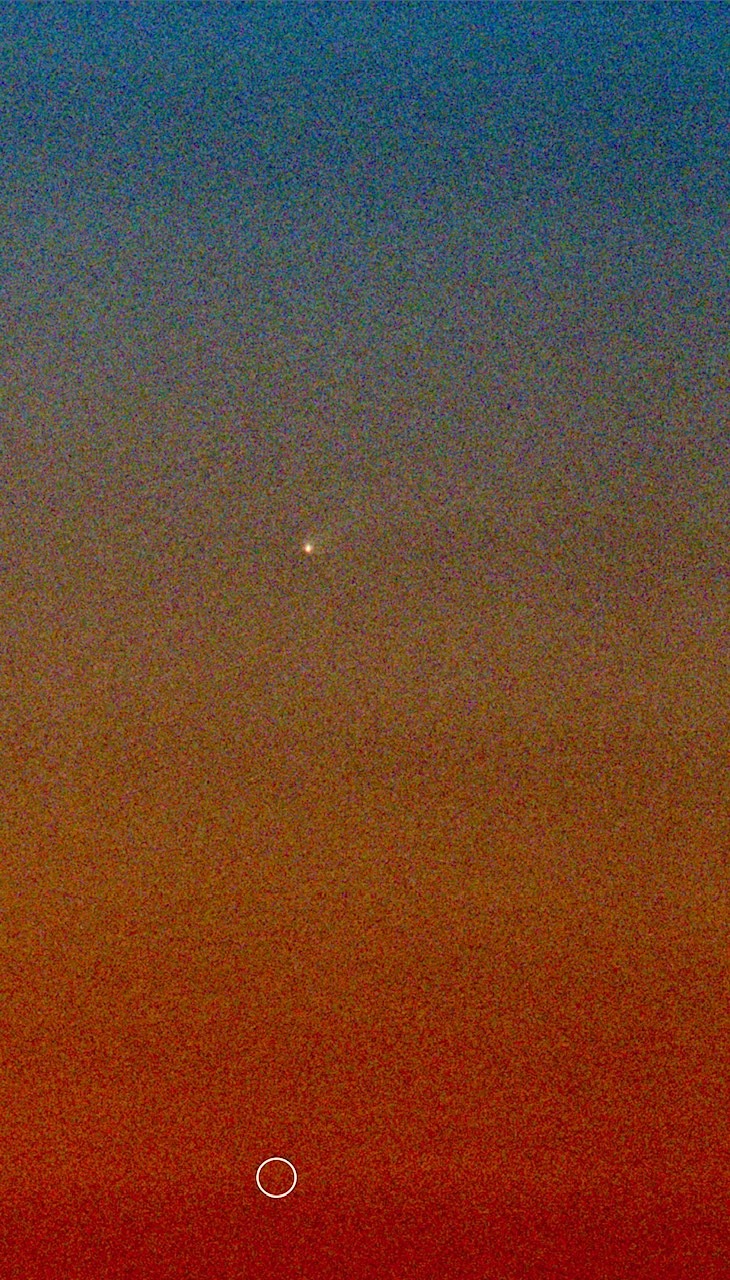
Processed at home later, the comet and its tail are clearly visible in these low resolution images. The white circles are SeeStar artefacts,
Were these the first images of C/2023 A3 Tsuchinshan-ATLAS taken in the UK since the summer? I’d like to think so.
I’d also like to think this is merely the prelude to the big show this comet will produce in the next two or three weeks. Good luck.