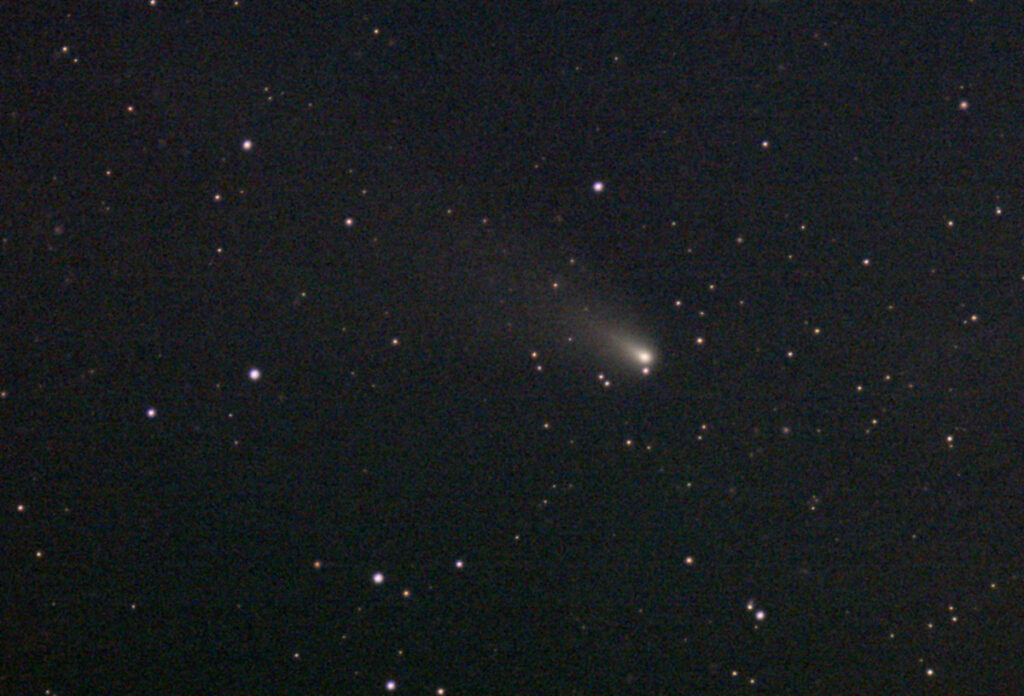
The brightest comet for several years is still shining in UK skies during October and November 2024 – bit it’s getting harder to see as it moves away from the Sun and becomes fainter. Here’s how to find it.
Soon after the comet became visible from the UK people were able to see it in the twilight sky with the naked eye and binoculars. As we move into November the comet is visible in a dark sky but it’s no longer easy to spot and binoculars are essential from now on. Use the map of the western sky below to help you find it.

The position of the horizon will change depending on the date and time you view, but your guide is the bright star Altair, which has a fainter star on either side of it. Once you’ve found Altair, look to the right and lower down to find Rasalhague, which is fainter, but should still be visible even if you have some light pollution.
The bright Moon around mid-November and mid-December will make it harder to find but following the 18th of each month there will be an increasing period of dark sky before moonrise during which the comet could be easier to locate.
Some sky viewing apps will help you find the right position, but you will still need to look with binoculars to find the comet. By mid-November it may be too faint to be seen even with binoculars, so a telescope will be needed. (Update 28 November – see the photo below taken on 25 October.) However, it might still show up on time-exposure photographs of that part of the sky, taken with an exposure time of a few seconds. A smart telescope, or one controlled by software, may well have the comet in its database, and can give a dramatic result such as the one taken with the Seestar 50, below.
Photography tip
Don’t give too long an exposure time. Although the comet appears stationary in the sky, it moves surprisingly fast against the starry background. Even smart telescopes track at the same rate as the stars, so if you use an exposure time longer than a few minutes the comet will start to smear out and won’t look so impressive.
Which way is it moving?
With comets, appearances can be deceptive. In these photos, which are shown with north upwards as you see in the sky, the comet looks as though it’s moving from right to left. But as the map shows, the comet is actually moving from left to right. Its tail is not streaming behind it as a result of its movement, like the smoke from a steam train. Instead, it’s being blown off the head of the comet by the effect of the solar wind – the particles that constantly stream off the Sun – and the dust from the comet’s nucleus spreads out along its orbit.
Like what you see?
Now that we’ve told you all this, think about joining the Society for Popular Astronomy. For an amazingly low £27 a year (adult UK price) you can get up-to-date with what’s going on in all areas of astronomy and find out what’s in the sky from our super magazine Popular Astronomy. Check it out and join online today! This is our regular price, not just an introductory offer!
Comet Gallery from SPA members
19 October
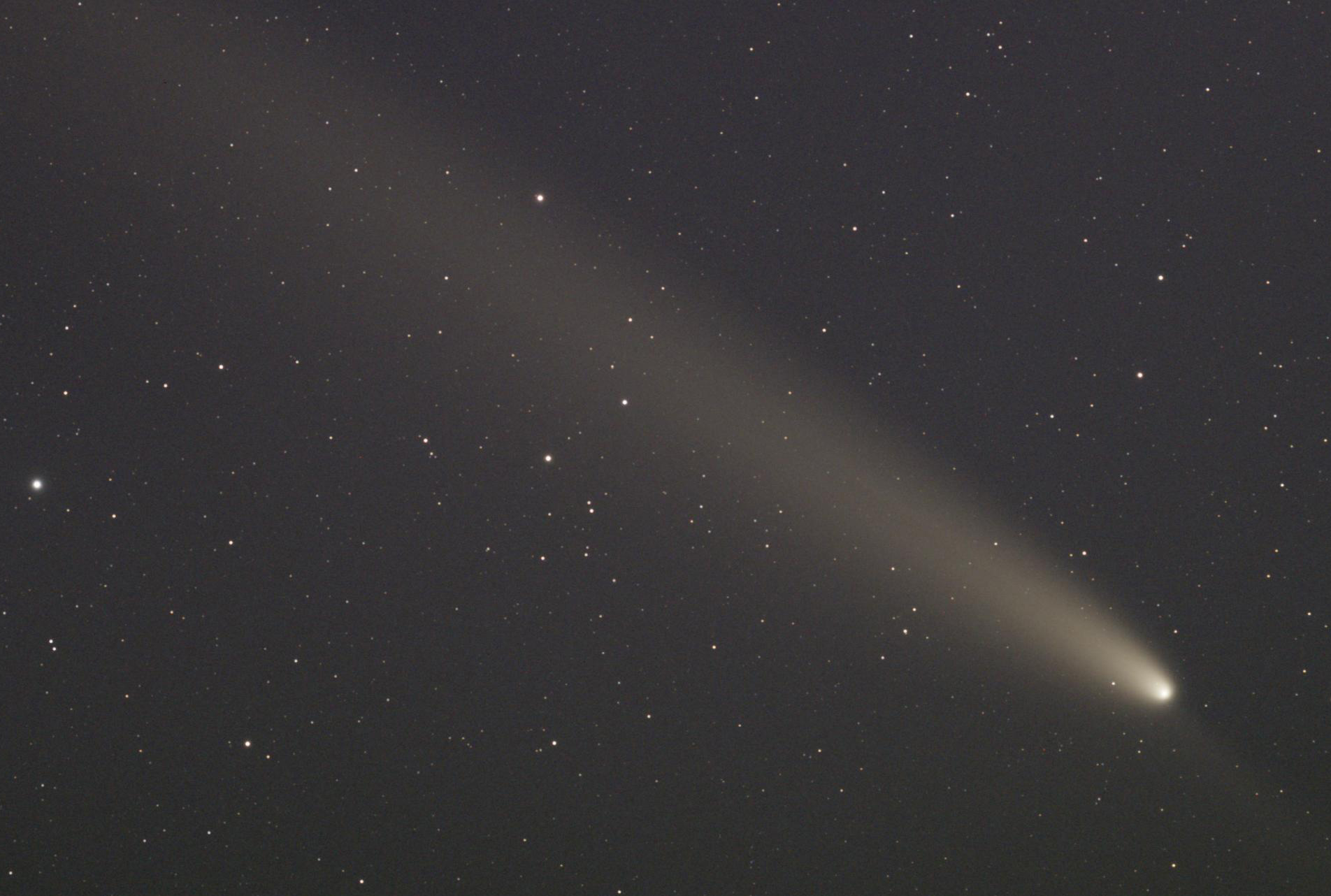
22 October
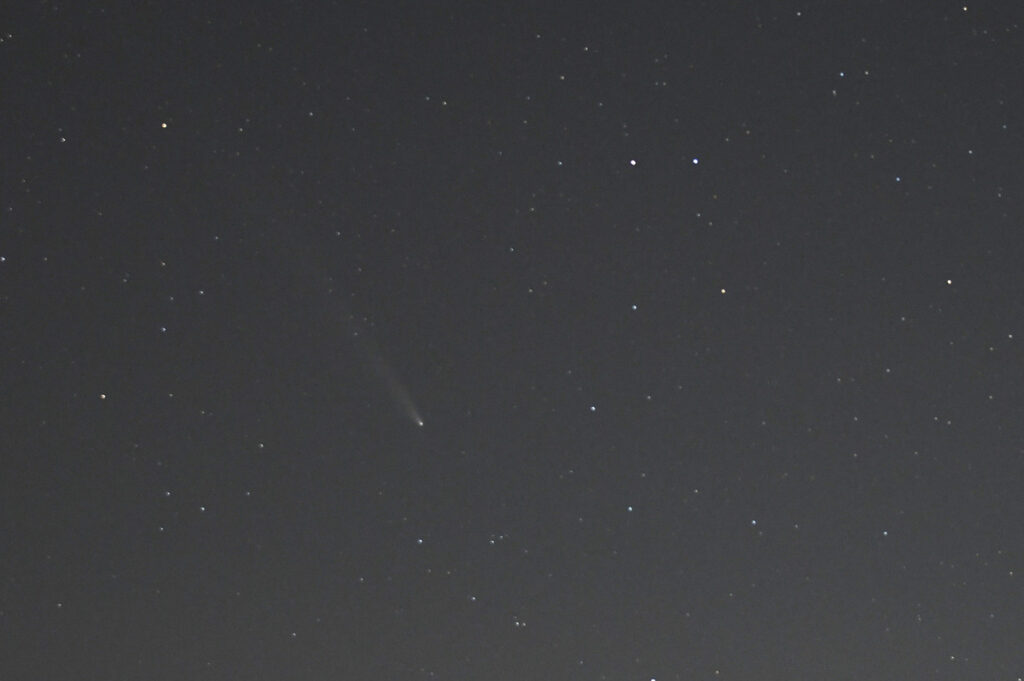
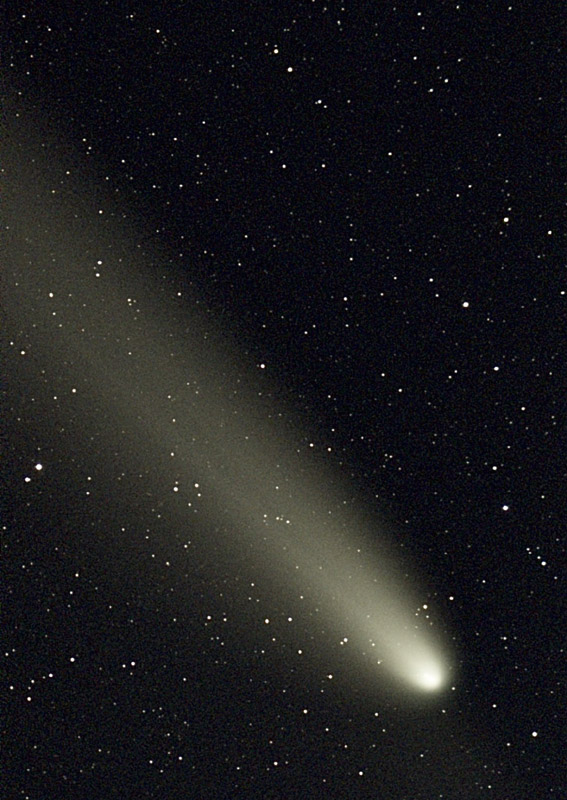
27 October
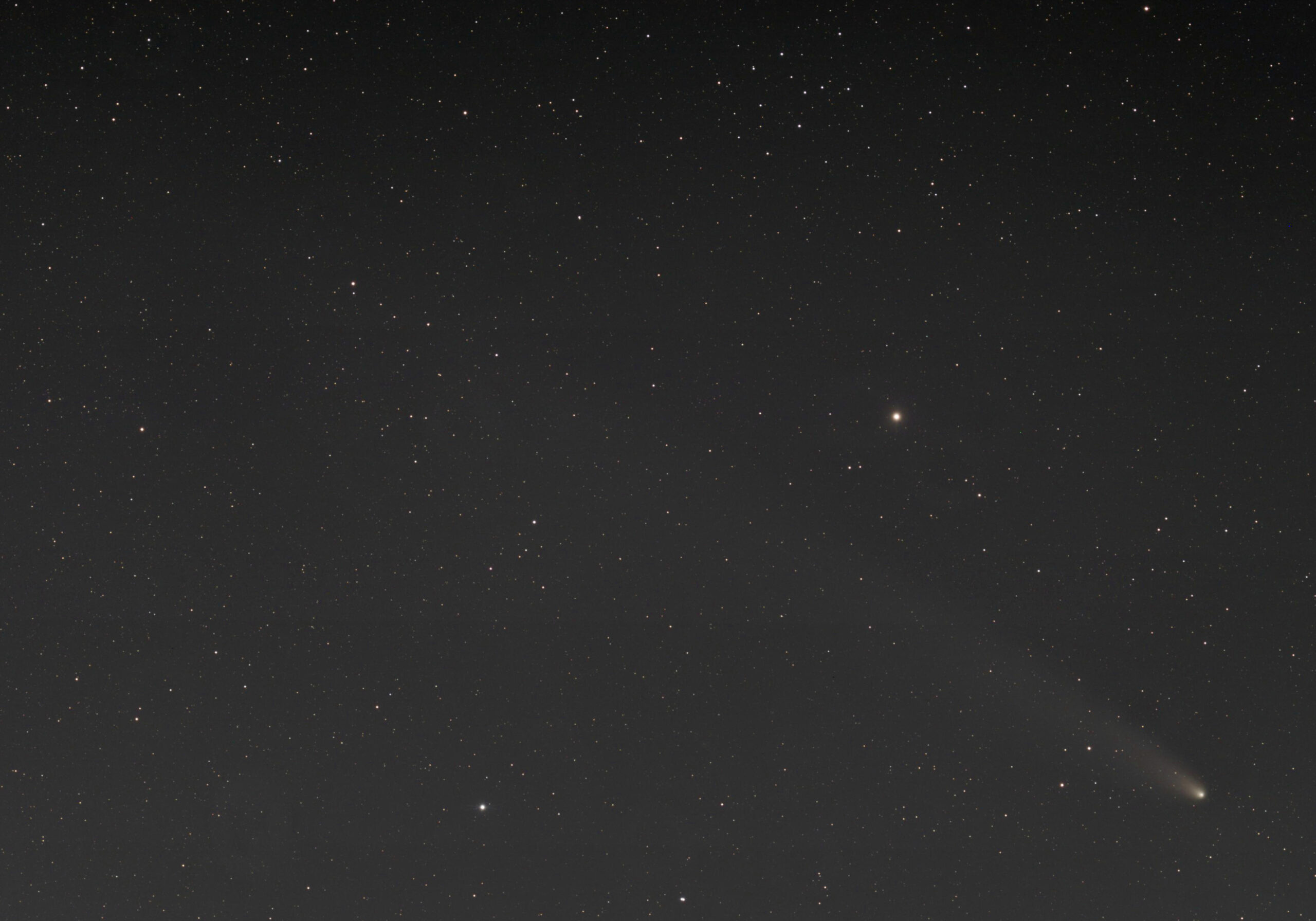
25 November