
This year will be very favourable for the annual Perseid meteors, with virtually no moonlight to spoil the view – weather permitting, of course! The best nights to observe for the UK are likely to be either this coming Sunday night, 11–12 August, or on Monday night, August 12–13, with the actual peak being predicted at about on the Monday afternoon when it is daylight.
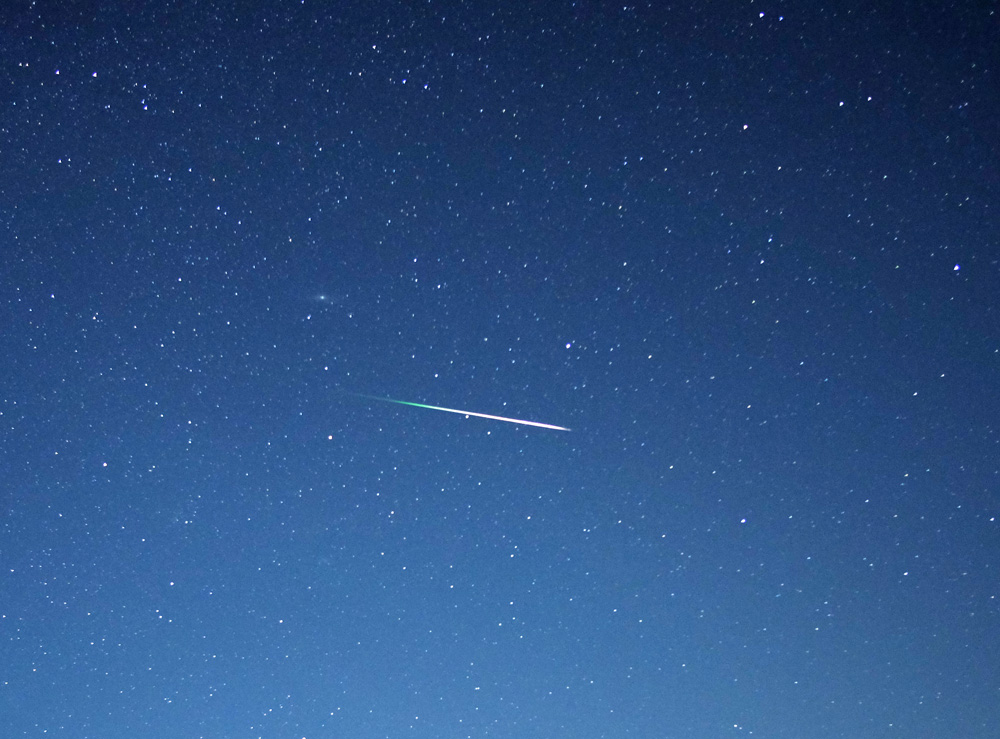
Although the UK won’t see the actual peak of activity, because the Perseids have a broad maximum it’s best to observe on both nights if possible, giving the greatest chance of getting clear skies.
While other predicted showers may have higher rates, the comparatively mild evenings at this time of year make the Perseids a favourite. And unlike most other types of observing, you need virtually no equipment other than your eyes. Just lie down comfortably on a lounger or similar, gazing up at as much of the sky as you can manage, out of the line of sight of any bright lights. Don’t forget a blanket – it can still get chilly in August!
Ideally you should avoid looking directly at the radiant of the meteors, where they emanate from – Perseus, over in the northeast at the start of the night. But keep watch for as long as you can – at least an hour – to stand the best chance of seeing shooting stars.
Although there is a first-quarter Moon, at this time of year the Moon is low in the sky and it will set by about 10:30 pm BST, which is the earliest time after sunset that you can start to observe.
Further details of the Perseids and how to record your observations are available on the Meteor Section website. There’s also a 35-minute video of a talk given in 2013 about the Perseids by Tony Markham.