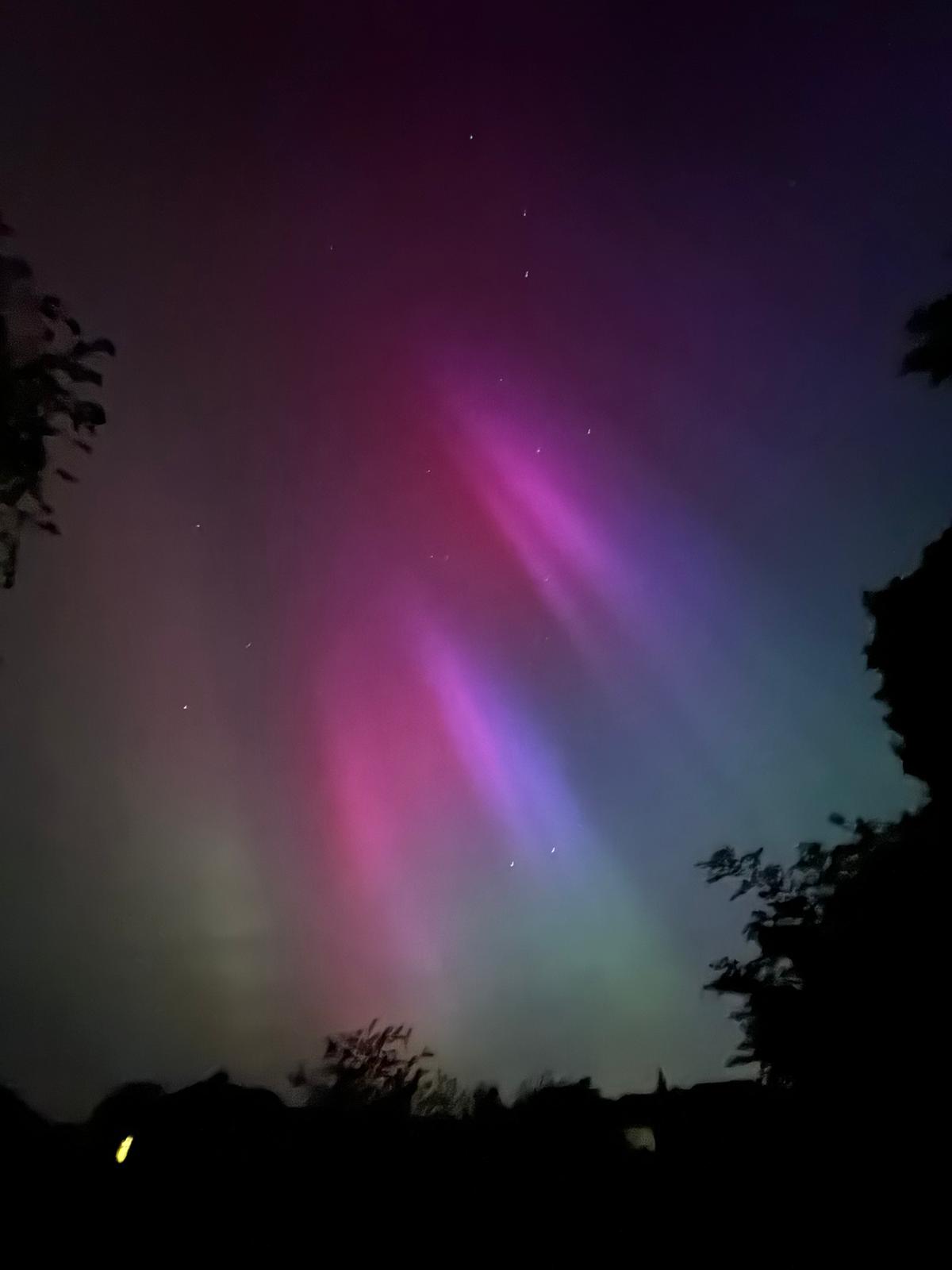
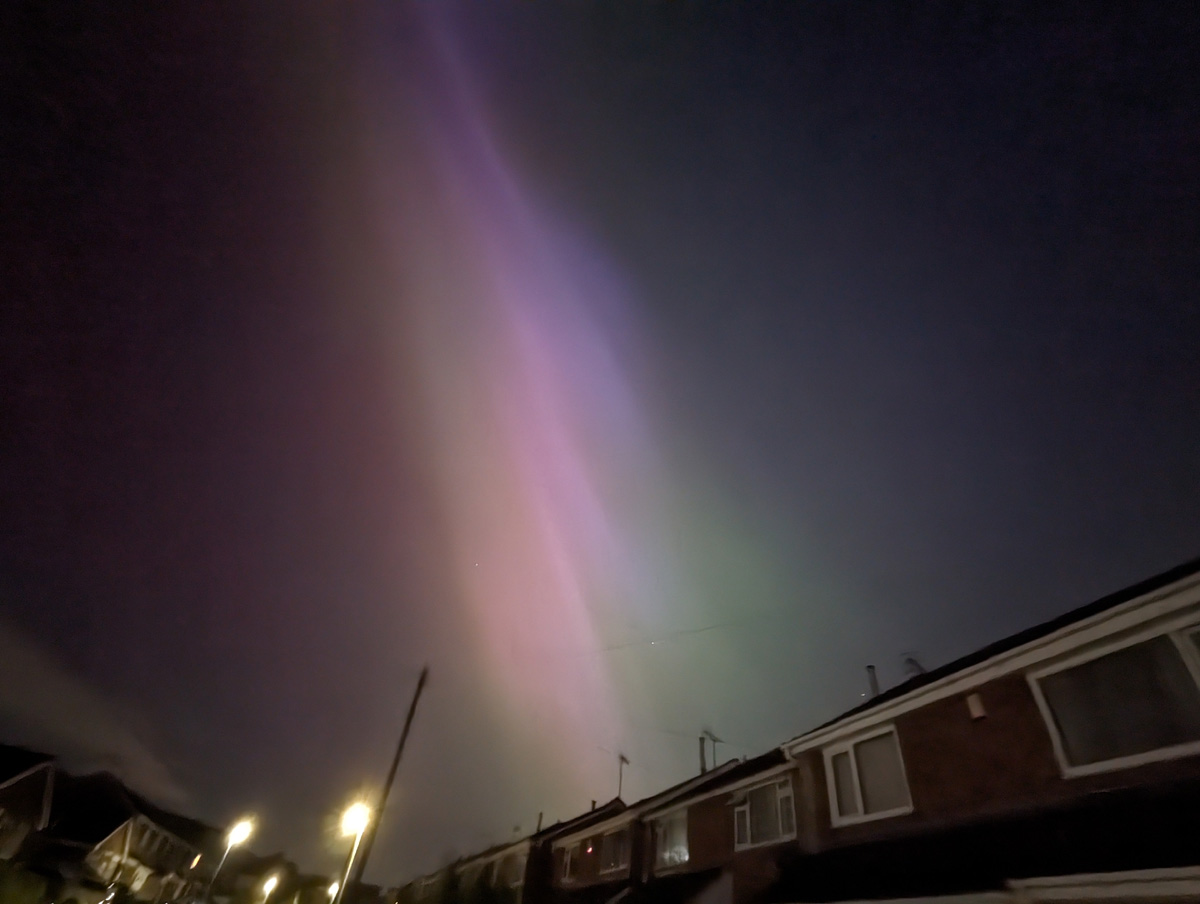
A large sunspot unleashed streams of particles into the Earth’s magnetic field which caused spectacular displays of the aurora (northern lights) on 10–11 May 2024. What are the chances of seeing more displays?
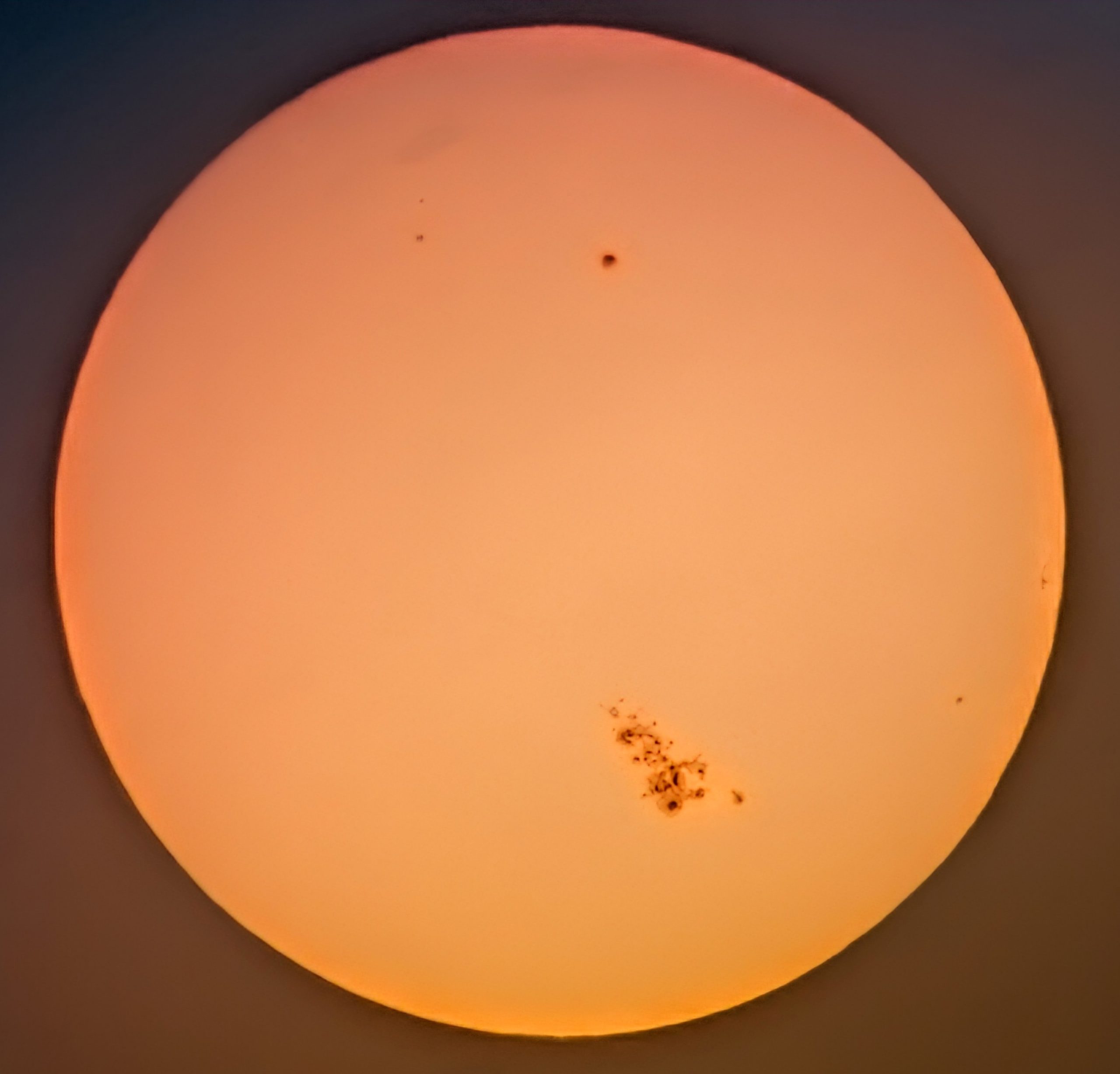
The Sun is extremely active at the moment, and the giant sunspot shown in the photo above produced a large solar flare on 9 May 2024 that gave rise to a massive geomagnetic storm. This is one of the largest sunspots ever recorded. Swarms of particles hit Earth’s upper atmosphere and triggered the largest aurora for many years. It was seen from as far south as the Caribbean, and the skies over Britain turned red on the night of 10–11 May. SPA members were warned by a newsletter issued in the early evening, and were ready for the event when night fell.
But the show is not yet over, and although activity levels dropped on 11 May, they could revive at any time during 2024 and 2025. So get to know what to look for, and be ready for the next alert.
What could you see of the northern lights?
Activity from sunspots is continuing, and the aurora could be visible again. However, spectacular photos such as those below taken by SPA members, could give a false impression of what you might see. The colours are genuine, but modern digital cameras are much more sensitive than our eyes at seeing colour at low light levels. To the eye, the red and green colours were far more muted so the skies may have seemed grey to many people. The brightness of the aurora masked the stars, so it could even look as though the sky was cloudy!
It’s best to get away from city lights if possible, but wherever you live, taking a quick photo with a phone on night view or a good camera on its time-exposure setting will show the presence of a green or red aurora. It helps to know what your night sky looks like under normal circumstances!
Movies taken in previous years often consisted of long time exposures strung together, making the movement of the aurora far quicker than was seen on this occasion. The northern lights can sometimes move very quickly, but more often the movement is quite slow, as on this occasion. The real-time video below shows the true speed of the event as seen from southern England.
To see the current state of auroral activity as seen from the UK, go to https://aurorawatch.lancs.ac.uk/. High activity shows as a red bar, but is no guarantee that the aurora will be visible across the UK. from southern areas it could just be a green glow in the northern sky. So get to know the brightness of your northern sky from wherever you live, and take a photo using night vision on a phone or with a time exposure on a camera, so you can identify an aurora when it occurs.
Photos from SPA members