
Another busy month for deep sky section, four members contributed thirty – two observations, all digital images.
Ian Papworth sent in four images: two galaxies, NGC 891 in the constellation of Andromeda and M33, the Pinwheel galaxy, in Triangulum, NGC 457 the Owl or ET open cluster in Cassiopeia and globular cluster M15 in Pegasus. Ian observes from Bedfordshire using a Skywatcher 150p Newtonian telescope and an Altair Hypercam 183c colour camera.

NGC 891, also known as Caldwell 23, is an edge – on spiral galaxy considered to be similar in size and shape to our milky way galaxy.

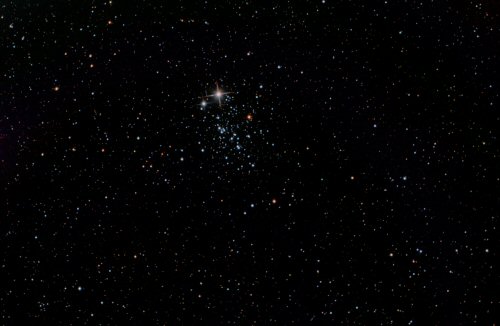

Mark Beveridge, observing from Thainstone, submitted thirteen images. Three are emission nebulae: IC 5070, Sh2-101 and NGC 6974 all in the constellation of Cygnus:
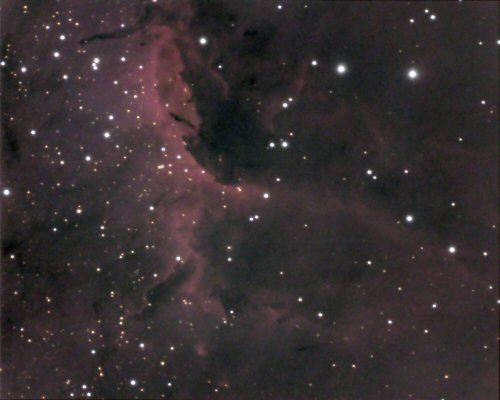
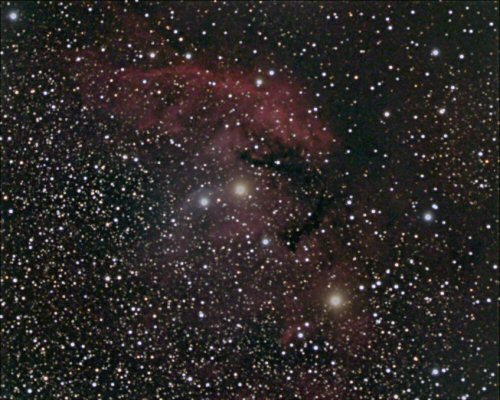
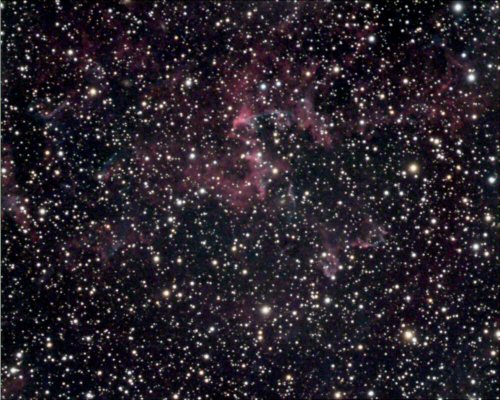
IC 4954/5 is a predominantly reflection nebula in Vulpecula, around 6,500 light years from the Earth. Studies have shown that it is a region of new star formation triggered mostly by earlier generations of stars becoming supernovae, the shock waves then compressing gas and dust so continuing the cycle.

The next three images are galaxies, NGC 157 in Cetus, NGC 185 in Cassiopeia and NGC 7177 in Pegasus:
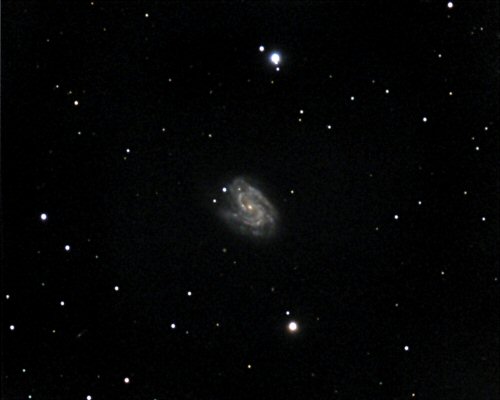
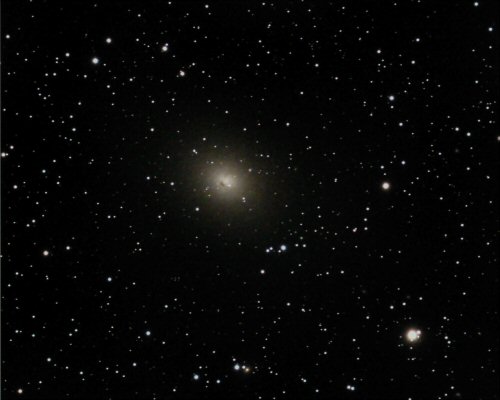
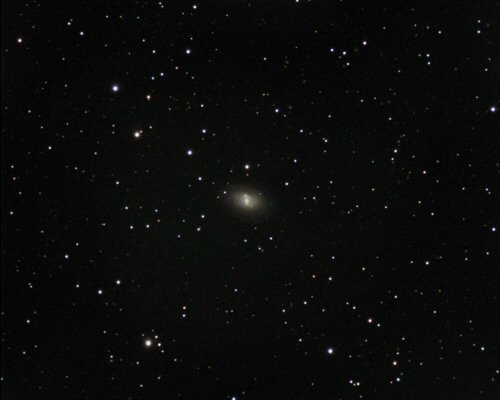
Next are two images of groups of galaxies, NGC 6835/6 in Sagittarius and NGC 7342 in Pegasus:
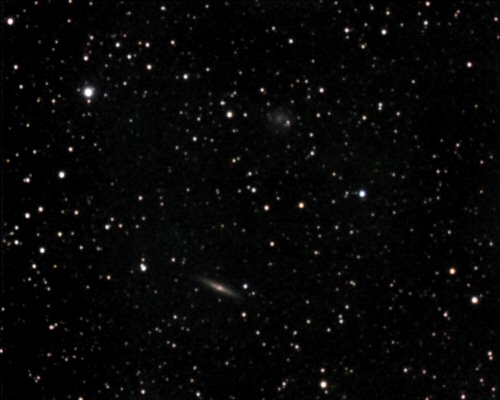
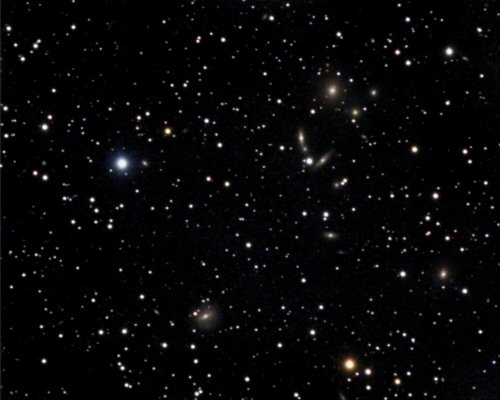
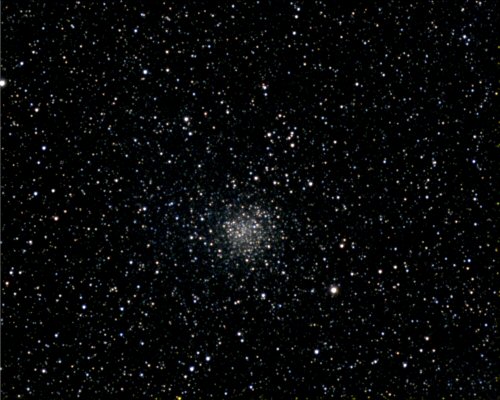
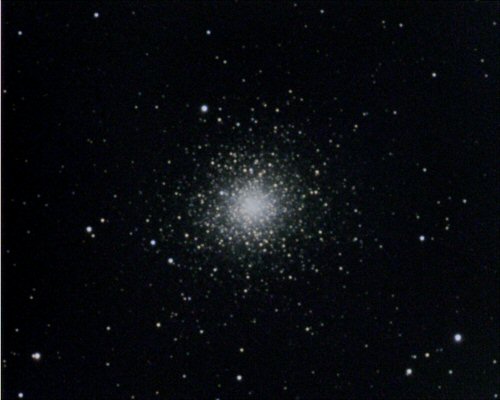
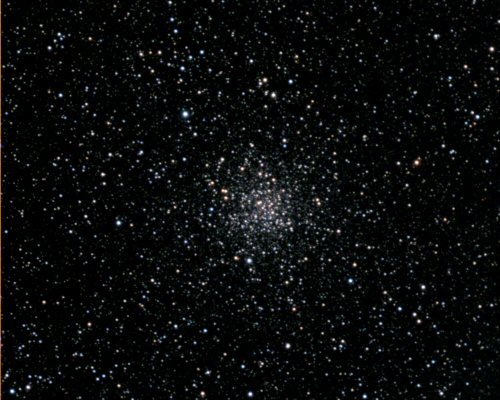
Mark imaged three globular clusters, NGC 6712 in Scutum, M2 in Aquarius and M71 in Sagitta:
Mark also imaged Epsilon Lyrae, a double – double star:

Mark uses Celestron 200mm Edge HD f10.4 SCT and a SXR – H814 camera plus red, green and blue filters.
Richard Lewis, observing from Suckley, took this image of NGC 7000, the North America emission nebula in the constellation of Cygnus with a SW 80 ED pro refractor and ZWO ASI 294 colour camera. It is a composite of three images:

NGC 7000 is the brightest part of a large nebulous region which also contains IC 5067/68/70 (the Pelican nebula) and is over four degrees across. It lies within the Orion arm of the galaxy.
Steve Norrie, observing from Fife, submitted fourteen digital images; twelve of these emission nebulae. The first four of these are: IC 1318 (the Butterfly nebula), IC 5070 (the Pelican nebula) both in the constellation of Cygnus, IC 1805 (the Heart nebula) and IC 1848 (the Soul nebula), both in Cassiopeia:
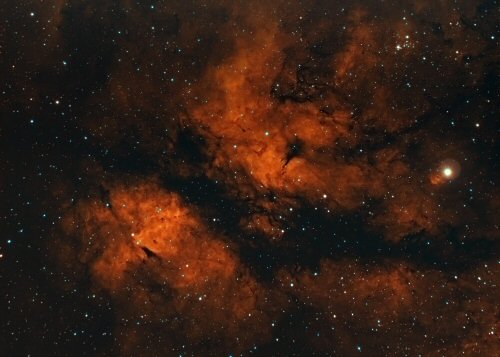

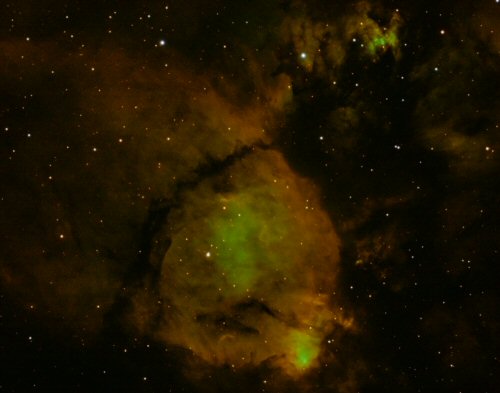
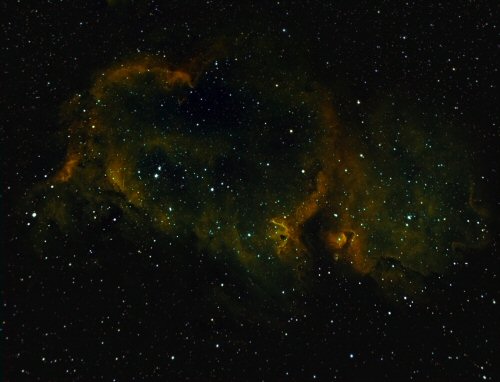
Next is a detailed image of a part of IC 1848, then a wide angle image and a close up of NGC 281, the Pacman nebula in Cassiopeia:
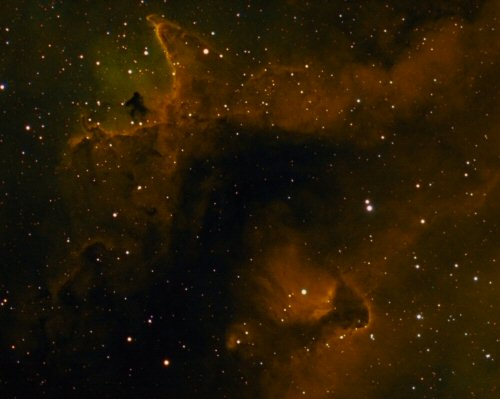
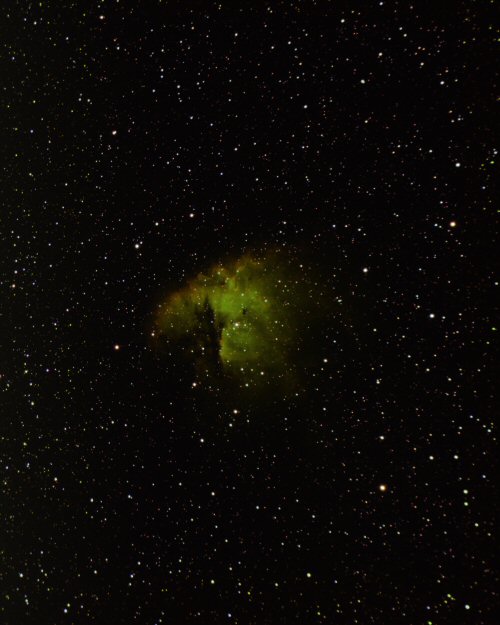
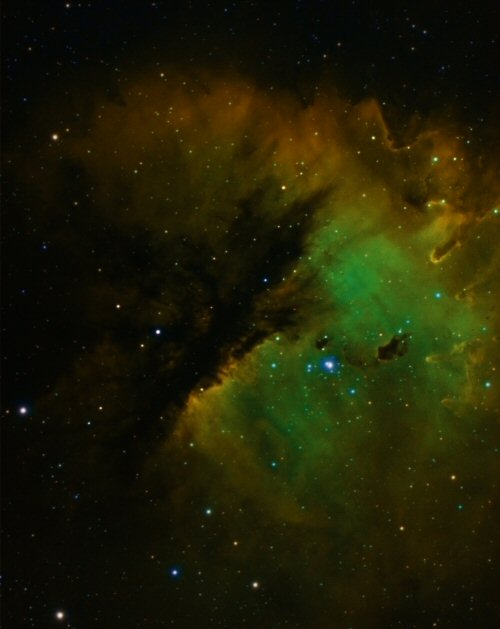
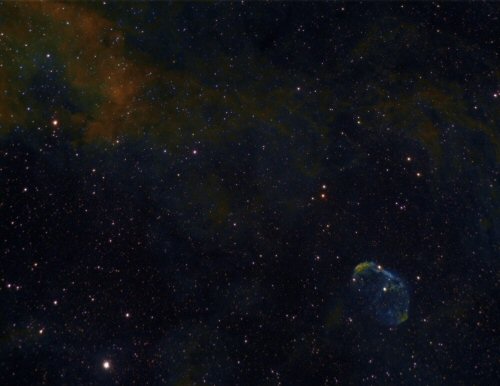
Below are two images of the Wall, a bright part of NGC 7000, the North America nebula in Cygnus, and NGC 6888, the Crescent nebula, also in Cygnus:
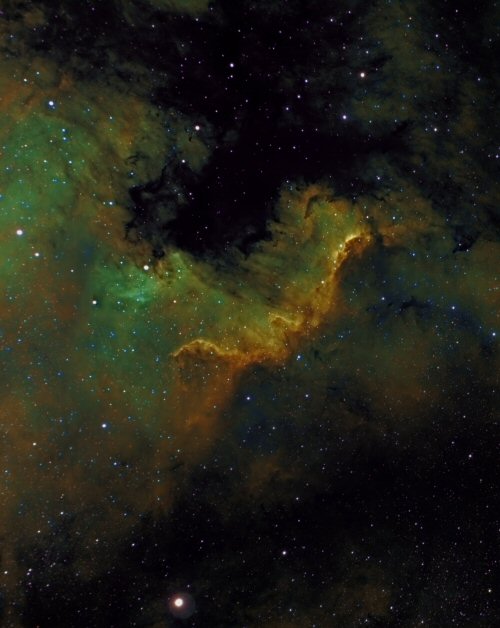
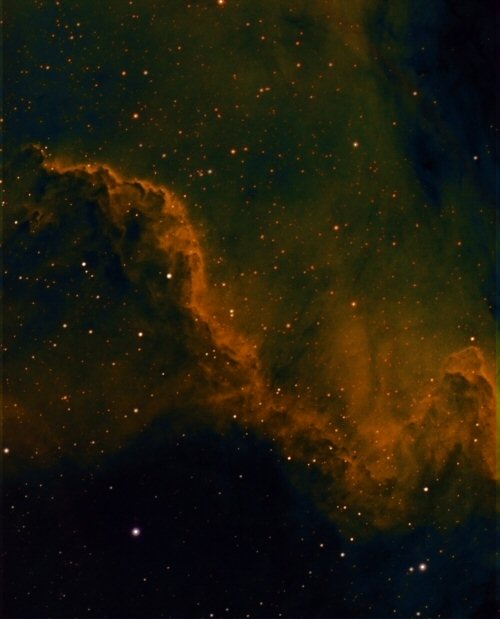
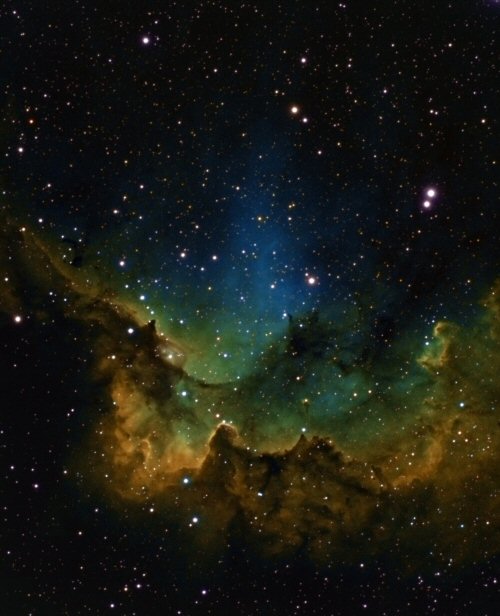
The next two images are NGC 7380, the Wizzard nebula and NGC 7538, both in Cepheus:
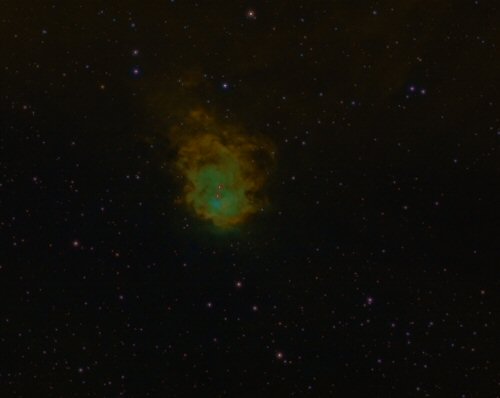
NGC 7538 is near the better known Bubble nebula and is reckoned to be about 9,000 light years from the Earth. It is an active region of new star formation, and contains the biggest known protostar, reported to be around three hundred times the size of our solar system. Thirteen of the proto stars in this nebula are over forty times the mass of the sun.
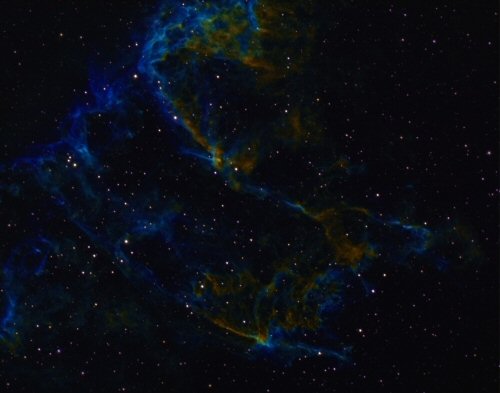
Steve’s remaining two images are the Pinwheel galaxy, M33, in Triangulum and NGC 6992, the Eastern Veil, part of the Veil supernova remnant in Cygnus:

Steve uses a variety of telescopes and a Trius 694 mono camera plus red, green, blue and narrow band filters.
Dave Finnigan