
During the month, the last before British Summer Time began, three Deep Sky Section members submitted a total of fifteen digital images:
Richard Lewis imaged the M42 emission nebula region in the constellation of Orion with a Takahashi FSQ 106mm refractor and ZWO ASI 294 MC Pro colour camera:
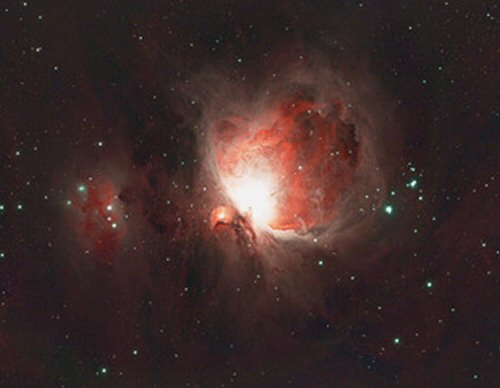
The above image includes emission nebula M43, to the left of M42, and at the far left Sh2-279, the Running Man emission/reflection nebula. M42 lies about 1,350 light years from the Earth, and is around 24 light years across. It is about 1 degree across on the night sky and bright enough to be a naked eye object.
Paul Brierley used what he described as his “grab and go imager” to capture globular cluster M3 in the constellation of Canes Venatici:

M3 is a magnitude 6 object and well seen in binoculars and small telecopes. It contains more known variable stars than any other globular cluster. It also contains a higher abundance of elements heavier than hydrogen and helium than most globulars, and so in astronomers’ parlance is “metal rich”.
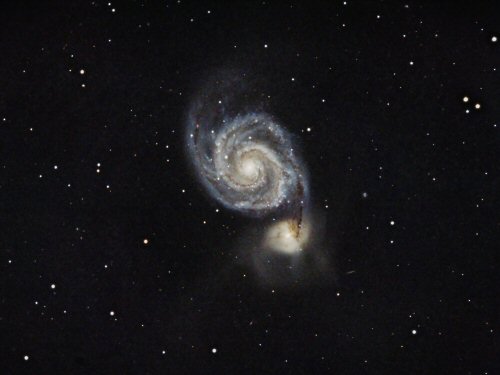
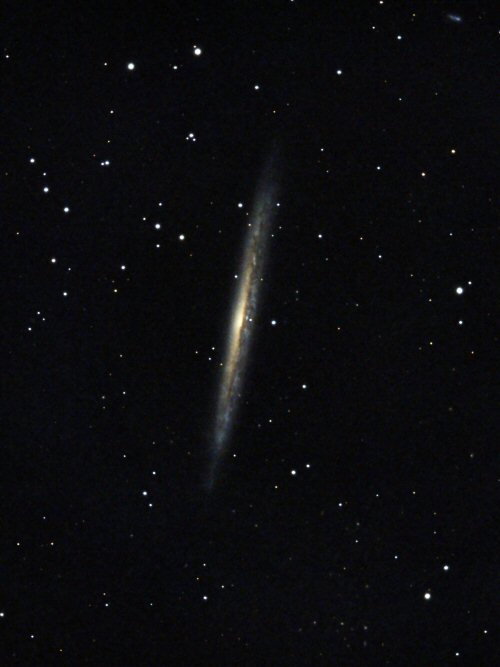
Mark Beveridge used a Celestron C11 SCT with a 0.63 focal reducer and ZWO ASI 294 MC Pro colour camera to image M51 the Whirlpool spiral galaxy in the constellation of Canes Venatici, NGC 4051 intermediate galaxy in Ursa Major and NGC 5906 the Splinter edge-on galaxy in Draco:
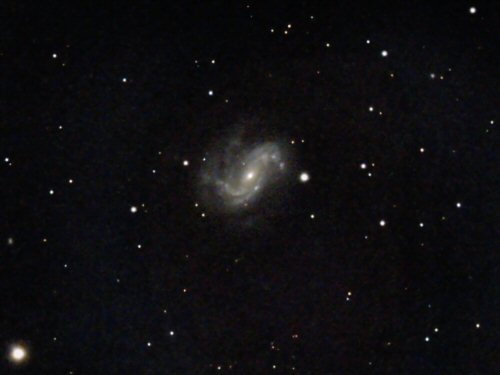
NGC 4051 is a member of the Ursa Major cluster and is classified as a Seyfert galaxy, emitting X-rays and containing a supermassive black hole of around 1.75 million solar masses.
Steve Norrie sent in ten images, utilising a number of different telescope and camera combinations. With an Explore Scientific ED 127mm refractor and Atik 490 MC colour camera Steve imaged IC 443 the Jellyfish supernova remnant in the constellation of Gemini, M63 the Sunflower galaxy in Canes Venatici, M101 the Pinwheel galaxy in Ursa Major and M106 galaxy in Canes Venatici:
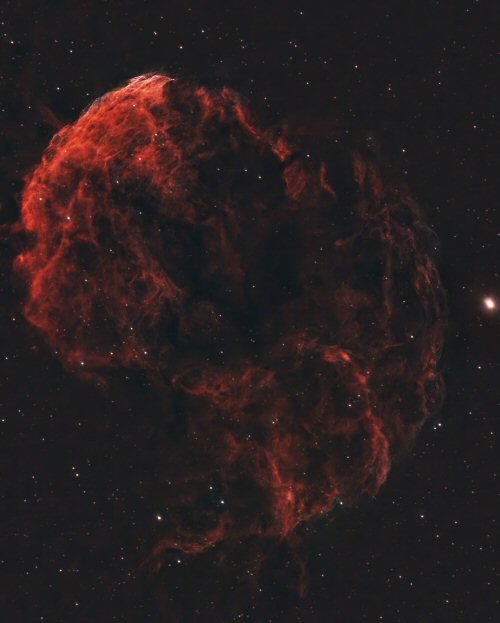
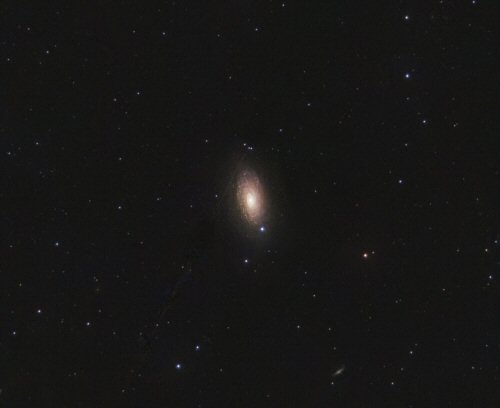
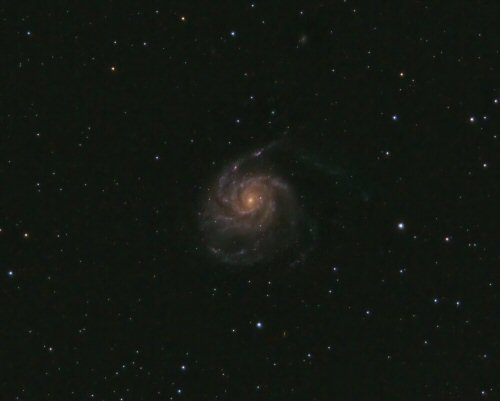
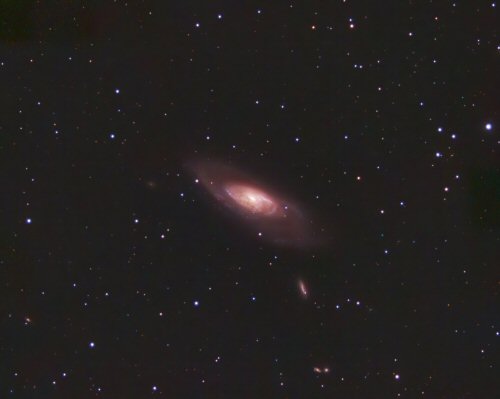
Switching to a Celestron C8 SCT and Starlight Xpress Trius 694 mono camera plus red, green and blue filters, Steve imaged M51 the Whirlpool galaxy in Canes Venatici, M101 the Pinwheel galaxy and M109 both in Ursa Major also NGC 2903 galaxy in Leo:

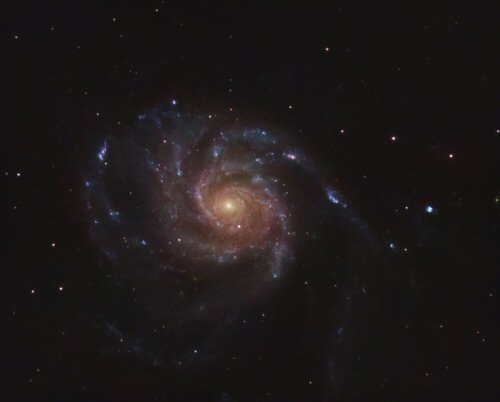
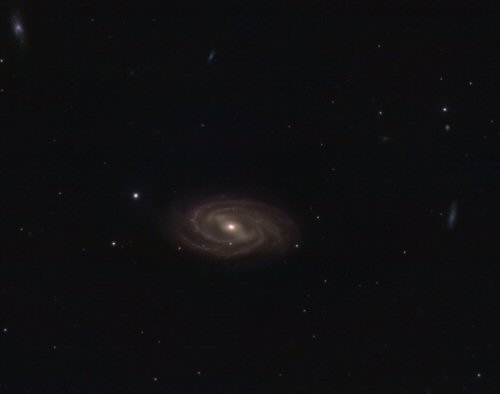
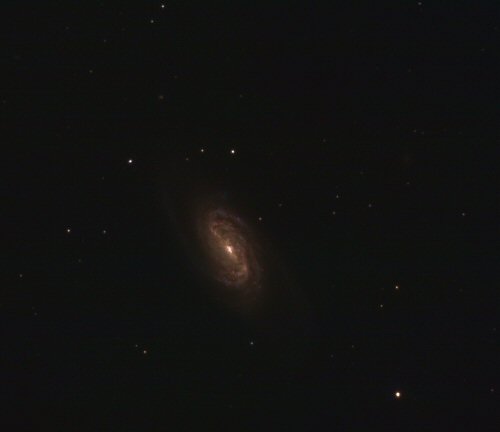
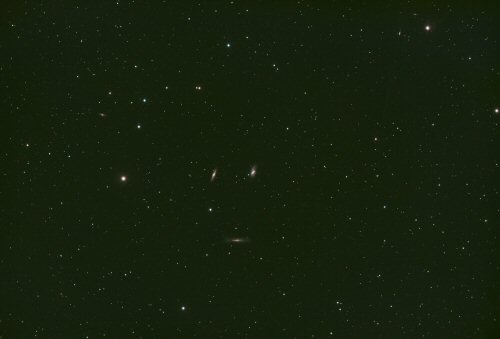
Steve imaged the Leo triplet of galaxies (M65, M66 and NGC 3528) with a Redcat 51mm refractor and ZWO ASI 294 MC colour camera, also Sh2-240, the Spaghetti supernova remnant on the Auriga/Taurus border with a Redcat 71mm refractor plus an Altair Astro 26 TEC camera with added HII and OIII data:
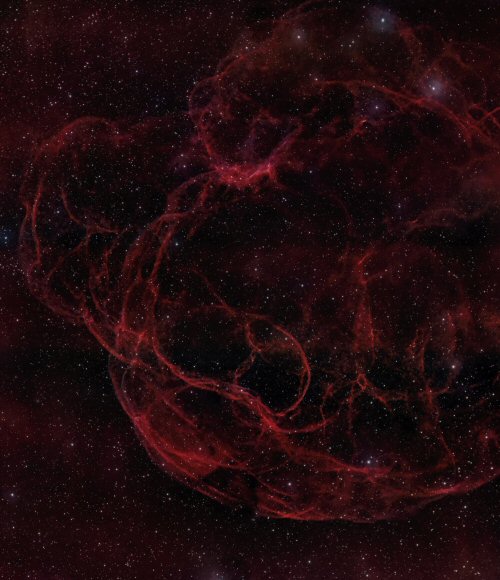
Sh2-240 0r Simeis 147 has an apparent diameter of 3 degrees, and is around 3,000 light years from the Earth. The supernova occurred around 40,000 years ago, and left a pulsar at the centre of the 160 light-year wide nebulosity.
Dave Finnigan