
This month five members contributed their observations to this section. The final tally is thirty – one digital images and two drawings.
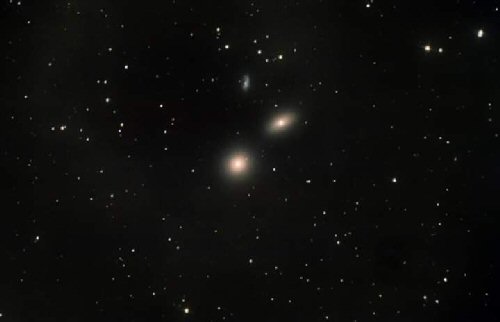
Ian Papworth sent in seven digital images, using a Skywatcher 150P reflector and an Altair Hypercam 183c pro colour camera The three below are of galaxies which lie in the constellation of Leo: M105 (also featuring galaxies NGC 3384 and NGC 3389), NGC 2903 and the Leo triplet: M65, M66 and NGC 3628.


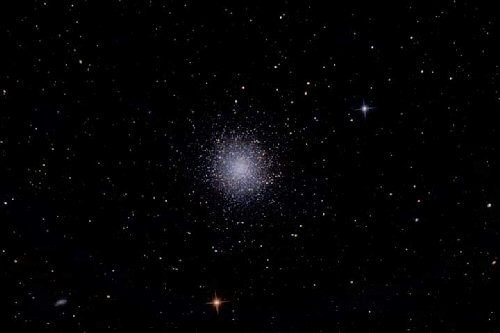
Ian also imaged the Perseus double cluster, NGC 884 and NGC 869, galaxy NGC 4631 known as the Whale galaxy in Canes Venatici and two globular clusters: M3 also in Canes Venatici and M13 in Hercules:

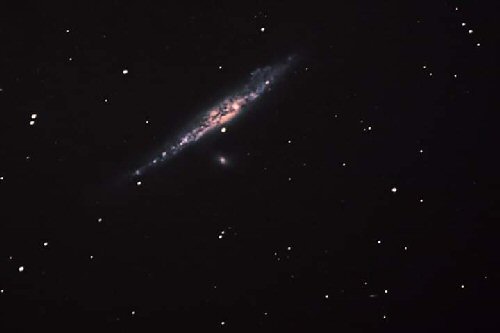
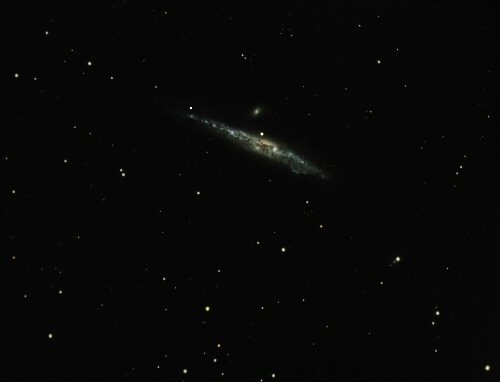
NGC 4631 has a central region of prodigious star formation, many massive enough to end their short lives as supernovae: so many that there is a lot of material being blown out of the centre, producing a halo of X ray emitting gas around the entire galaxy.

Michael Kinns, observing with an Orion Optics 200mm f6 Newtonian reflector at 150x and 100x magnification respectively sketched NGC 2261 Hubble’s variable nebula, a reflection nebula in the constellation of Monoceros and M78, another reflection nebula in Orion:
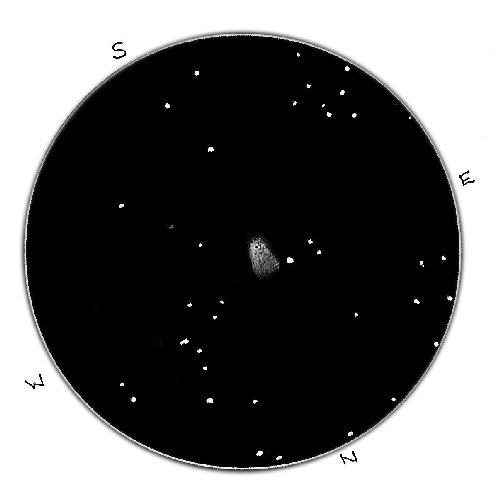
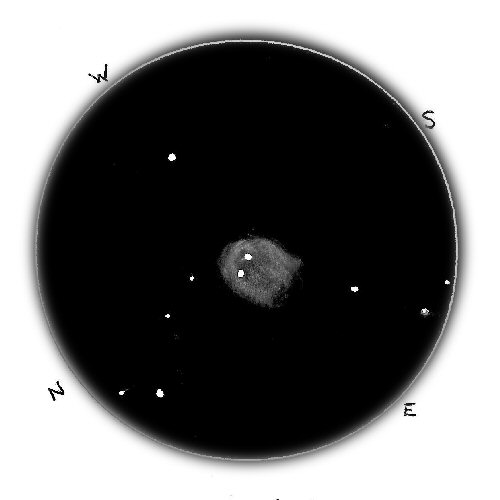
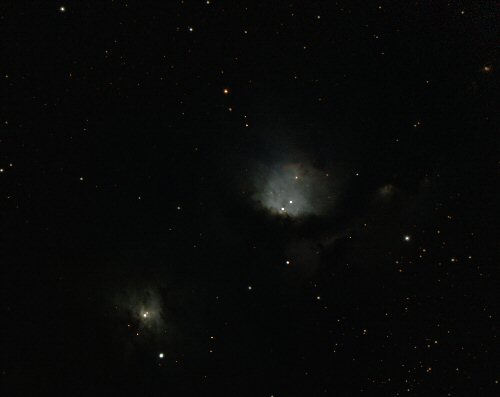
M78 is a part of the Orion Molecular Cloud Complex and lies about 1,350 light years from the Earth. Two hot, bright type B stars are illuminating this nebula.
Mark Beveridge imaged ten galaxies – the first four below are all in the constellation of Leo – M96, M65, M105 and NGC 3628:


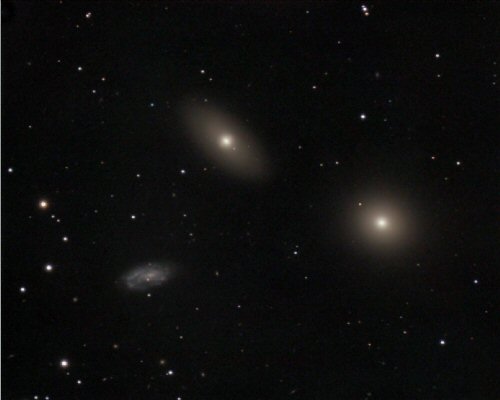
Elliptical galaxy M105 is on the right of this image; the galaxy in the middle is NGC 3384 and on the left is NGC 3389. All belong to the Leo galaxy group. M105 is described as having a weak active supermassive black hole at its centre. M105 and NGC 3384 are surrounded by a cloud of atomic hydrogen, where star formation has been observed.
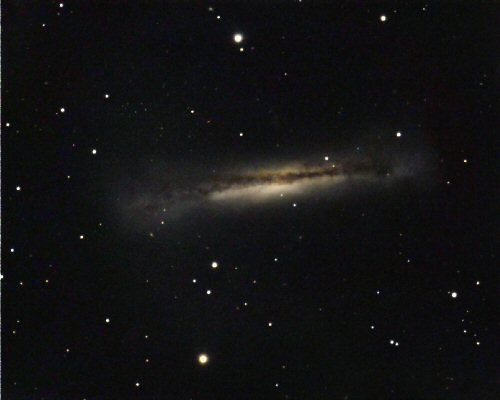
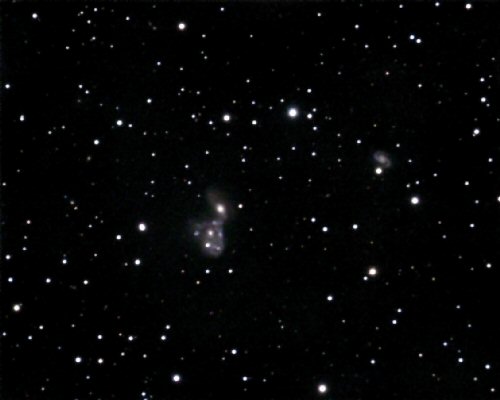
Next are two galaxy images, NGC 2444/5, a pair of galaxies also known as Arp143 and NGC 2683 in Lynx:
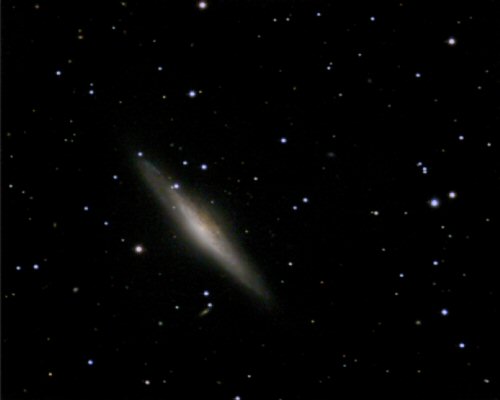
The remaining four images are NGC 2841 in Ursa Major, NGC 3344 in Leo Minor, NGC 2575 in Cancer and M106 in Canes Venatici:
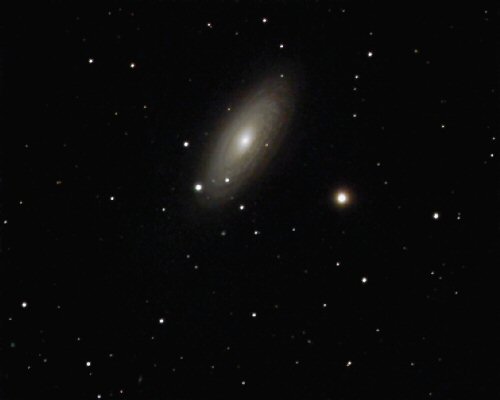
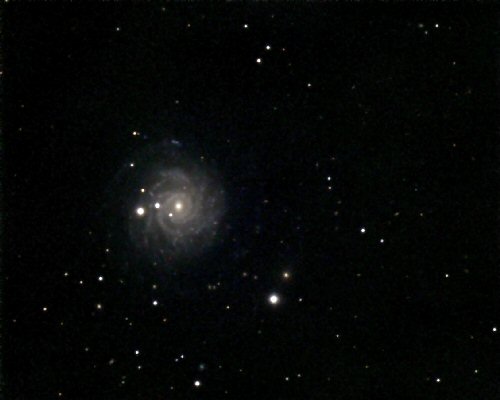
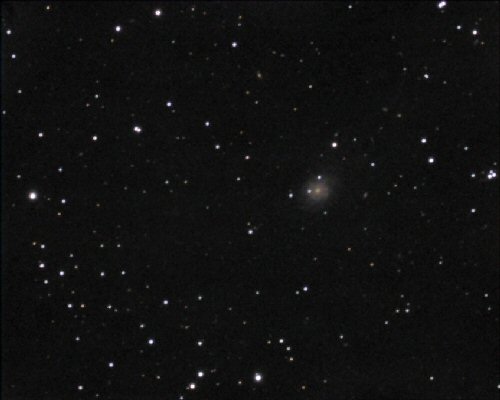

Mark used a Celestron 200mm Edge HD f 10.4 SCT and a SXR – H814 mono camera plus red, green and blue filters.
David Davies imaged three globular clusters via an 8″ Richey Chretien telescope and a QSI 583 mono camera plus red, green and blue filters; M72 in the constellation of Aquarius, and NGC 6934 and NGC 7006 which are both in Delphinus:

M72 is in a retrograde orbit around our galaxy, possibly due to it having been captured from the Sagittarius dwarf galaxy. It is reckoned to be about 52,000 light years from the Earth
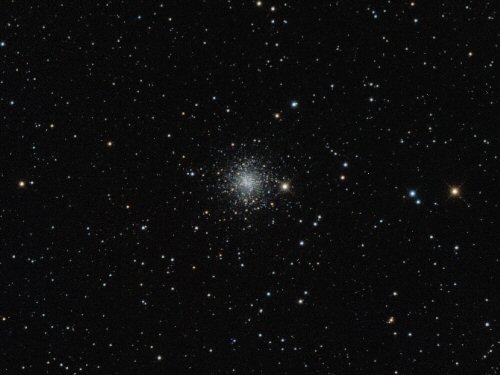

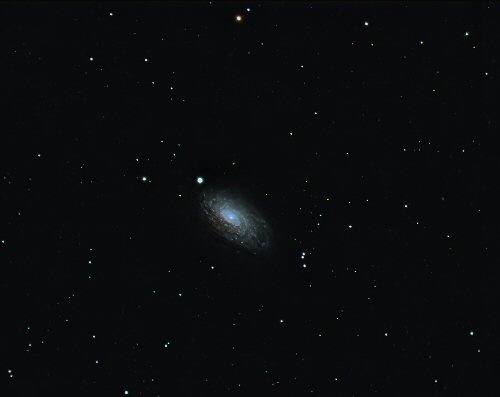
Steve Norrie sent in eleven images. The first three below are in the constellation of Canes Venatici, M63 the Sunflower galaxy, NGC 4631 the Whale galaxy and M51 the Whirlpool galaxy:

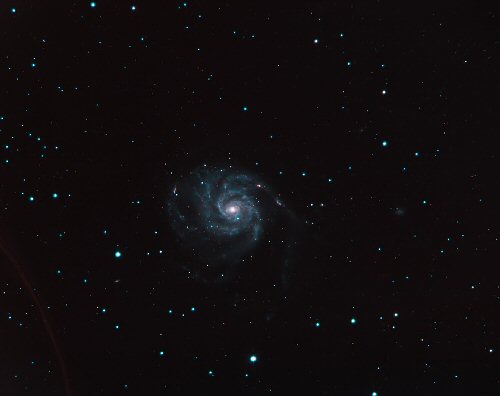
The next objects are in Ursa Major, M81 aka Bode’s galaxy and M101 the Pinwheel galaxy:

In Coma Berenices Steve imaged M64 the Black Eye galaxy and NGC 4565 the Needle galaxy:
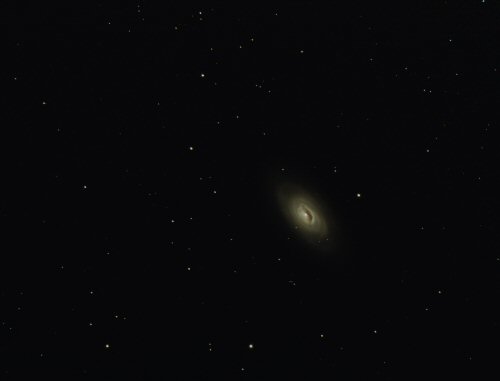
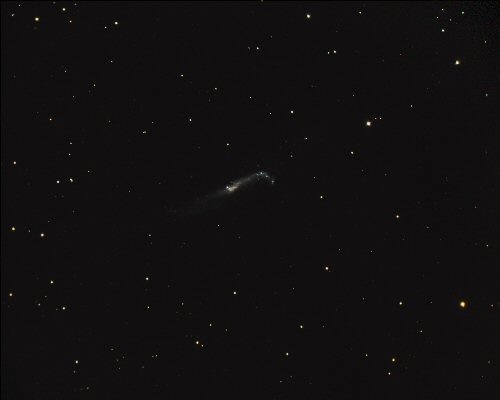
Steve also imaged the Leo Triplet, emission nebulae NGC 281 the Pacman nebula in Cassiopeia and NGC 7822 in Cepheus; also reflection nebula M78 in Orion:


NGC 7822 comprises the HII emission region known as Sh2 – 171 and the young star cluster Berkley 59. There is a type O star within this cluster designated BD+66 1673 which is 100,000 times more luminous than the sun, having a surface temperature of around 45,000 degrees K.
Steve produced these images using a variety of telescopes and cameras: a Celestron 9.25 SCT, an ES 127 refractor and an Altair 80 ED-R refractor; an Atik 490 colour camera and a Starlight Xpress Trius 694 mono camera plus red, green and blue filters, also narrow band filters for the Hubble palette images of the emission nebulae above.
Dave Finnigan