
Six section members contributed to this month’s total of thirty-two digital images.
Alan Clitherow, SPA planetary section director, imaged NGC 7635 the Bubble emission nebula and IC 63 the Ghost emission/relection nebula, both in the constellation of Cassiopeia, using a Skywatcher 190P Maksutov-Newtonian telescope and ZWO ASI178 MM and QHY288 M mono cameras respectively. The first image is a combination of HII and OIII data, the second is RGB plus HII data:

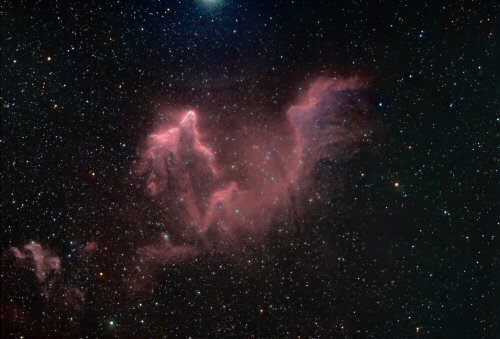
The star resposible for making IC 63 visible is the hot, luminous, variable class B multiple star gamma Cassiopeiae. It is just out of the above image, left of top centre. The star and nebula are about 550 light years from the Earth
Alan also captured M42 the Orion nebula with the MN190P and a QHY 10 colour camera plus IDAS NBZ dual narrow band filter:

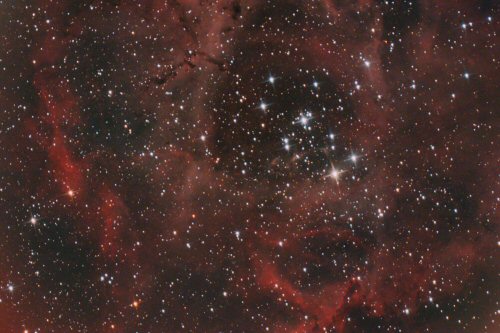
Ian Papworth used a Skywatcher 150P Newtonian telescope and Altair Astro 183C colour camera to image NGC 2244 the Rosette emission nebula in the constellation of Monoceros and NGC 2392 a planetary nebula in Gemini:
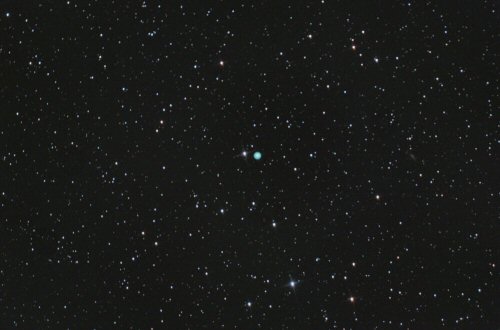
NGC 2392 is the remnant of a sun-like star after it completed the red giant stage of stellar evolution around 10.000 years ago. The gaseous outer layers of the red giant now surround the hot white dwarf stellar core, which is ionising the gas making the nebula visible for a few tens of thousands of years.
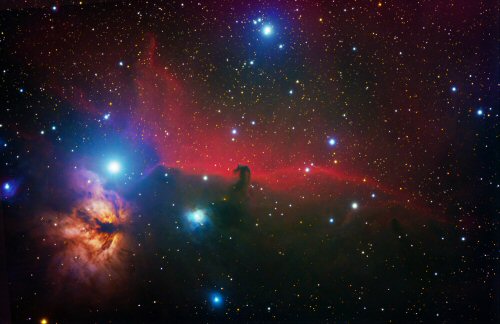
Paul Brierley imaged B33 the Horsehead dark nebula in the constellation of Orion with an Altair Astro 115mm EDT refractor and ZWO ASI294 MC Pro colour camera:
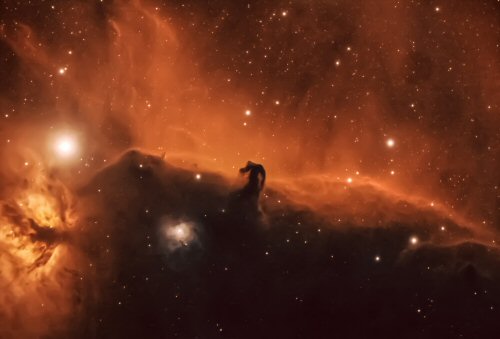
B33 is a dark cloud of dust and gas sufficently dense to block the light of the emission nebulosity IC 434 behind it, from the perspective of the Earth. This is an active star forming region. Also, to the far left of the image is NGC 2014 the Flame emission nebula and below the Horsehead and left is the reflection nebula NGC 2023.
David Davies sent in two images of edge-on galaxies, NGC 2653 the UFO galaxy in the constellation of Lynx and NGC 891 the Outer Limits galaxy in Andromeda:
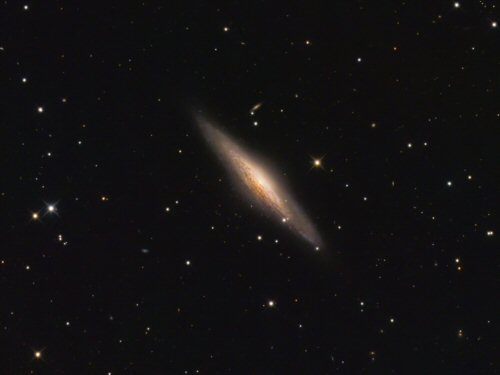
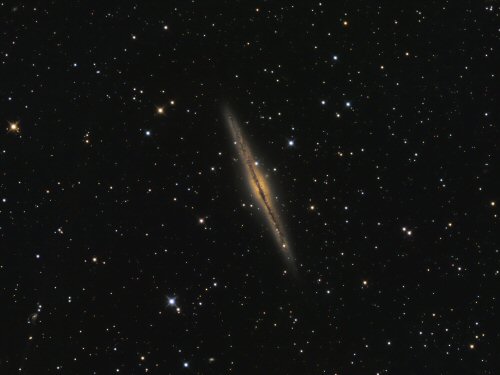
NGC 891 is a member of the NGC 1023 group of galaxies which in turn belongs to the Virgo supercluster (Local supercluster), as does our own local group of galaxies.
David observes with a 200mm Richey Chretien telescope and a QSI 683 mono camera plus red, green and blue filters.
Richard Lewis used a Takahashi FSQ 106mm refractor and ZWO ASI294 MC Pro colour camera to image the Pinwheel galaxy M33 in the constellations of Triangulum, IC 1805 the Heart emissin nebula in Cassiopeia and B33 the Horsehead dark nebula in Orion:
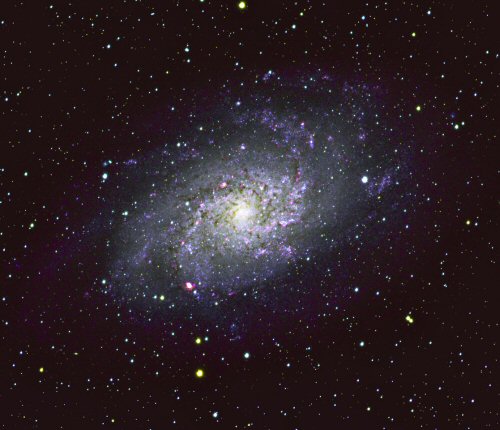
M33 is 2.7 light years from the Earth, so the second closest large galaxy, (the closest being M31) and the third largest after M31 and our milky way galaxy. A new star forming region in M33 is catalogued as NGC 604 and is about forty times the size of the Orion nebula with around two hundred type O and Wolf-Rayet stars: it is visible in this image as a pink dot below and to the left of the galactic core, towards the end of a spiral arm.
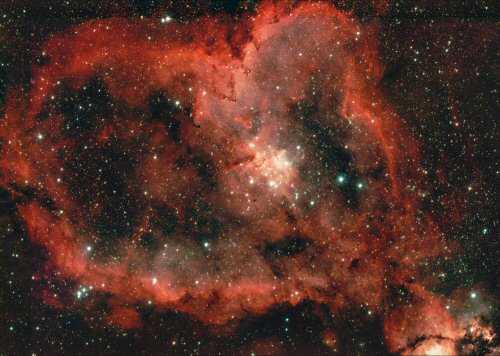
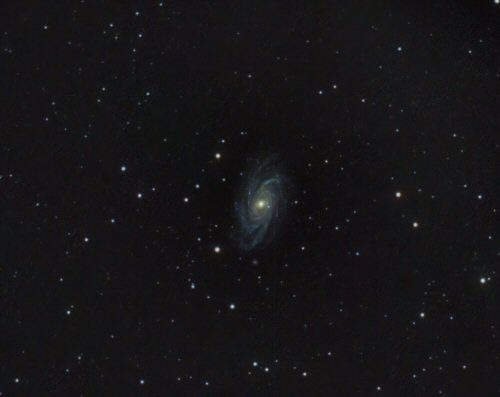
Steve Norrie contributed a total of twenty-one images this month. The first batch below are all galaxies taken with a Celestron C8 SCT and Atik 490 EX colour camera: M51 the Whirlpool galaxy in the constellation of Canes Venacici, NGC 2841 in Ursa Major, NGC 3184 the Little Whirlpool galaxy in Ursa Major, NGC 660 in Pisces, NGC 2336 in Camelopardalis and NGC 2368 in Lynx:


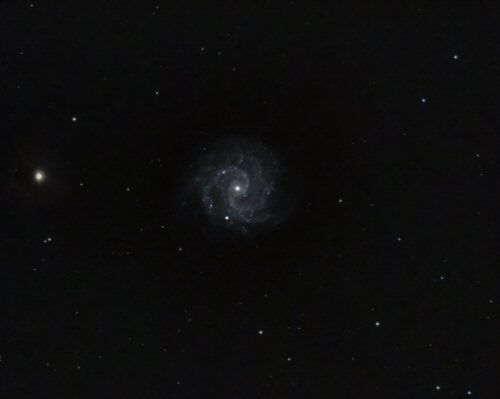

NGC 660 is classed as a peculiar polar-ring galaxy. The ring is at 45 degrees to the to the plane of the galaxy disc and is a region of copious new star formation. The origin of the ring is disputed, some sources favour a galaxy collision, others suggest it is material captured from a passing galaxy. The central region of this galaxy is also a site of much new star formation, and NGC 660 is further classified as a starburst galaxy.

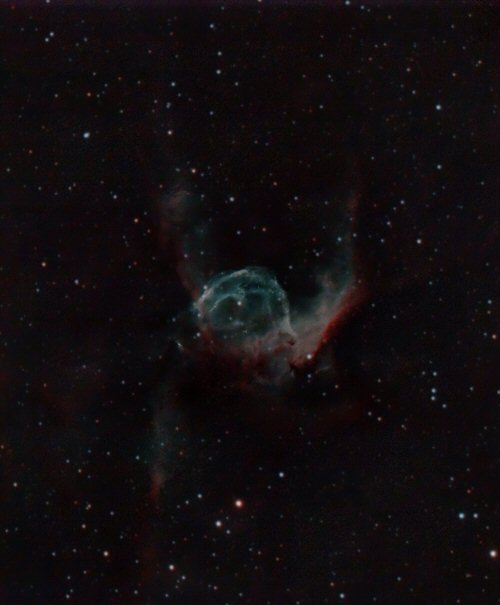
With the same telescope and camera combination Steve also captured NGC 1931 emission/reflection nebula in Auriga and NGC 2359 Thor’s Helmet emission nebula in Canis Major:

Steve used a Williams Optics Redcat 51mm APO refractor and a ZWO ASI294 MC Pro colour camera to image NGC 1499 the California emission nebula in Perseus and IC 2177 the Seagull emission nebula in Monoceros:

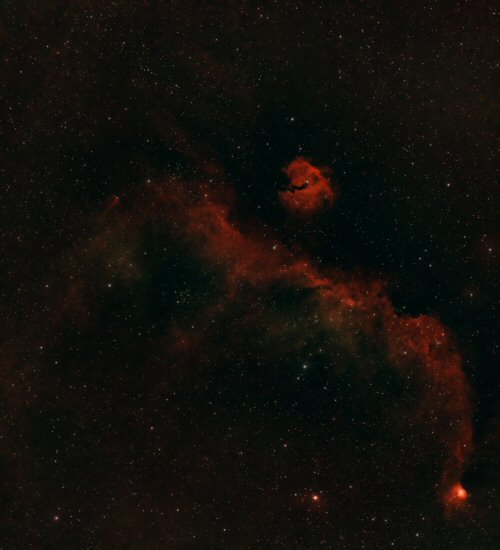
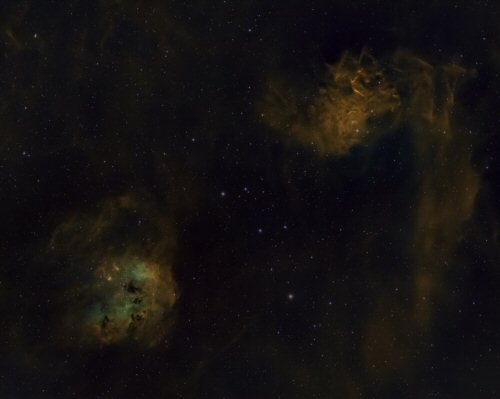
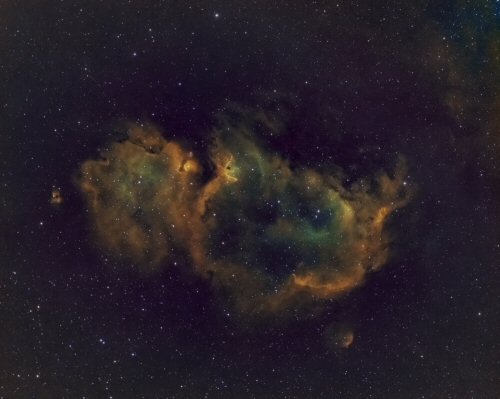
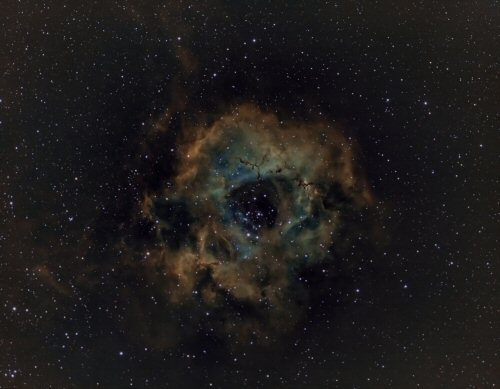
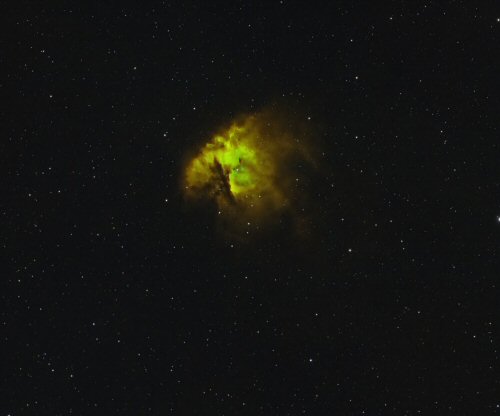
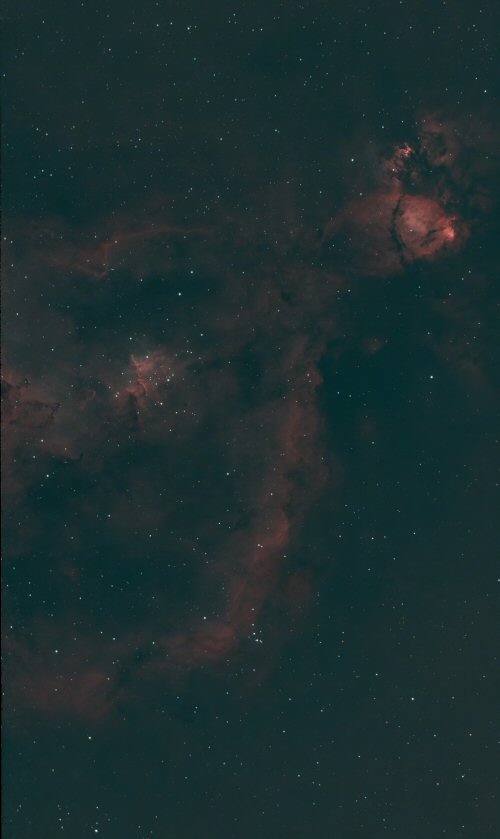
Still using the Redcat refractor but with a Starlight Xpress Trius 694 mono camera Steve imaged more emission nebulae, IC 410 the Tadpoles nebula in Auriga, IC 2177 the Seagull nebula in Monoceros, Westerhaus 5 the Soul nebula in Cassiopeia, IC 1805 the Heart nebula in Cassiopeia, NGC 2244 the Rosette nebula in Monoceros, NGC 281 the Pacman nebula in Cassiopeia and IC 405 the Flaming Star nebula in Auriga:

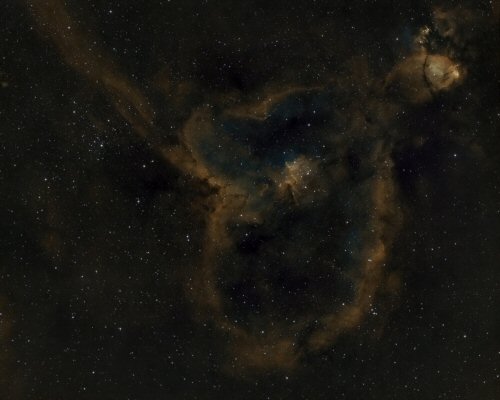

Steve also re-imaged IC 1805 with an EDR 72mm refractor and Altair Astro Hypercam 26C colour camera:
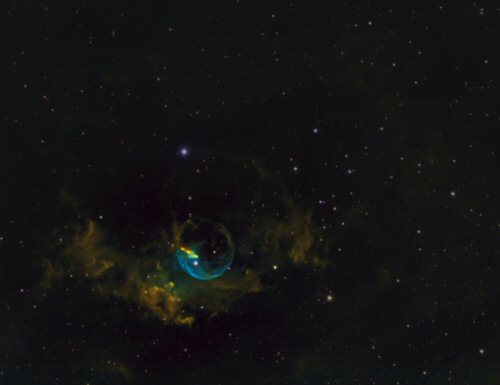
In addition, Steve sent in two more renditions of NGC 281, one taken with the C8/Trius setup to give the Hubble palette the other with the EDR 72/ AA26C and an image of NGC 7635 the Bubble emission nebula (C8/Trius), all of which are in Cassiopeia:


Dave Finnigan