
The slow return of longer, darker nights heralded an increase in section activity: four members submitted twenty – six digital images in total. No sketches were received this month.
Ian Papworth imaged a planetary nebula, an emission nebula, a galaxy and an open cluster. M27 is the Dumbbell planetary nebula in the constellation of Vulpecula, NGC 281 is the Pacman emission nebula in Cassiopeia:

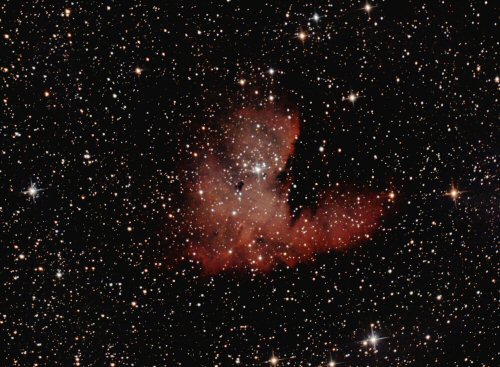
NGC 281 is part of an HII region situated about 9,500 light years from the Earth in the Perseus arm of the milky way galaxy. It is associated with open cluster IC 1590 and contains Bok globules where new star formation is thought to be happening.
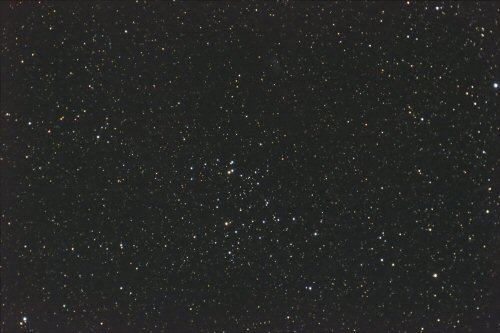
The next two images are of galaxy M31 in Andromeda, and open cluster NGC 7510 in Cepheus; the latter a monochrome image.
Ian uses a Skywatcher 150p Newtonian reflector and an Altair Hypercam 183c pro colour camera, an Atik 314 mono camera (mono image) and a Nikon D5100 DSLR (M31 image).


Geoff Elston, SPA solar section director, sent in four images captured with a Skywatcher 127mm Maksutov Cassegrain telescope plus a Canon D550 DSLR. The first two are globular clusters, M71 in the constellation of Sagitta and M2 in Aquarius:


M2 is about 55,000 light years from the Earth and is around 175 light years in diameter. At magnitude 6.4 it is easily seen using binoculars.
Below are NGC 5907, the Splinter galaxy in Draco and NGC 6709, an open cluster in Aquila:

Mark Beveridge sent in five digital images using a Celestron 200mm Edge HD f10.4 SCT and a SXR – H814 mono camera plus red, green and blue filters. The first three are emission nebulae, IC 5146 the Cocoon nebula in the constellation of Cygnus, NGC 6823 in Vulpecula and NGC 6888 in Cygnus:

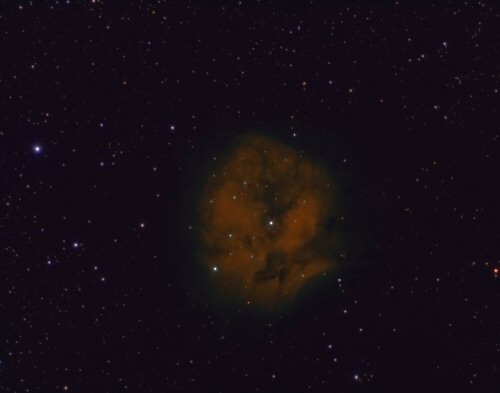
The Cocoon nebula is a region of ongoing new star formation. One in particular is a bright class B star estimated to be 14 times more massive than the sun.


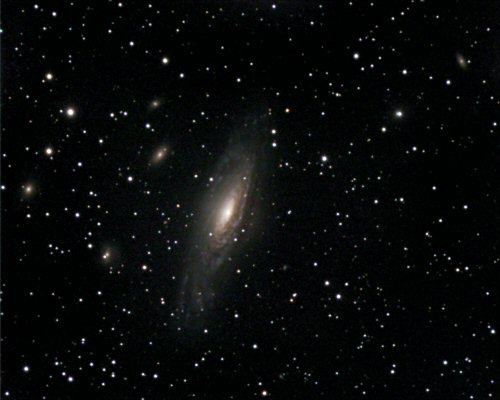
Mark’s other two images are planetary nebula NGC 6842 in Vulpecula and galaxy NGC 7331 in Pegasus:
Steve Norrie submitted thirteen digital images to the section, eight of which were of emission nebulae. The first four are IC 1396, the Elephant’s Trunk nebula in the constellation of Cepheus (a wide angle shot with a EDR 72mm refractor then a close up with a C8 SCT) and two images of IC 1805 the Heart nebula in Cassiopeia:
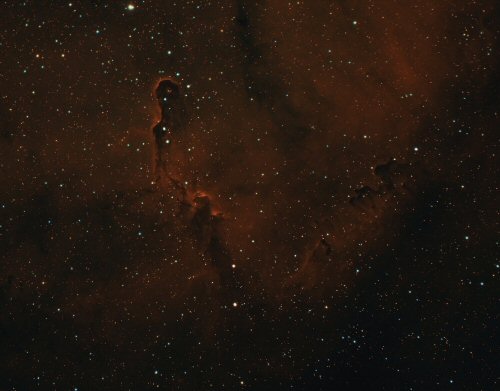
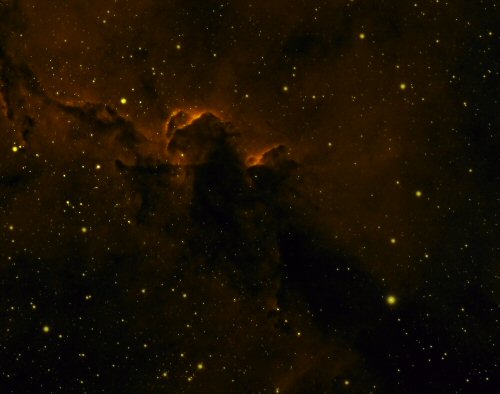


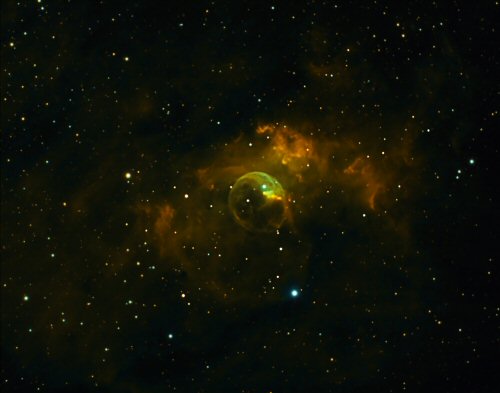
The next four images are of IC 5146 in Cygnus (the Cocoon nebula described above), NGC 6888 also in Cygnus, NGC 7635 the Bubble nebula in Cassiopeia and NGC 7822 in Cepheus ( the latter with an EDR 80mm refractor):
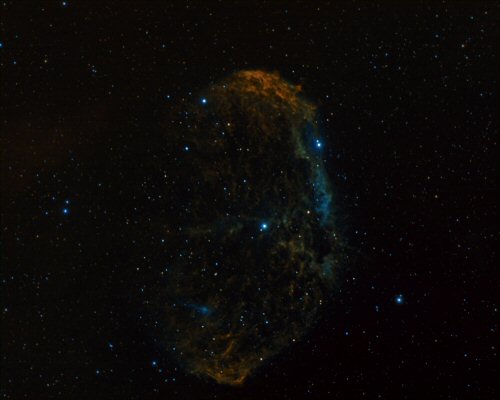
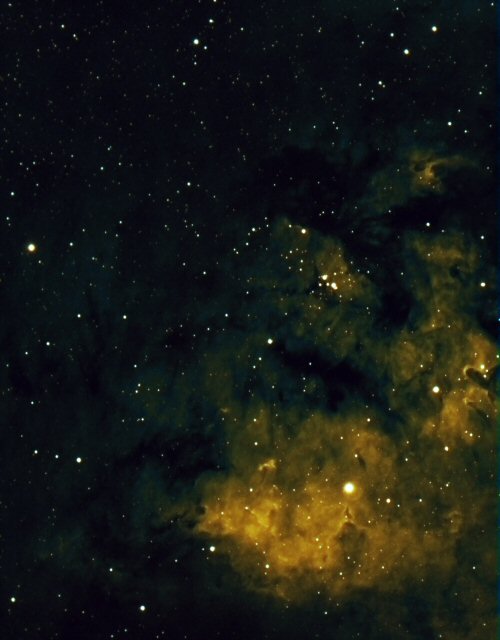
NGC 7822 consists of an HII region Sharpless 171 and a cluster of young stars designated Berkeley 59. A very hot star has been discovered here: BD+66 1673 is a double star with a class O component having a surface temperature of an estimated 45,000 K. It is ionising the gas in this nebula and shaping it with powerful stellar winds.
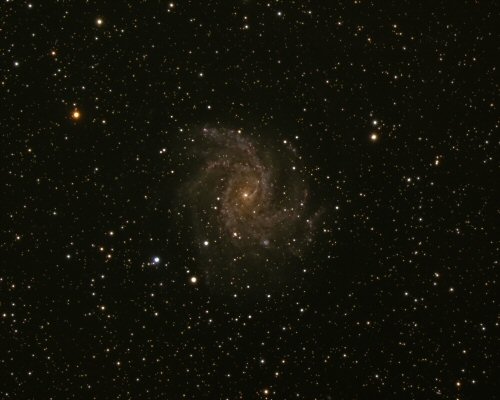
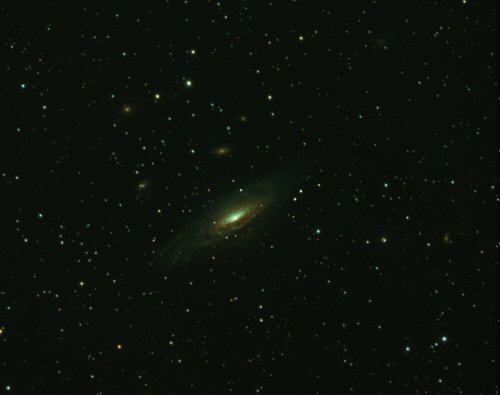
Steve’s remaining five images are planetary nebula M27 in Vulpecula, galaxies NGC 6946 aka the Fireworks galaxy on the Cepheus / Cygnus border and NGC 7331 in Pegasus, reflection nebula NGC 6820 in Vulpecula and NGC 6960, the Witch’s Broom, the western part of the Veil supernova remnant in Cygnus:

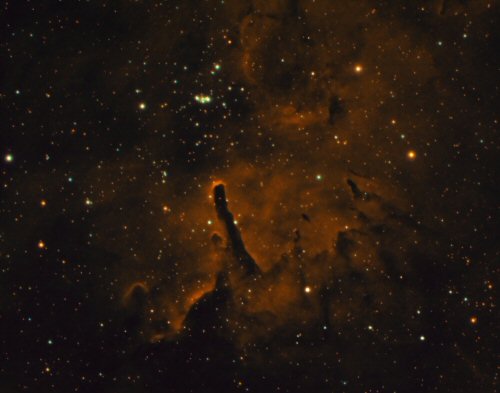

Steve used a variety of telescopes for these images with a Starlight Xpress Trius 694 mono camera plus narrow band filters.
Dave Finnigan