
The planet Uranus isn’t always easy to find because it’s much fainter than the bright planets that had been known since ancient times. But this year there’s a great signpost in the sky that will help you to locate it with binoculars – the wonderful Pleiades star cluster, also called the Seven Sisters. Here’s how to spot the Pleiades and Uranus.
The Pleiades (pronounced ‘Ply-a-deez‘) are an unmissable sight during the winter months (in the northern hemisphere). Although each individual star isn’t particularly bright, together they attract the eye by their hazy glow. In autumn you’ll find them rising in the eastern sky as soon as its gets dark, then by late evening they are high in the southern sky. They show up even from city skies as long as you don’t have lights directly in your eyes.
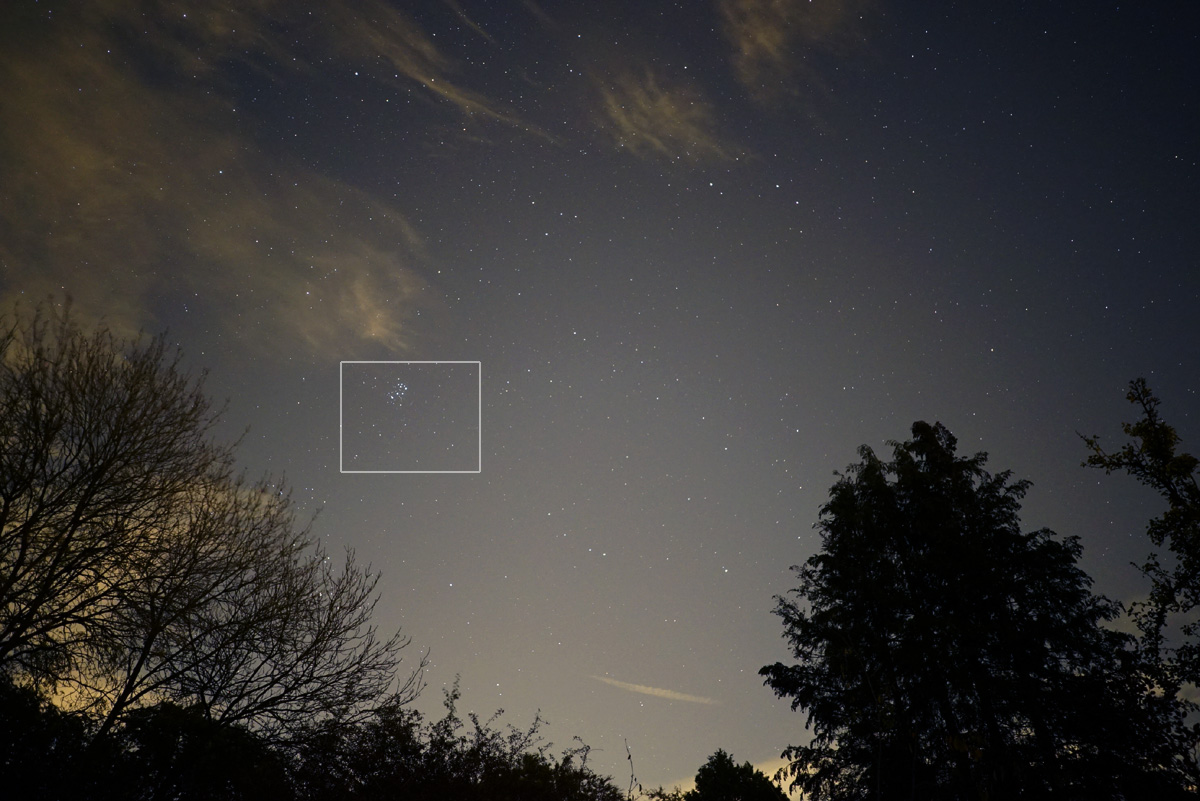
Once you’ve found the Pleiades, take a good look at them through any binoculars. There are far more than seven sisters – in fact this is a cluster of about 1000 young stars, all around 100 million years old. Compare that with the Sun’s 4½ billion year age. Nine of the brightest stars actually have names – the seven beautiful young sisters and their two parents! Most people can see six, but some can see eight or nine or more.
Now look below them, about one field of view of binoculars, and spot a pair of stars of about equal brightness, with another ‘star’ to their left. That star is Uranus, the seventh planet from the Sun, some 2800 million km away from us. Here’s what you should see (without the helpful circle indicating Uranus):
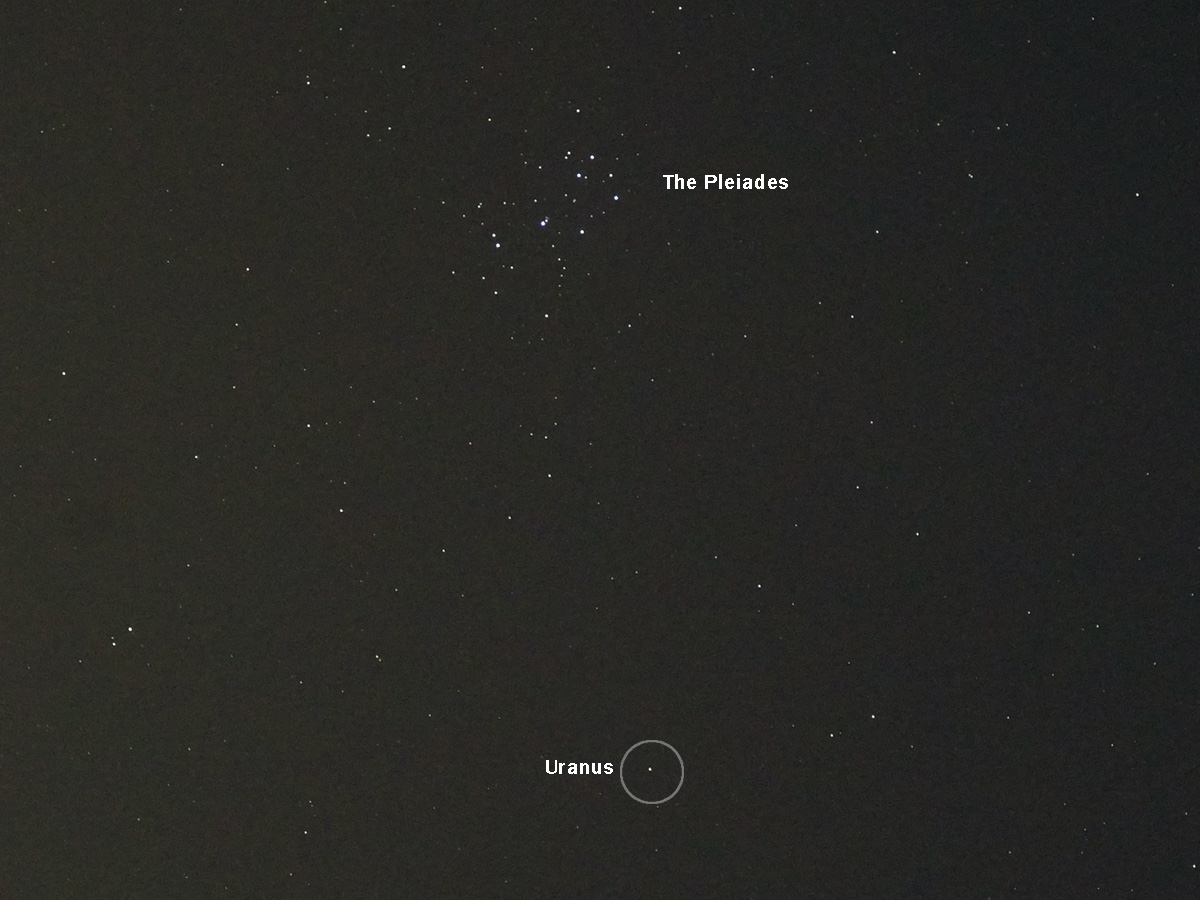
Uranus is so far away that it moves only slowly around the Sun, taking 84 years to do so. That means that it will stay in roughly the same position for weeks at a time. At the moment it appears to be moving from left to right across our field of view, although its movement around the Sun is from right to left. This is because the Earth moves much faster in its orbit, so by comparison Uranus appears to be moving backwards.
It will continue to do this until the beginning of February, moving along the line shown below, and by mid-December it will be alongside the pair of stars that are currently to its right. So take a look from time to time and you can witness its slow movement for yourself. From early February 2026 onwards it resumes its slow plod eastwards, and this time next year it will be towards the left-hand side of the picture.
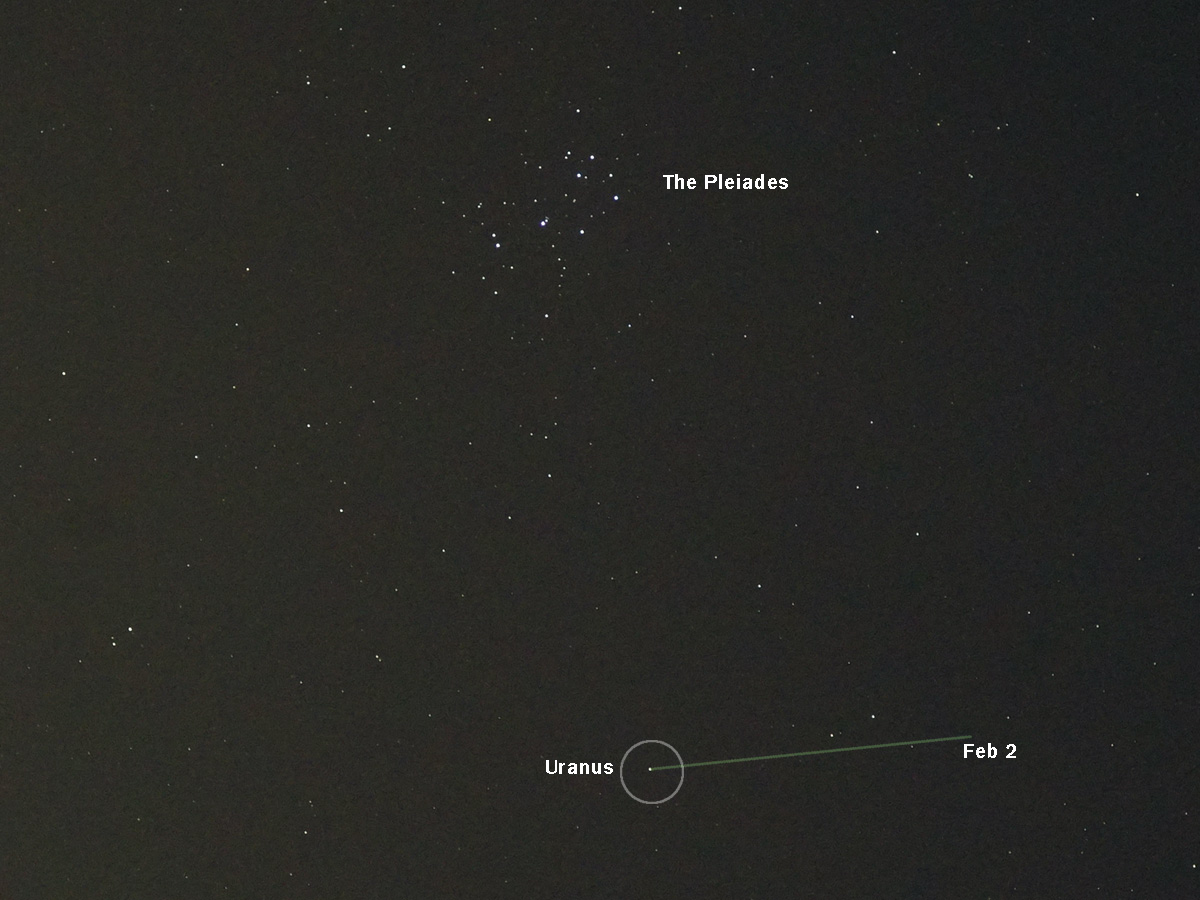
If you wondered why we said that the left side of the picture is to the east, rather than to the west as if it were on a map, this is because you are looking up in the sky and not down at the ground. If you are facing south, west is to your left.