Update 12 December 2018
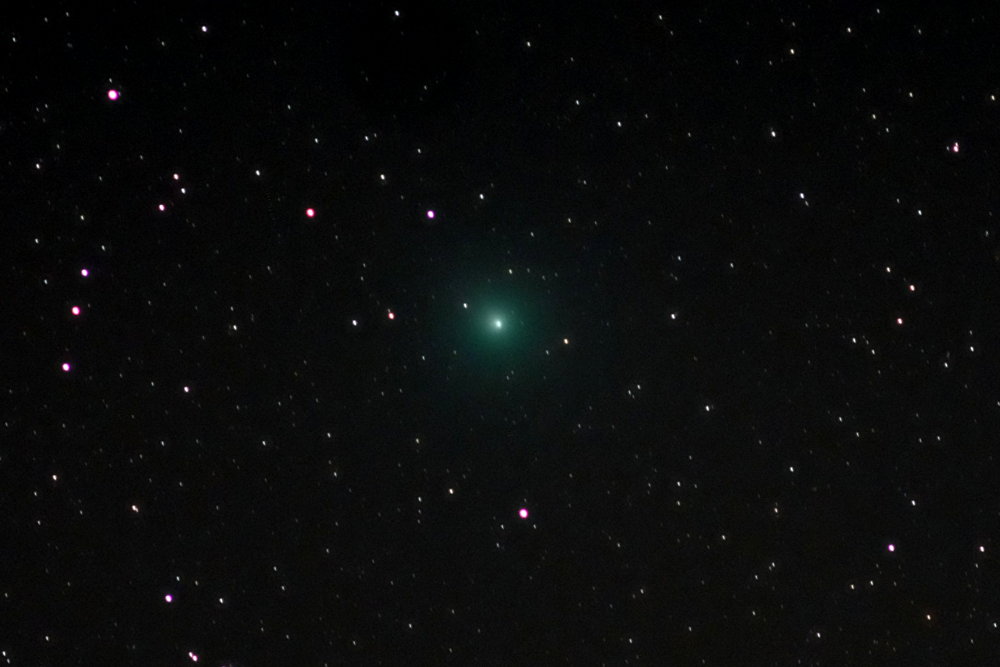
You may have heard that a ‘giant comet’ is visible to the naked eye at the moment – but where is it, and where should you look? The stories are absolutely true. Comet Wirtanen is quite close to us and appears as large in the sky as the full Moon. But – and of course there has to be a ‘but’ – you’ll need crystal-clear and dark skies to see it with the naked eye from typical UK locations, though with binoculars it will be a bit easier to spot.
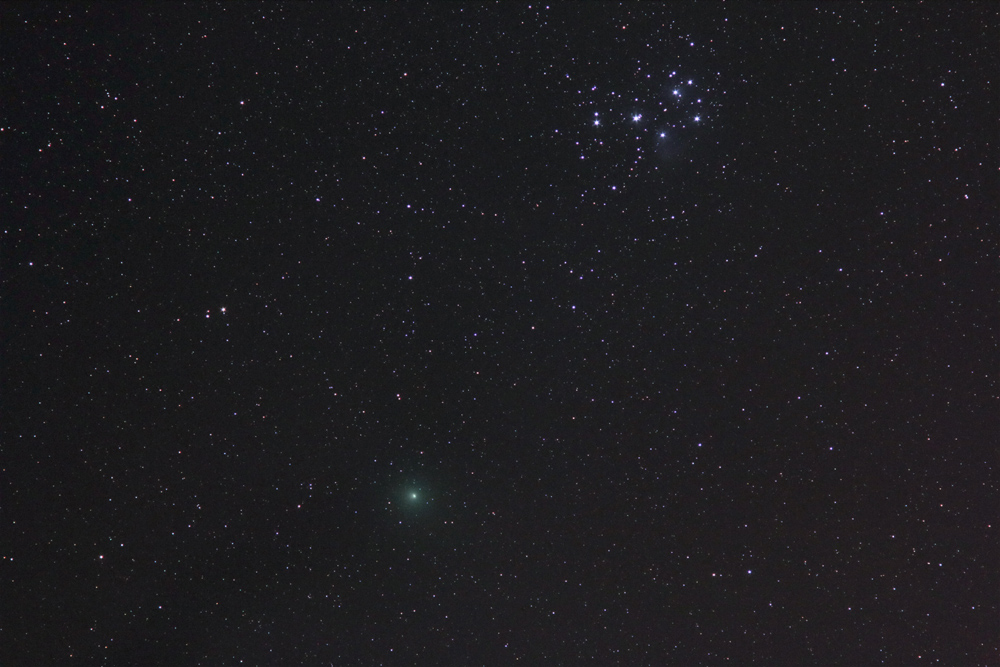
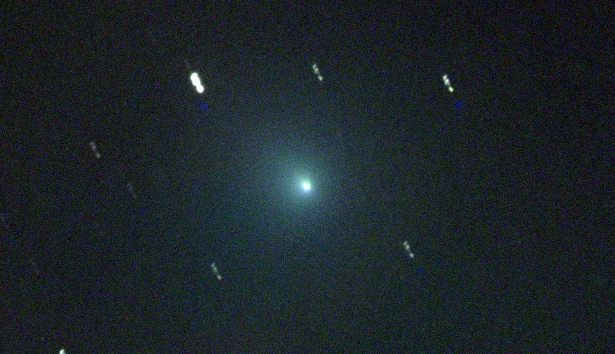
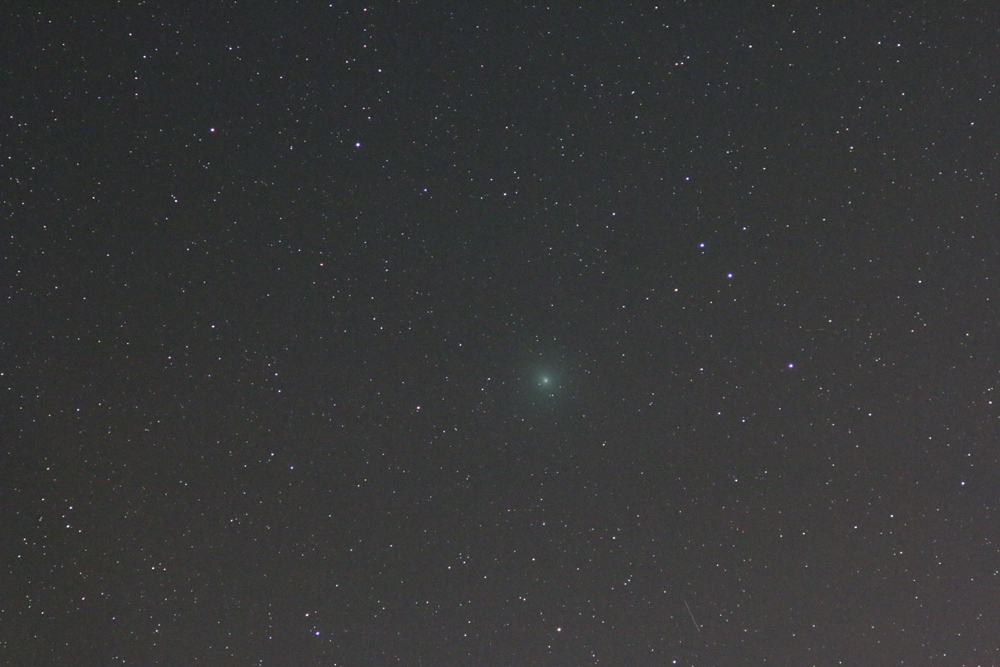
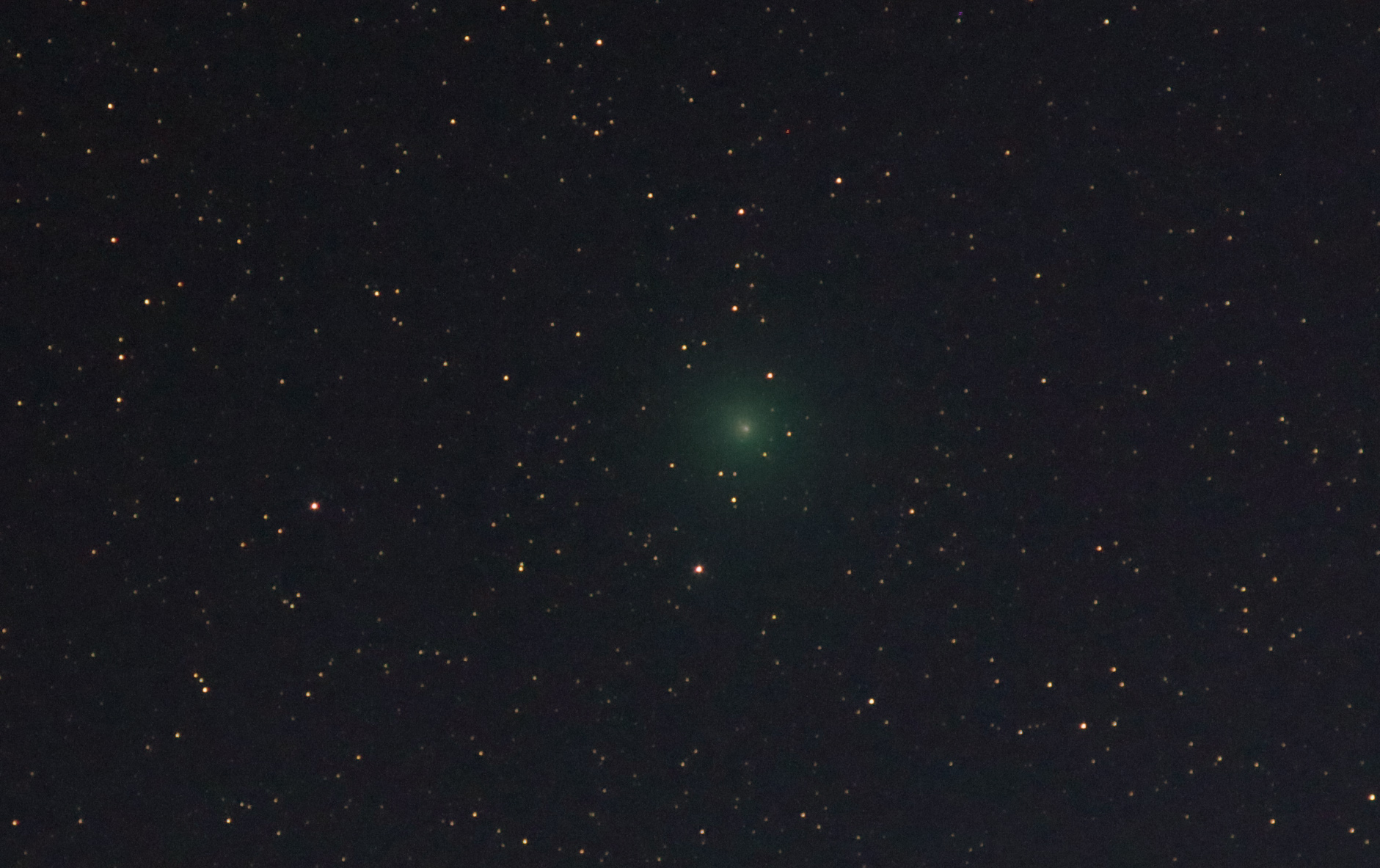
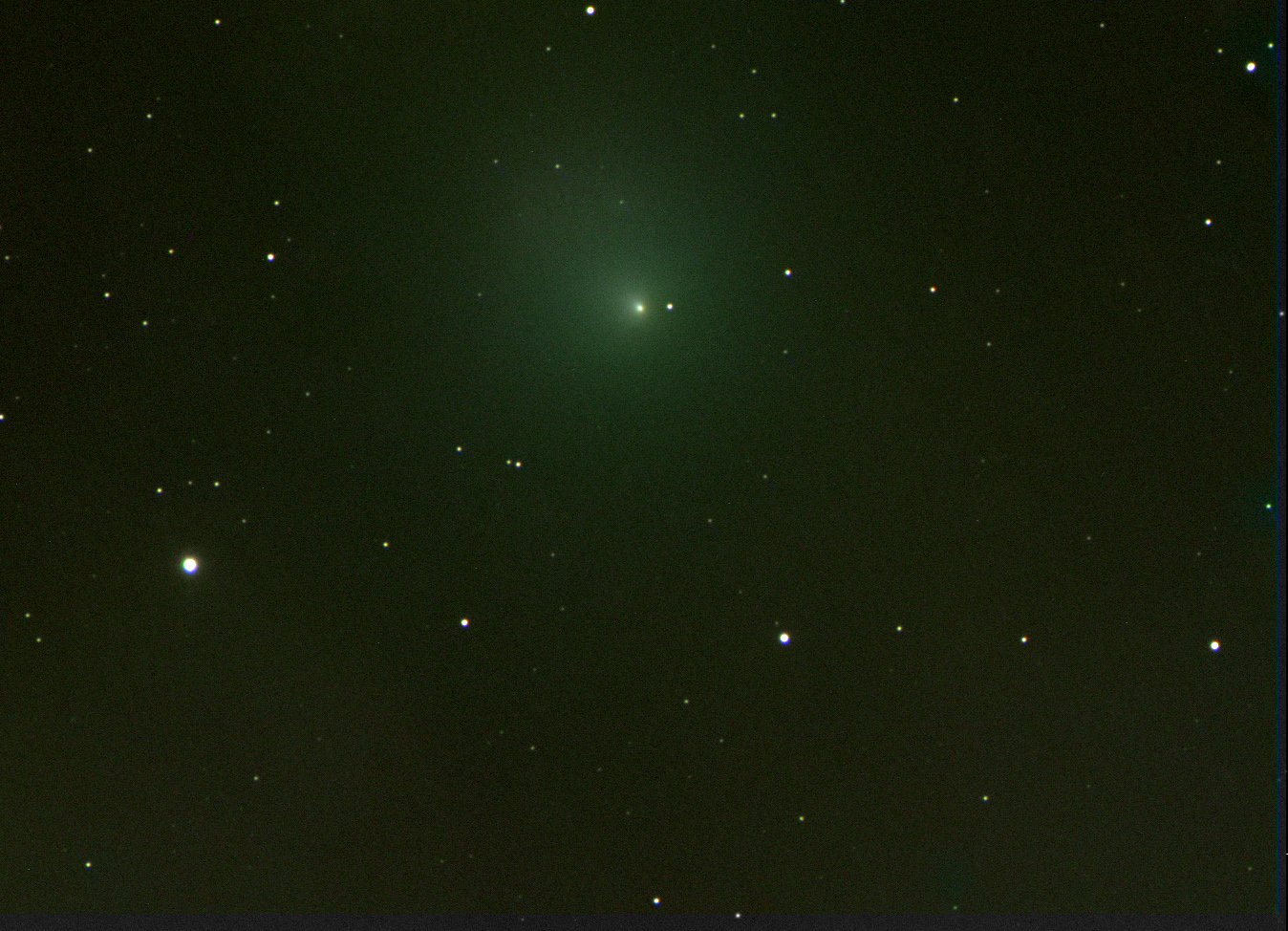
However, don’t expect to see a brilliant object with a great streaming tail. This one looks like a faint glowing ball, with hardly any tail at all. Having said that, this comet is quite active, and there’s a chance that it could flare up and become more spectacular.
The comet moves slowly against the background of stars night by night, so if you see something whooshing through the sky it’s something else, such as a shooting star or even an aircraft! It’s currently getting higher in the sky, and by mid December it will be close to the well-known Pleiades star cluster, or Seven Sisters, which are visible even from city skies. But the Moon will be getting brighter at this time as well, so it’s a trade-off between the position of the comet and the brightness of the Moon. If you live in a city or suburbs, you’ll really need to get out into a darker location to be able to see it properly.
Where and when to look
By now the comet is getting close to easily recognised star patterns so you’ll need to pick out these constellations first. It’s highest in the sky around 10 pm but there’s no need to wait until then – an hour or two beforehand will still be OK unless your skies are really poor.
Our map shows the sky looking south at around 10 pm as seen from the UK. The constellation of Orion is a good guide to finding your way around.
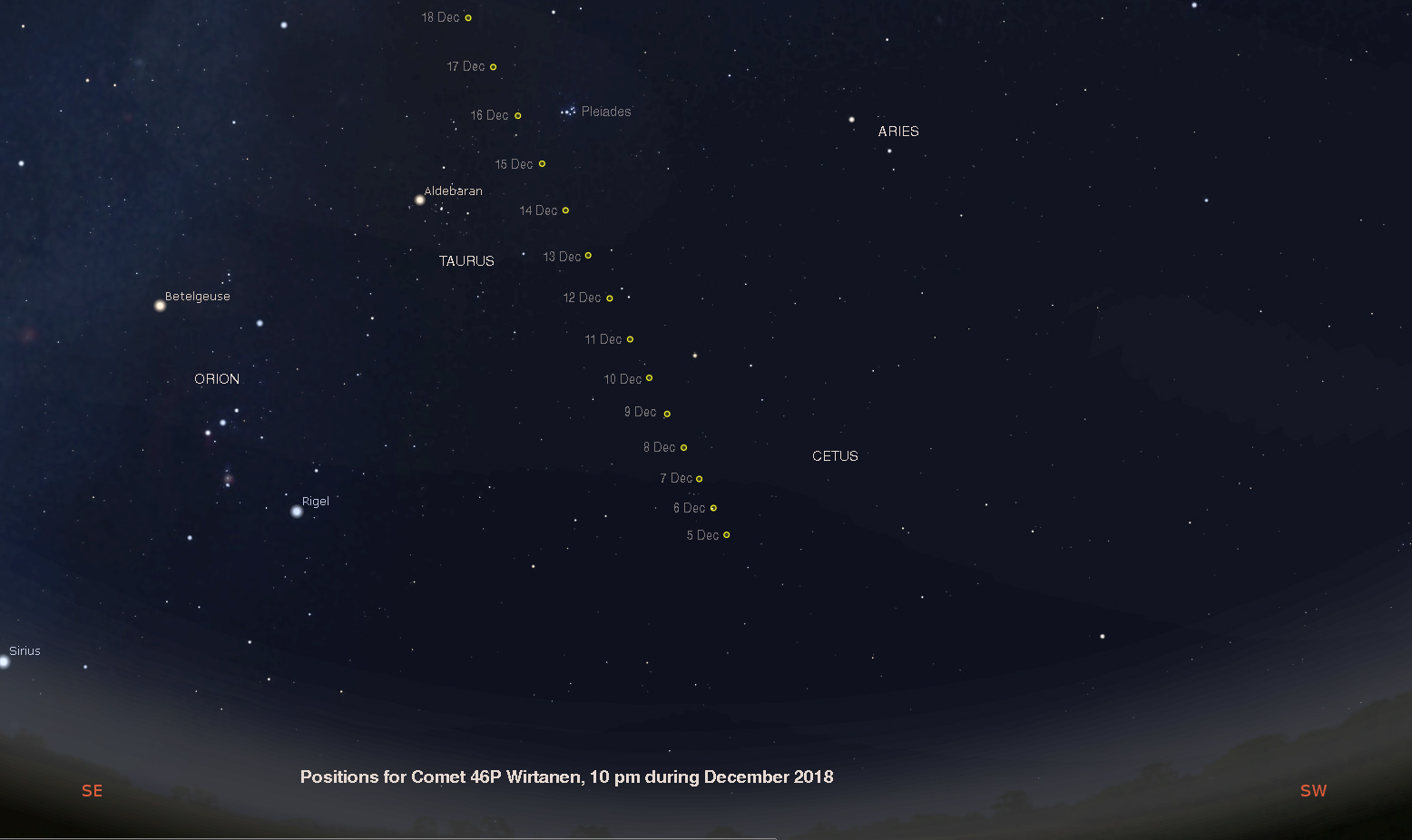
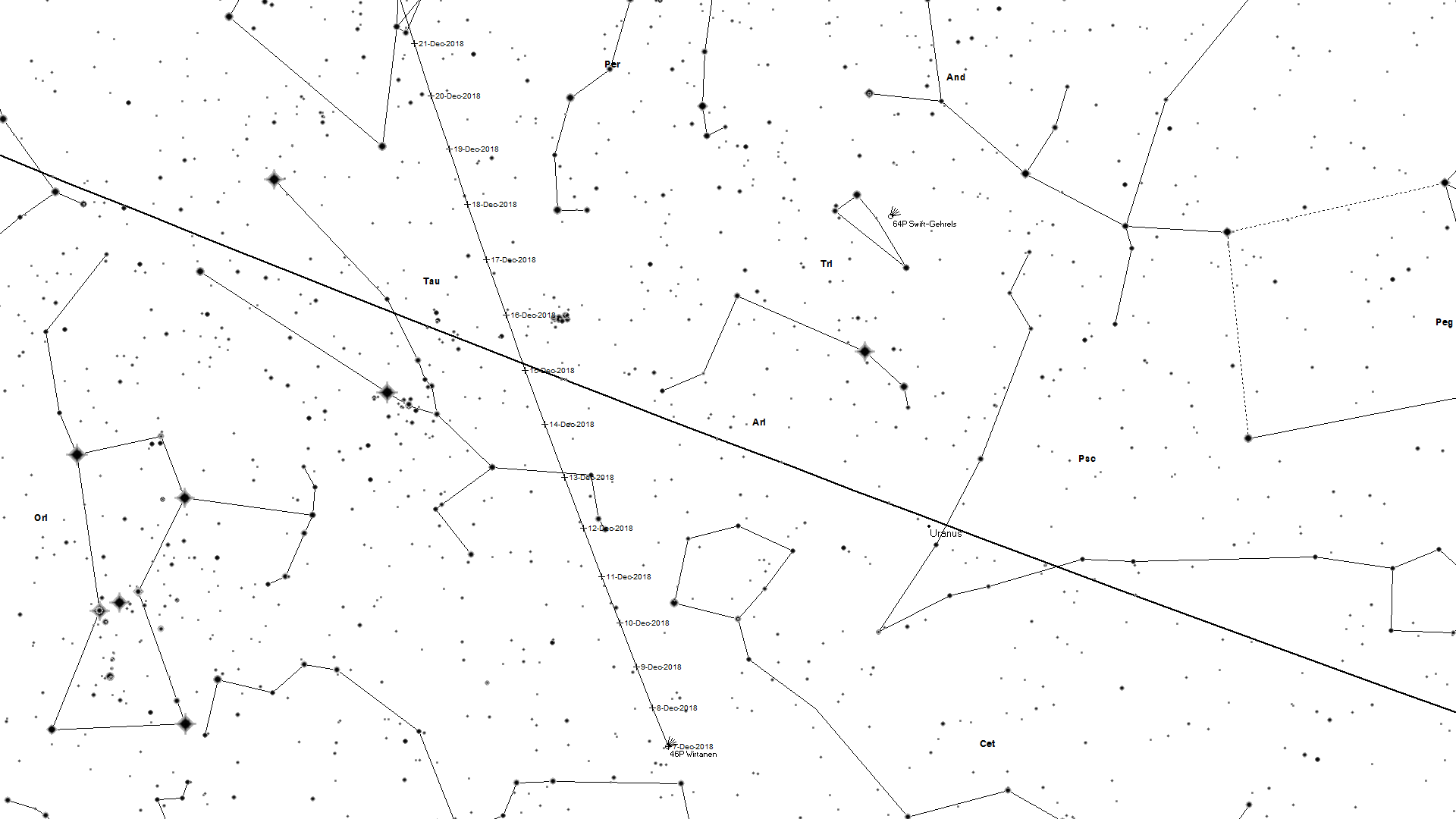
Note that the positions are shown for 10 pm each evening. By about 12 December the comet should be bright enough and high enough in the sky to become visible in binoculars though probably not the naked eye, as seen from typical UK country areas, but it is quite large and diffuse so it might not be easy to spot if your skies are hazy or light-polluted. You’ll need to compare the map with the real sky in detail, and ‘star-hop’ using your binoculars to find the correct position, as it won’t be obvious. The Moon will be in the sky at 10 pm after 14 December, so although the comet will be brightest on 16 December, it might be more easily visible before that date. After 17 December the Moon starts to get particularly bright and close to the comet, making it even more difficult to see.
The best instruments for viewing the comet will be binoculars or a telescope at its lowest magnification – around 40 times or less, giving the widest field of view. If you dig out that telescope you got for Christmas a few years ago but never really used, here are some tips for getting it to work properly.
For updated info, also see our Comet Section news page.
Photographing the comet
Easier than you might think, if you have a camera that will give exposure times of several seconds (and know how to use it). This is more about knowing how to operate your camera than anything else, so find the instruction manual and work out how to give night exposures. Tip: these are not the same as the 2-second or 10-second delay settings that allow you to get into the picture before it takes the shot.
You’ll need a fairly high ISO setting (sensitivity) – try 1600 to start with. Try an exposure of 5 or 10 seconds, at full aperture (f/3.5 or thereabouts) and focused on infinity. Use a medium or wide focal length to start with, and close in on the comet with a telephoto once you’ve found it. The camera has to be held rock-steady, so use a tripod if at all possible. The more telephoto the setting, the harder it is to keep it still without a tripod. You can find more tips on using a digital camera here.
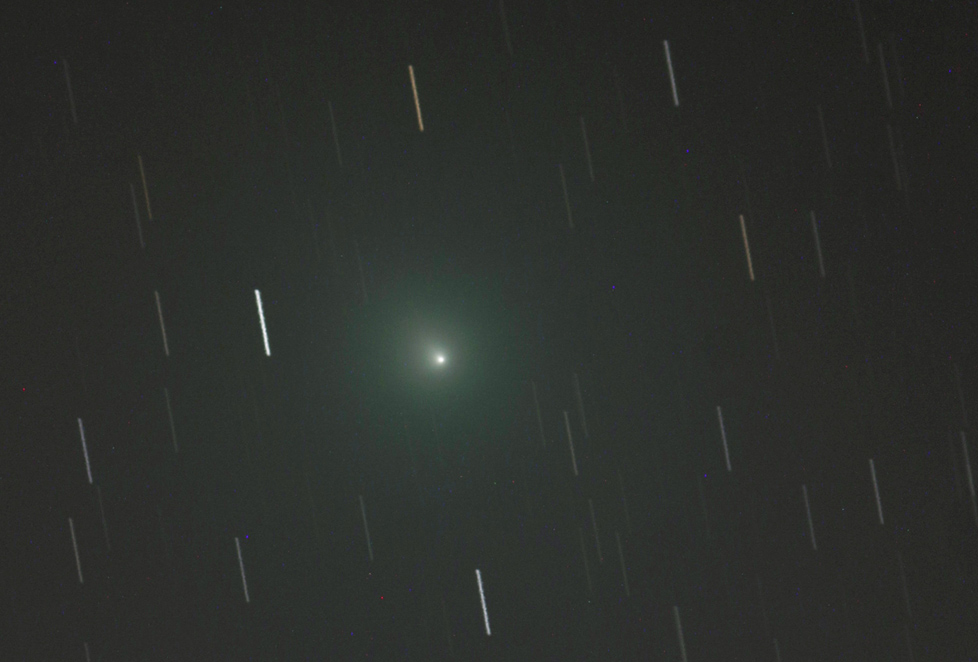
Most of the photographs on this page were made with cameras on tracking mounts, but if you don’t have one of these, and use a fixed camera, increasing the exposure time or the focal length will result in the stars and comet trailing as the sky moves.
About Comet Wirtanen
The comet was discovered by American astronomer Carl Wirtanen 70 years ago, and has been steadily orbiting the Sun every 5.4 years. It’s not a particularly large comet, but just happens to be in an orbit that this year brings it fairly close to us. There are many such comets in the solar system. A comet is a chunk of rather dirty ice left over from the origin of the solar system some 4.6 billion years ago. There is a lot of ice out in the far reaches of the solar system, and most of the satellites of the outer planets are icy. Comets occasionally get diverted in towards the Sun, where they orbit for thousands or millions of years slowly getting smaller as the Sun’s heat gets to them, releasing the ice as gas. This comet is about 1.2 km across.
We have seen several comets in close-up from space probes, probably the most famous being the Giotto probe to Halley’s Comet in 1986 and the Rosetta probe to Comet 67P Churyumov–Gerasimenko in 2014. Actually, Rosetta was originally intended to go to Comet Wirtanen, but it wasn’t ready in time.
Threat to civilisation as we know it?
No, although this comet will come comparatively close it’s still around 12 million km away – that’s about 100 times farther away. And there’s no way it can suddenly decide to veer off towards us. You’ve been watching too many disaster movies.
Gallery
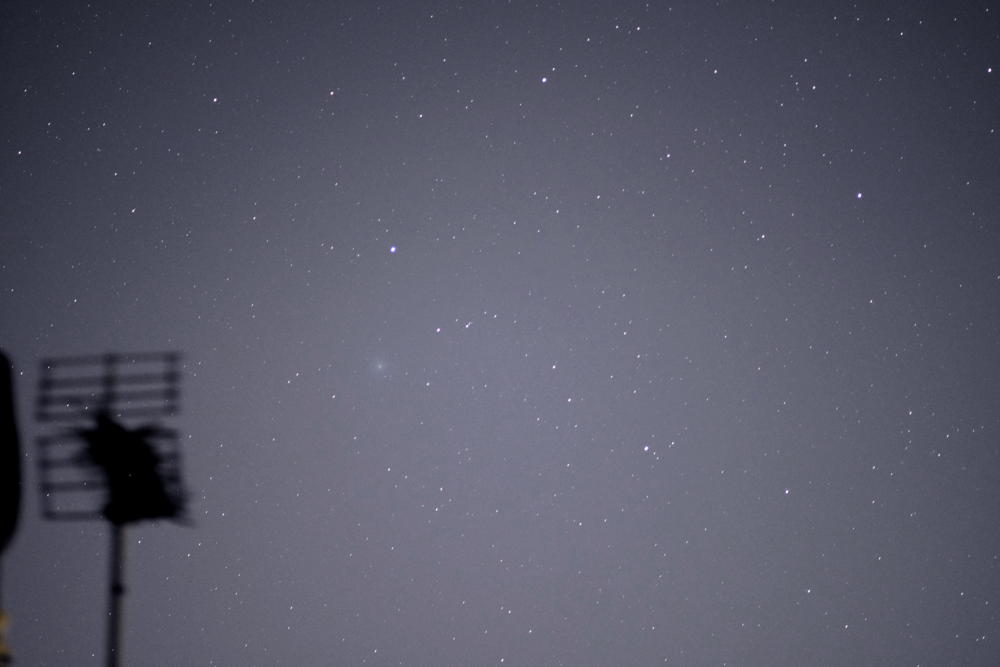
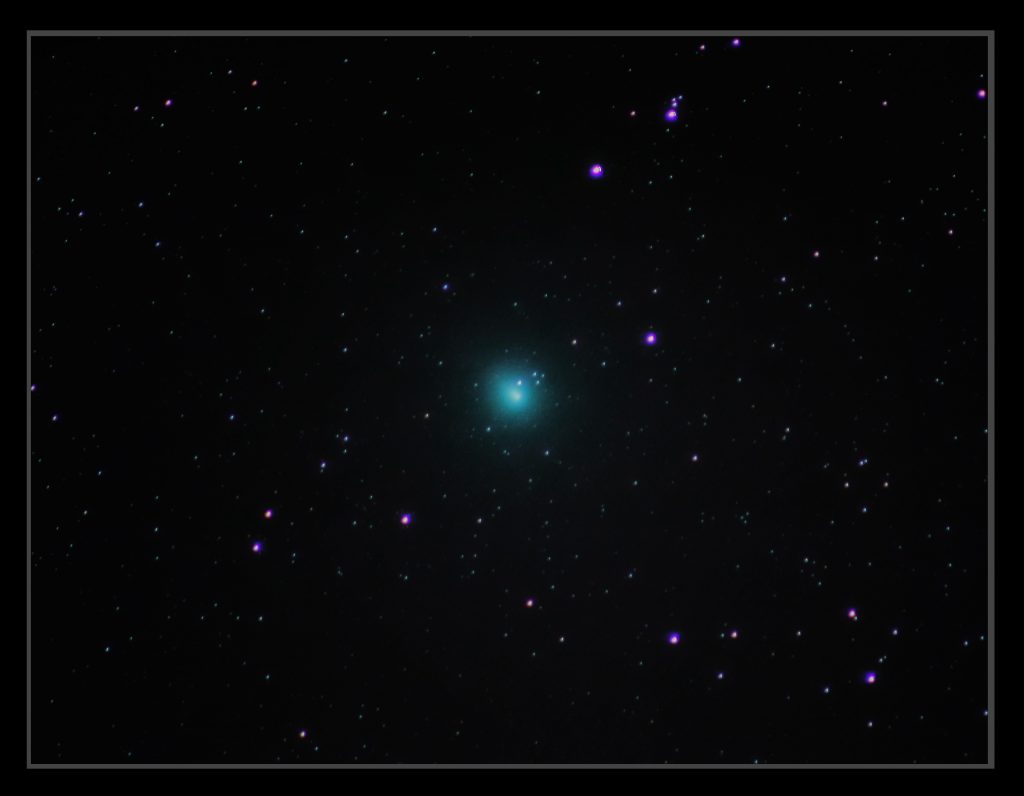
Above: Comet Wirtanen 46P photographed from Shap, Cumbria, late on Dec 3rd, using a Canon 700D DSLR with a 135mm lens, on a sky-tracking. The image is a processed stack of 30 individual images. Photo: Stuart Atkinson