Everyone notices the times of sunrises and sunsets in winter in the UK. For months, the Sun has been high in the sky when all but the earliest of risers get up. But in December and January, many people get up and travel to work or school and back in the dark. Here are some facts about winter sunrise and sunset times that you might not know.
Amateur astronomers probably appreciate winter more than most people, because there are more hours of night. They can get out there and start observing about teatime and not miss any sleep!
Why we get winter
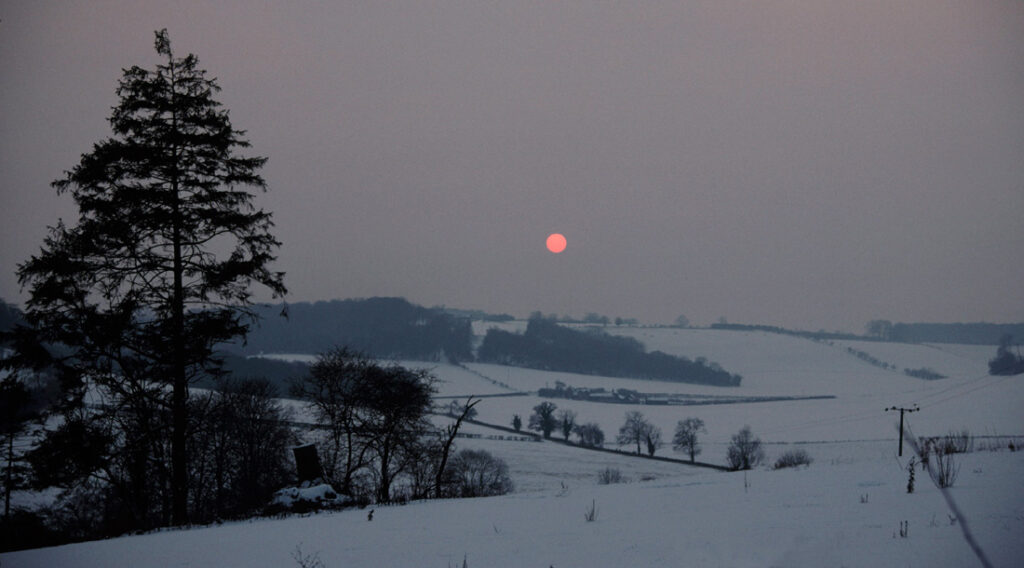
Everyone knows this. It’s when the days get shorter, the nights get longer, and it gets colder. Something to do with us tilting away from the Sun.
Yes, partly right. Winter in the UK is when the Northern Hemisphere of the Earth is tilted away from the Sun. Actually the Earth doesn’t keep on changing its tilt all the time but it’s Earth movement around the Sun in its yearly orbit that makes the changes.
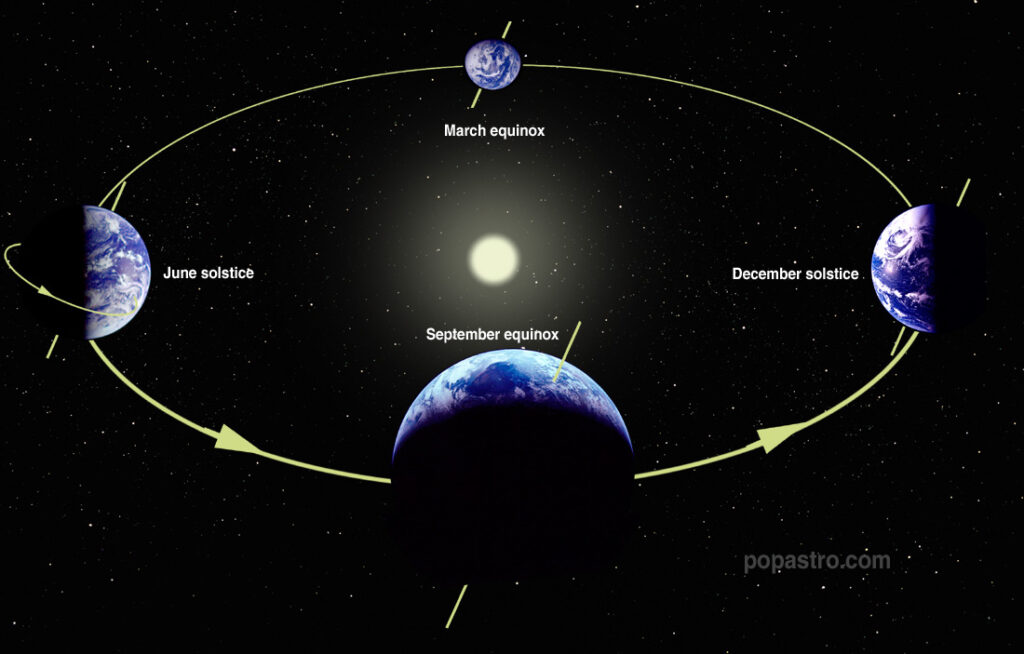
Are we farther away from the Sun in winter?
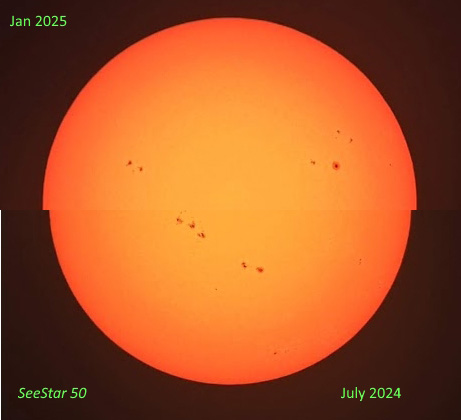
No, in fact Earth is currently closest to the Sun in January and farthest in July! Our closest to the Sun in 2026 is on 3 January, and the farthest is on 6 July. This is because the Earth’s orbit around the Sun is not a circle but an ellipse. We are three per cent closer in January, so the Northern Hemisphere winter isn’t as cold as it might be. Here are two photos with the same telescope of the Sun in January and in July, taken by SPA member Owen Gwynne.
When is the shortest day?
The shortest day in 2025, the winter solstice, is on 21 December. In some years it is on the 22nd, as the date can change because of leap years. In the 2080s and 2090s there will be a few years when it is on 20 December, but only quite young readers of this need concern themselves about that.
When is the latest sunrise?
Actually because of that elliptical orbit we mentioned, the latest sunrise is not on 21 December but on 1 January, in 2026. So the mornings will continue to get darker until the end of 2025. The earliest sunset is on 12 December, although it is virtually the same between 7 December and 17 December so you won’t really see much difference. The biggest difference comes from the cloud cover on any particular day.
The actual times vary depending on where you are in the UK. Sunset on 12 December is at 15:47 in Dover, 15:18 at John o’Groats and at 16:21 at Land’s End. In Dover, sunrise on 1 January is at 7:58 while at Lands End it is 8:22 and at John o’Groats 9:03.
What is a solstice?
The solstice is when the Sun appears to rise and set in the same place for days in a row, at the extremes of its rising and setting along the horizon, which happens in June and December. In December it rises in the south-east and sets in the south-west as seen from the UK.
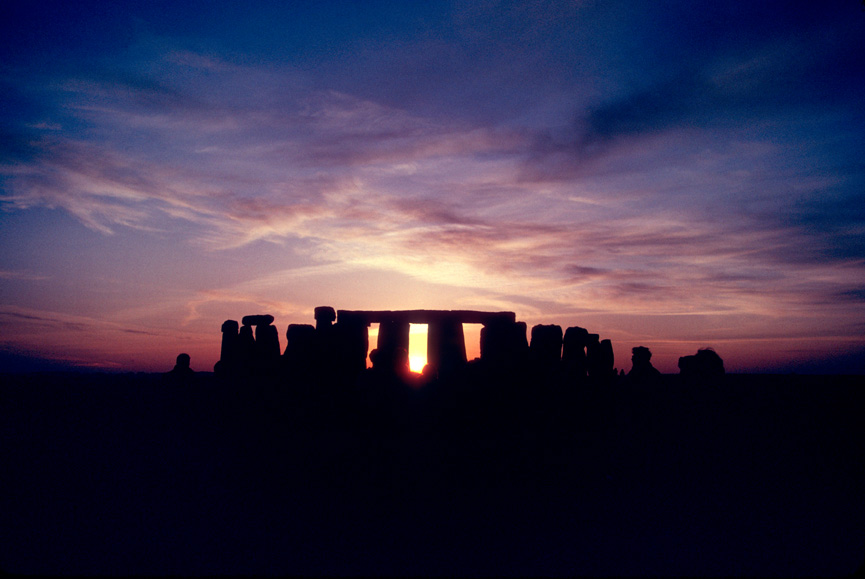
The shortest day has been commemorated in the UK for thousands of years, as archaeology in the area of Stonehenge has shown. Winter feasts were held at Durrington Walls near Stonehenge, and the stone circle is aligned on the midwinter sunset as well as the midsummer sunrise. These two directions are exactly opposite each other.
For the Romans, the festival was known as Saturnalia. The midwinter celebrations have now morphed into Christmas – although there is nothing in the Gospels to say when Christ was born.