
As the Moon moves through the sky, it’s constantly passing in front of stars. On the evening of Tuesday 1 April it goes in front of the beautiful Pleiades star cluster The Seven Sisters), as seen from the UK, giving the opportunity to see it hide the brighter stars of the cluster using binoculars or a telescope. The stars disappear abruptly as the Moon covers them.
The Moon will be a thin crescent, making the sight easier to view than when it is at a larger and brighter phase. So this will be a great sight to observe. The Moon hiding a star is known as an occultation. The brightest star in the Pleiades to be occulted is third-magnitude Alcyone, and this event takes place at around 22:45 BST, but the exact time varies by quarter of an hour or more depending on where you are. The whole sequence of occultations begins at around 21:45 BST and ends at about 23:30.
The Moon will be fairly low in the sky at the time so make sure you have a low horizon to the north-west where the event will take place.
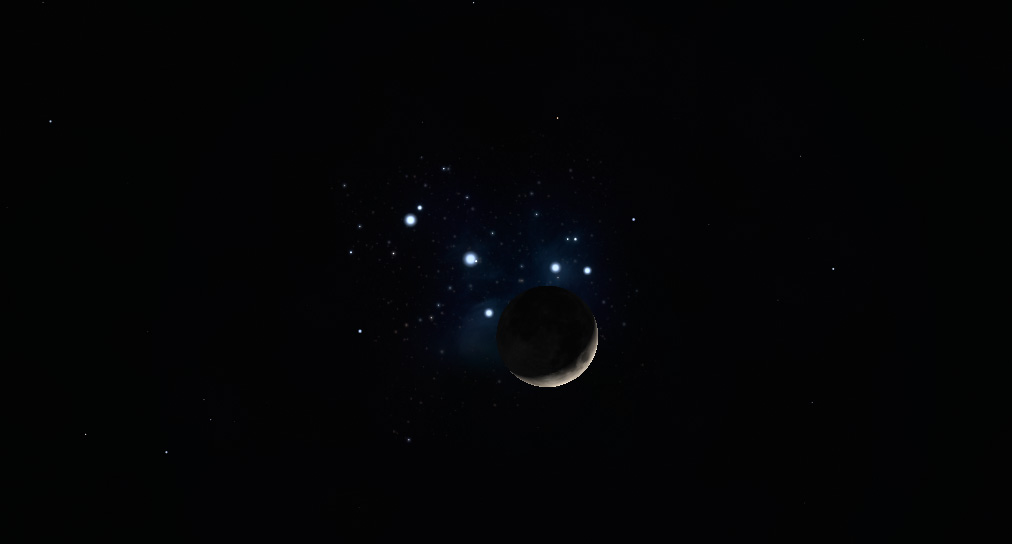
For some favoured observers, two stars, Maia, and Celaeno, will not just be occulted – they will just be grazed by the upper edge of the Moon. This event, known as a grazing occultation, is a very special sight. As seen from a very narrow track across the UK, the star will wink out, then reappear, then disappear again as it is peeps in and out of mountains and valleys on the dark northern edge (known as the limb) of the Moon.
The line of the graze of Celaeno will be visible to those who live on a line extending from Beadnell in Northumberland to Fort William in Scotland, at about 22:10BST. That of the brighter Maia extends across the southern half of the UK, crossing south and west London, and passing to the north of Oxford and through Worcester and finally crossing the Welsh coast near Pontlyfni, south of Anglesey, as shown on the map below based on Google Earth. It occurs around 22:41 BST.
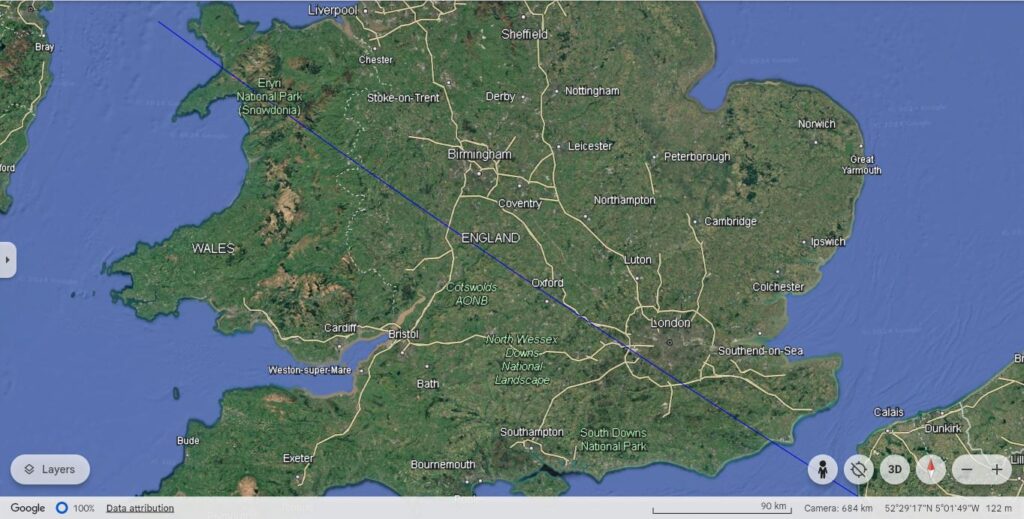
To plot these lines in detail for yourself, visit this page in our Occultation Section and download the .kmz files linked there to your computer. Open these files in Google Earth and you will be able to view the lines.