
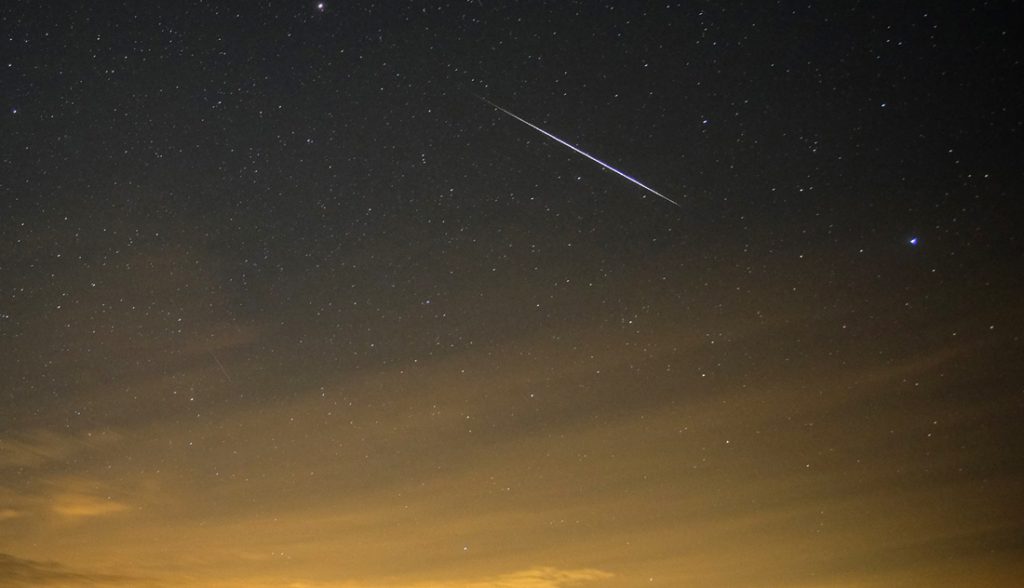
For astronomers, New Year fireworks come in the form of the Quadrantid meteors. Each year around 3–4 January one of the best meteor showers of the year occurs, and 2022 promises to be a good year, weather permitting.
How many?
You may hear that ‘up to’ 120 meteors an hour are expected, and that is the official ‘zenithal hourly rate’. But hold on – that’s the technical maximum that you might see under ideal conditions. Although the 2022 appearance is likely to be good, as the Moon won’t be in the sky (it’s nearly new Moon), very rarely do you get perfect conditions. A bit of light pollution will wipe out many of the fainter ones, and the rates increase after midnight as the radiant – the point in the sky from which the meteors appear to radiate – rises higher in the sky. With clear skies and in a country area you could see 50–60 an hour at this time.
The Quadrantid meteors have a quite narrow peak of activity, which may occur about 9 pm UK time, when the radiant is at its lowest as seen from the UK, but the exact timing is uncertain. Meteor observers will be out in force, given clear skies.

Where to look
Although the radiant is in the north-eastern sky, meteor observers find that the best place to look is in mid sky about 45 degrees away from the radiant itself. So look towards the north or east for the best chance of seeing meteors, although any direction will do if these directions are not available to you. There is no particular area of the UK that will see more meteors, but try to get away from city and suburban areas if you can.
Look at the SPA’s Meteor Section website for more information about the Quadrantids and how to observe them.