Comet C/2019 Y4 (ATLAS) is breaking up. The comet was expected to become visible to the naked eye in May.
First signs were reported on 5 April by observers in China who had been monitoring the comet. What had previously been a condensed core to the comet (known as a pseudo-nucleus) appeared elongated, and aligned with the axis of the tail. This behaviour is consistent with a major disruption of the nucleus, according to the observers.
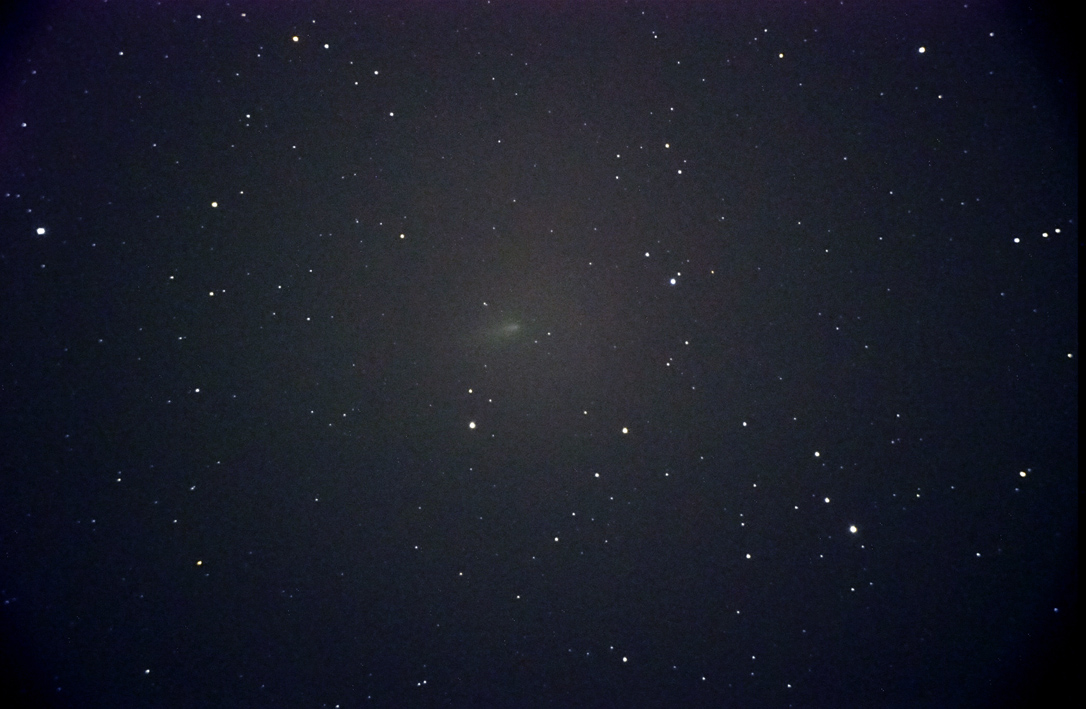
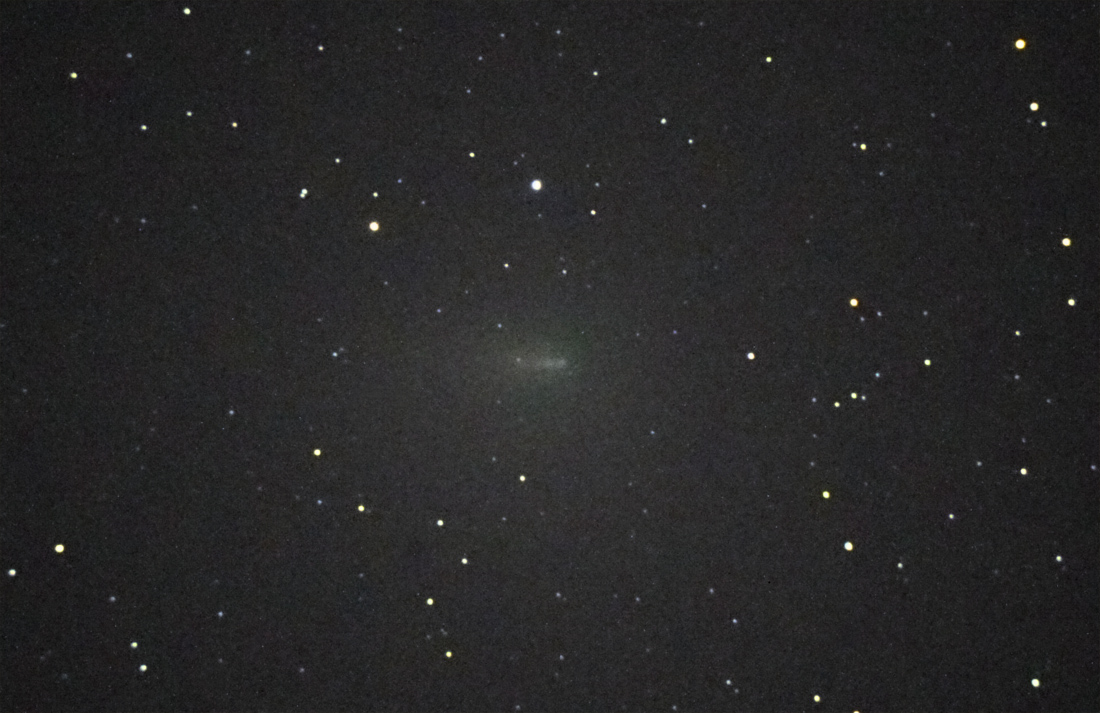
Photographs taken from the UK on the evening of 6 April confirm the changes, as shown in the photos below taken with the same instrument and settings eight days apart.
Observers in Japan, reported on CBET4744, had reported ‘unusual changes’ in the orbit of the comet, due to what appear to be what are termed non-gravitational effects – that is, due to such phenomena as significant gas release. The Bureau issued a new orbit for the comet, but the object now appears to be diverging from the revised positions.
It looks as though the hoped-for comet spectacular in May won’t now be occurring.
See updates below

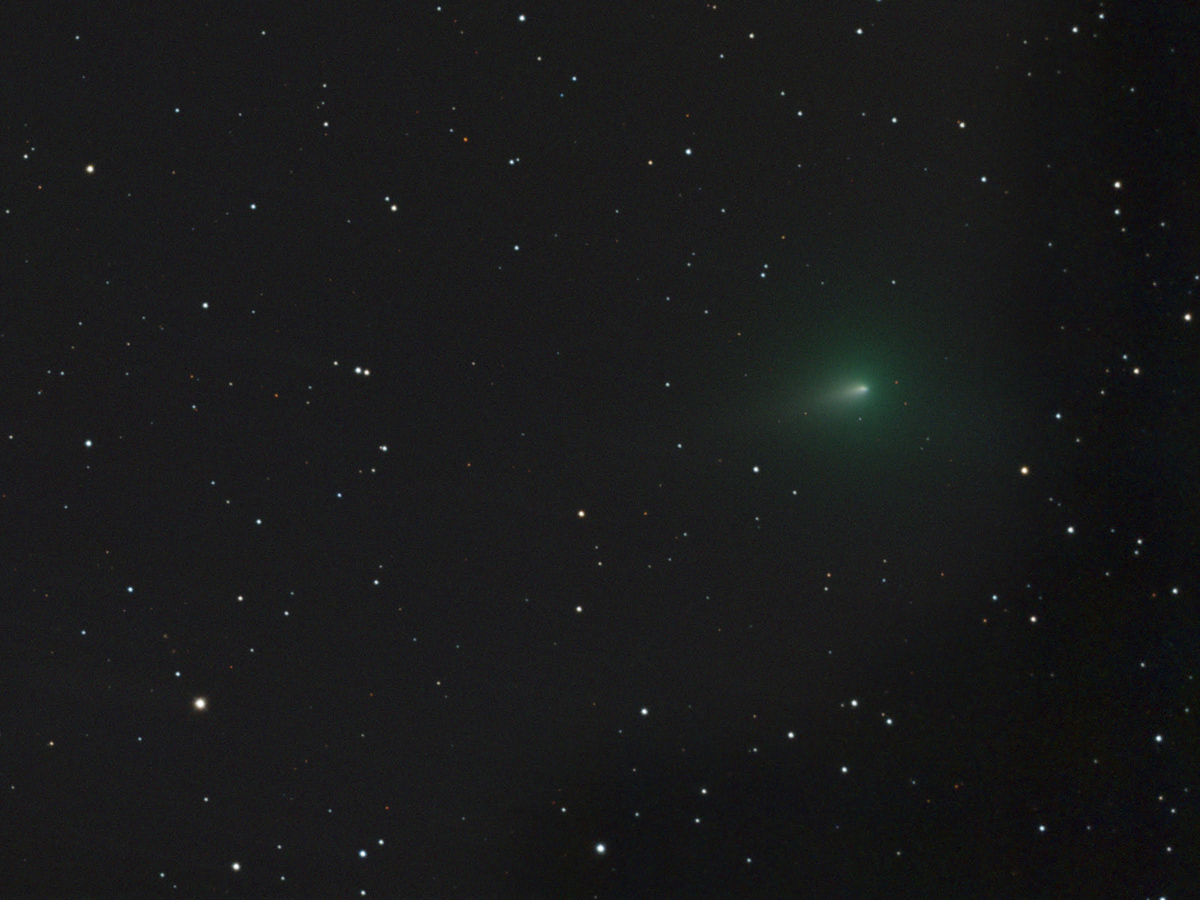
On 3 April, before the breakup became evident, the comet was still displaying a coherent pseudo-nucleus, though with some elongation, as shown in this image by David Davies near Cambridge.
Update 13 April
The Central Bureau for Astronomical Telegrams reports that ‘CCD images obtained by many observers have shown that the nucleus of this comet has fragmented, causing the comet to lose its sharp central condensation and spread out in clumps of diffuse light that is typical of comets falling apart. ‘ They go on to quote comet expert Zdenek Sekanina as saying that ‘Perihelion survival of C/2019 Y4 is questionable but not ruled out.’
Update 21 April
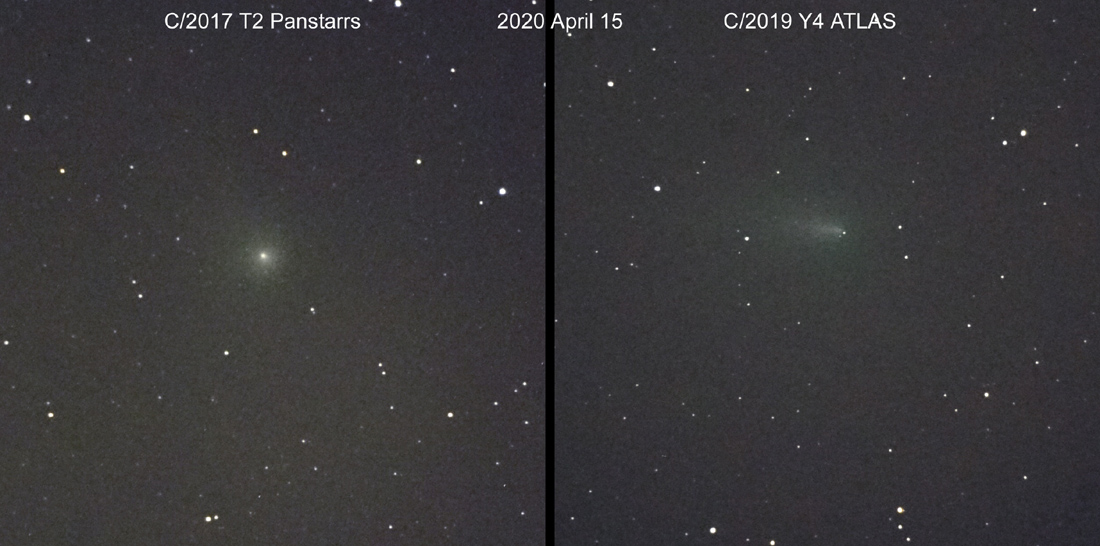
Comet ATLAS continues to fragment, although it is still visible as an elongated object at around magnitude 8. The photographs below show it in comparison with the nearby comet C/2017 T2 Panstarrs, with the same instrument and exposure details.