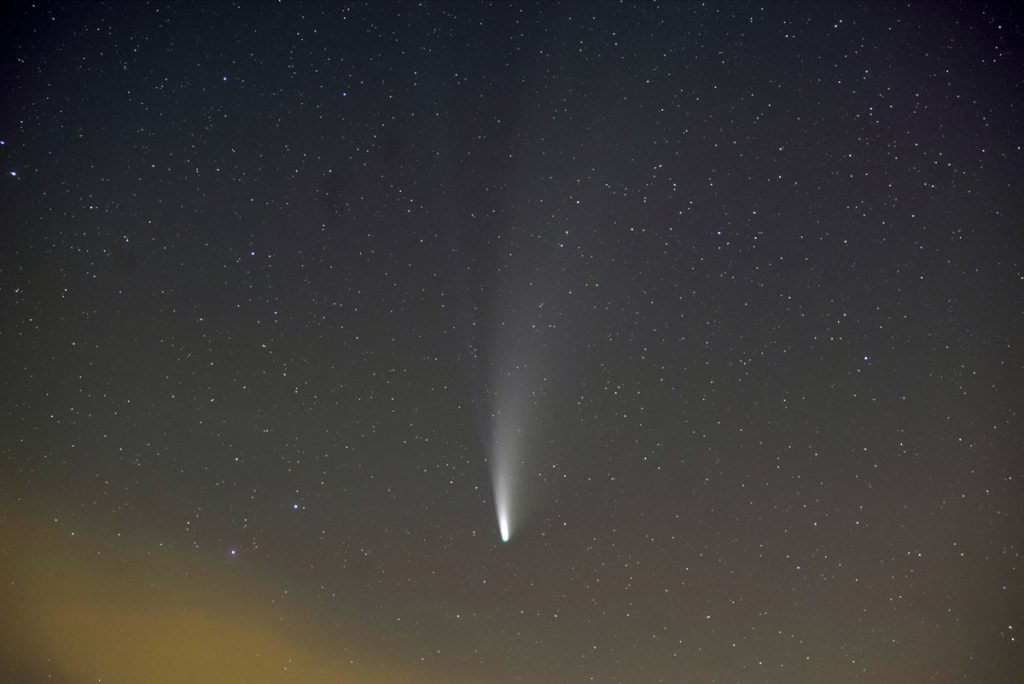
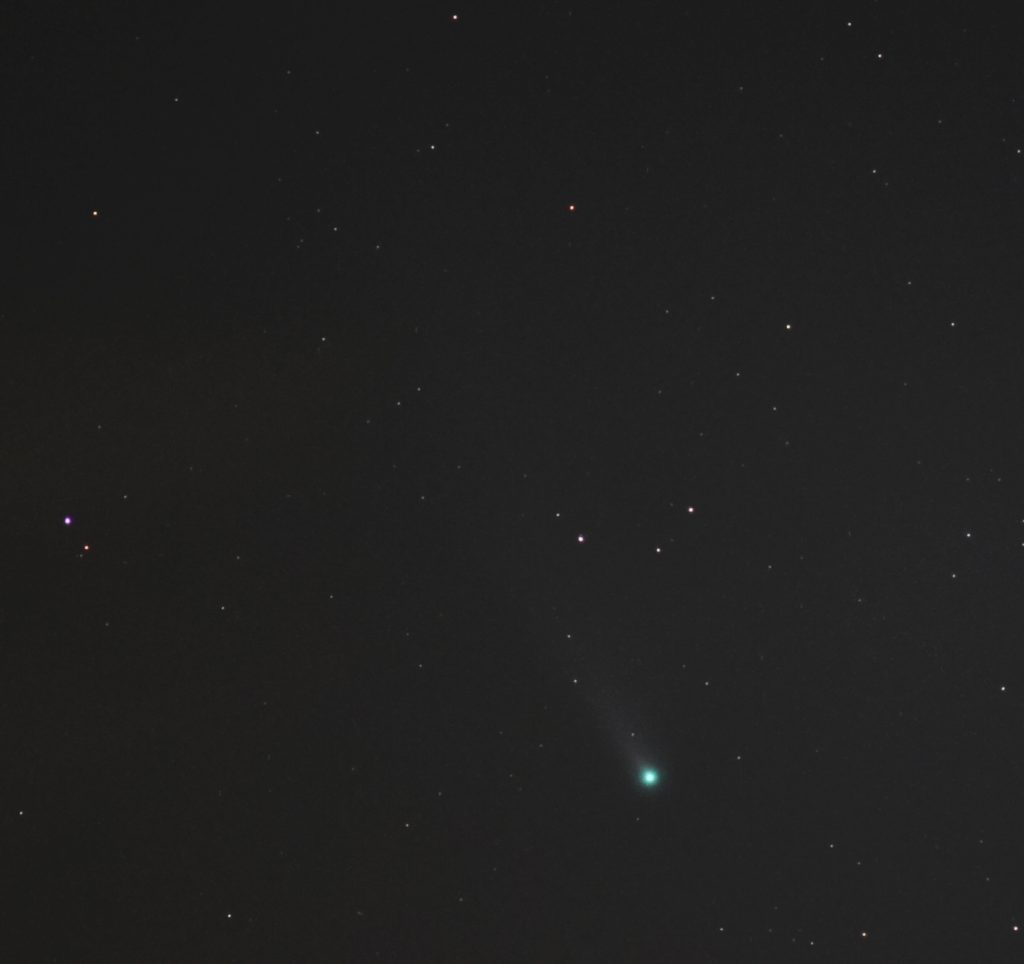
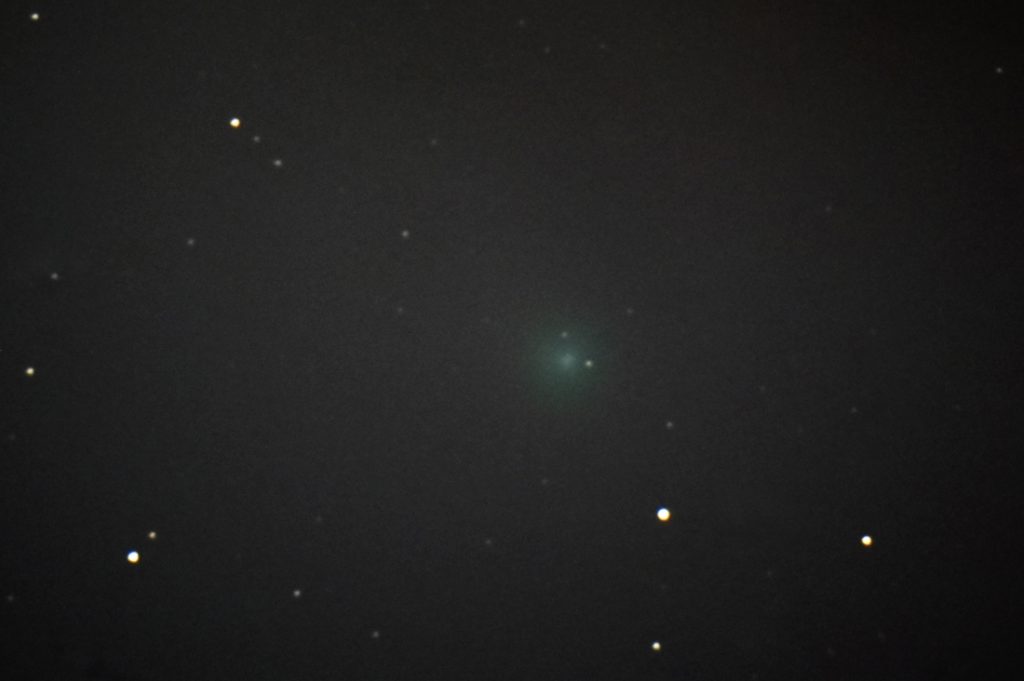
There’s a bright comet in our skies, which is visible to the naked eye during July in the evening and early morning sky.
You can find Comet C/2020 F3 NEOWISE low in the north-western sky after about 11 pm BST when the sky gets dark, and best visible about midnight when the sky is darker. It’s displaying a resplendent tail which sticks up from the horizon, and it should remain visible throughout July, although it will get fainter but higher in the sky. The object remains quite small in the sky, so binoculars will give the best view.

This comet is the brightest to be seen from the UK since the brief appearance of Comet McNaught in January 2007. It follows the disappointment of two comets earlier this year which broke up as they neared the Sun.
However, Comet NEOWISE* has survived its perihelion passage, as it was closest to the Sun on 3 July. It is getting closer to Earth, although the predictions are that its brightness will fade as it gets farther from the Sun. Its closest point will be on 23 July, when it will still be over 100 million km from us – so no risk of a collision, if you were wondering!
You can photograph the comet without special equipment, although because it is small phone cameras will not give a good result. Use a good camera on a telephoto setting – around 200 mm on a DSLR camera – and give exposures of no more than a second or two at a fairly high ISO rating. If possible, subsequently stack the separate exposures using software such as Photoshop, Affinity, or the free Deep Sky Stacker program, so as to overcome any ‘noise’ resulting from the high ISO.
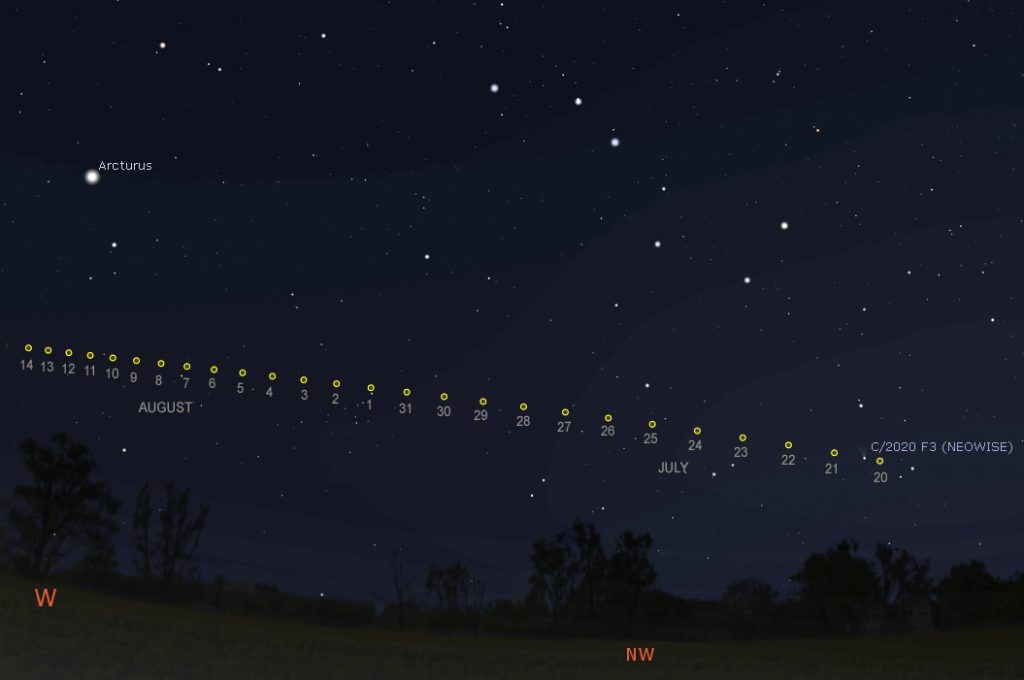
Here is a chart showing how the comet’s position changes during July and August, with the horizon for midnight BST. Use the well-known star pattern of the Plough in the north-western sky to judge where to look. The sky moves from left to right during the course of the night, and the comet is at its lowest position in the sky, due north, at 1 am. After that it starts to get higher again with the sky starting to get brighter about 3 am.
The comet is predicted to fade in brightness, and will probably be below naked-eye visibility by the end of July.
*Where does the name come from? NEOWISE is a satellite designed to survey the sky in infrared wavelengths. It has discovered thousands of asteroids, many of which are potentially hazardous to Earth, several nearby brown dwarf stars and 28 comets to date.
Comets are named after the discoverer, so each comet has the name NEOWISE. However, the full designation lists the year and week of discovery, so to prevent confusion the full name, in this case C/2020 F3 (NEOWISE) should be used. There was also a C/2019 F3 (NEOWISE), for example, but that was very faint.
Gallery
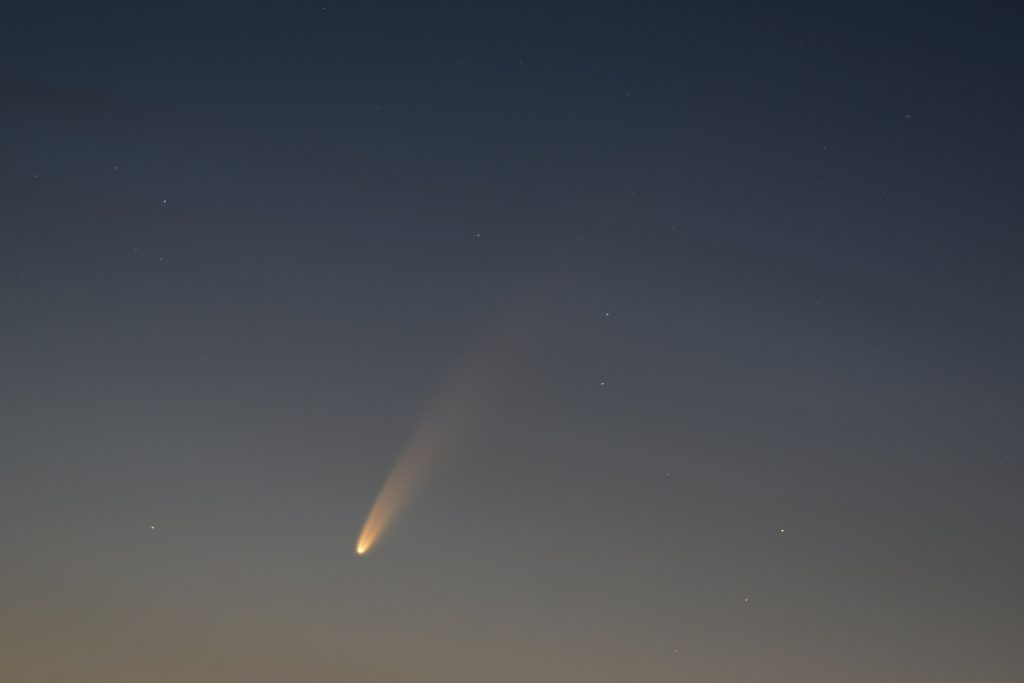
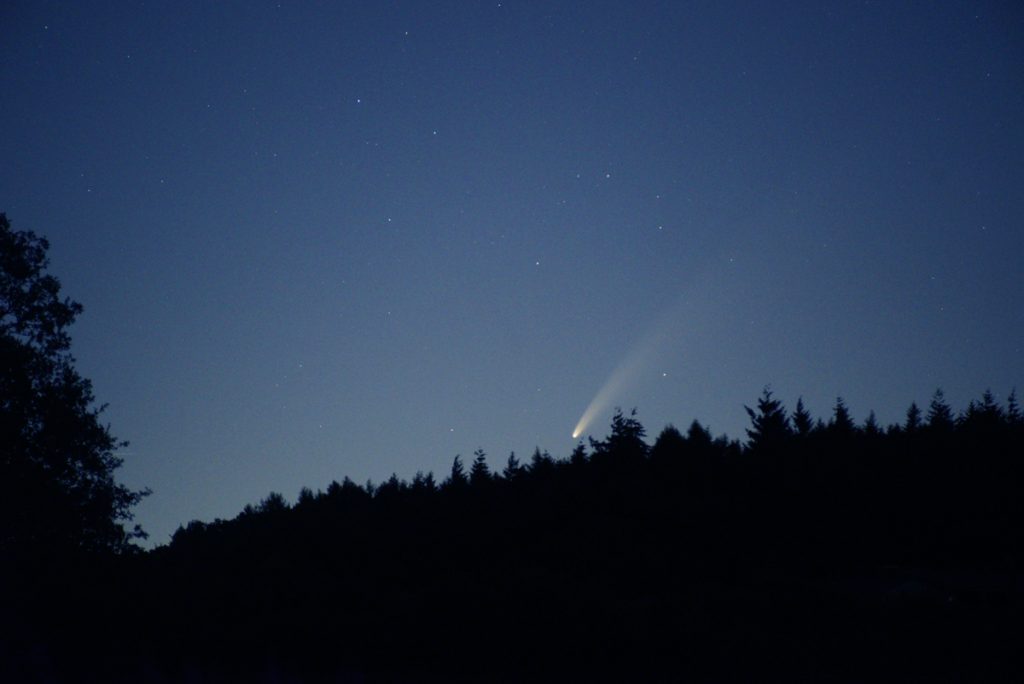
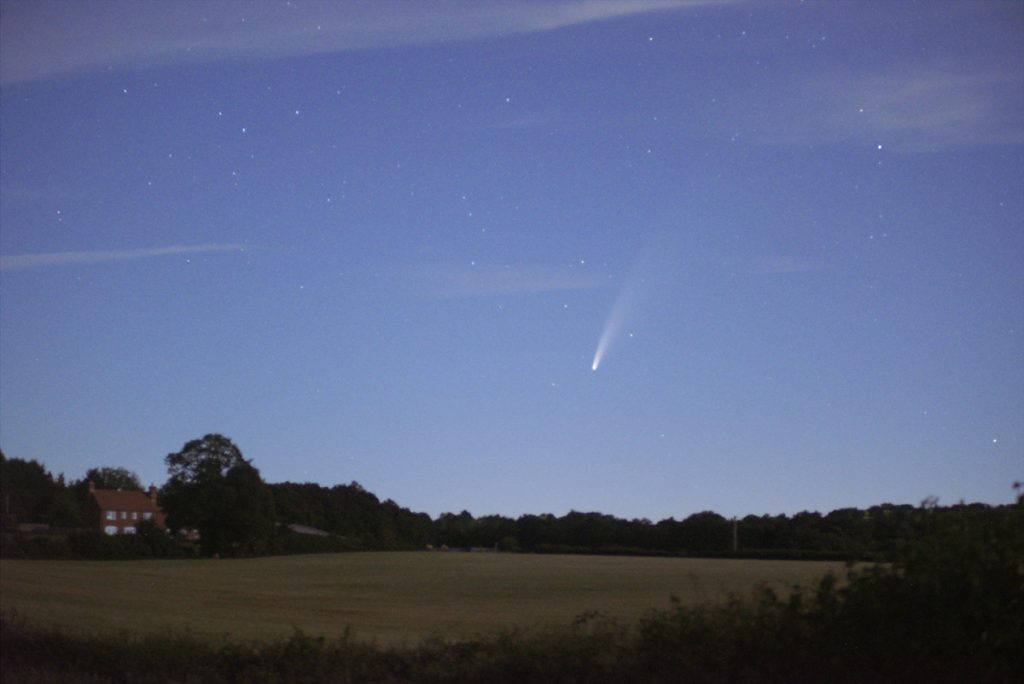
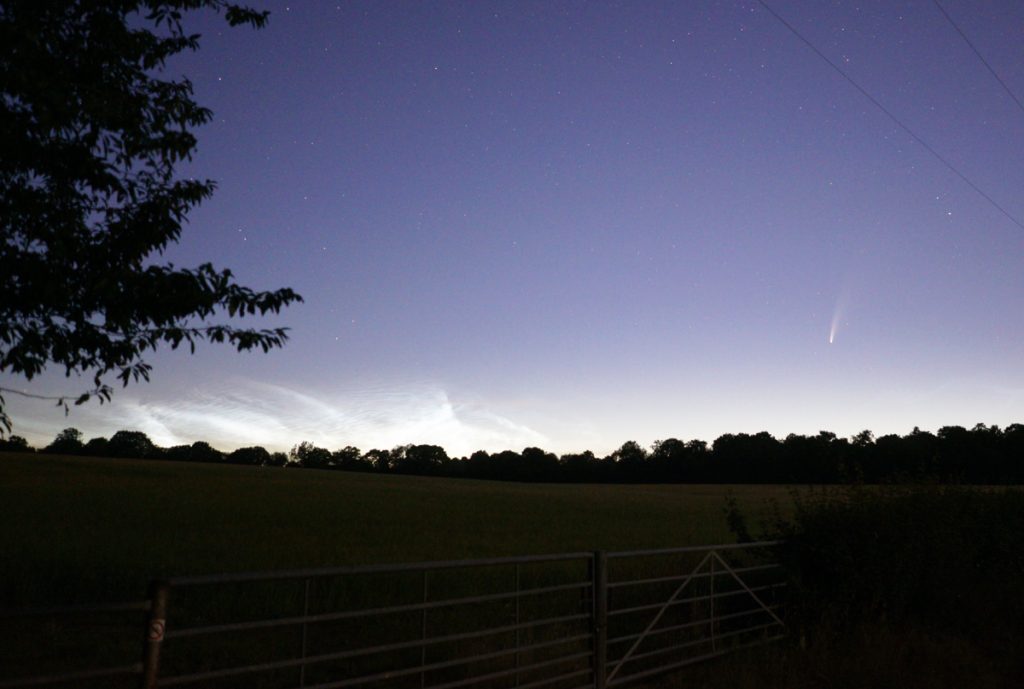
11-12 July
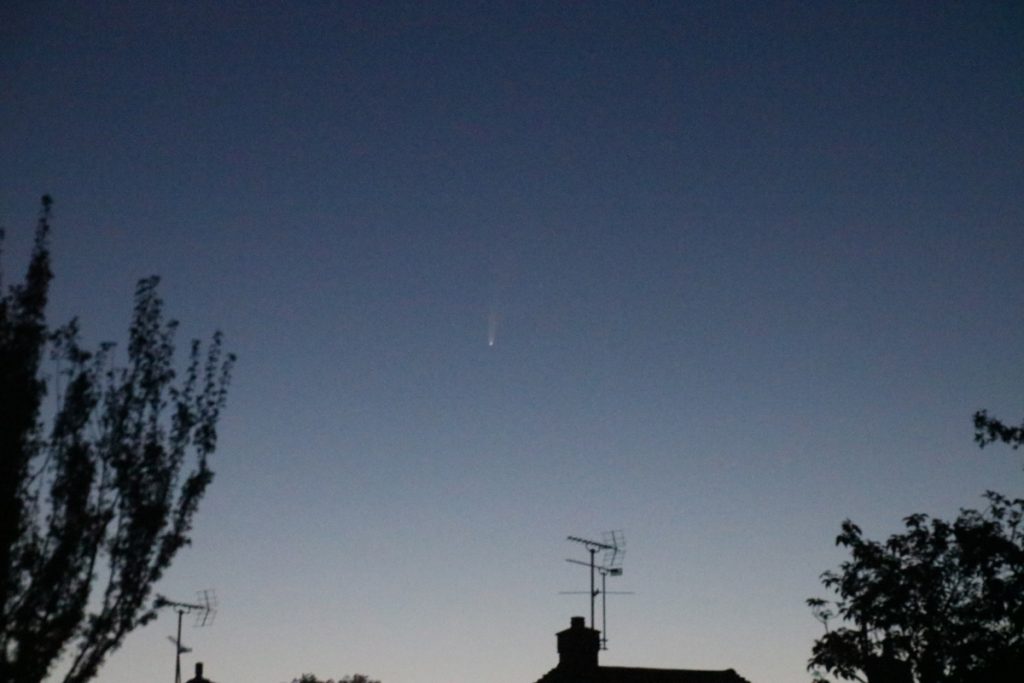
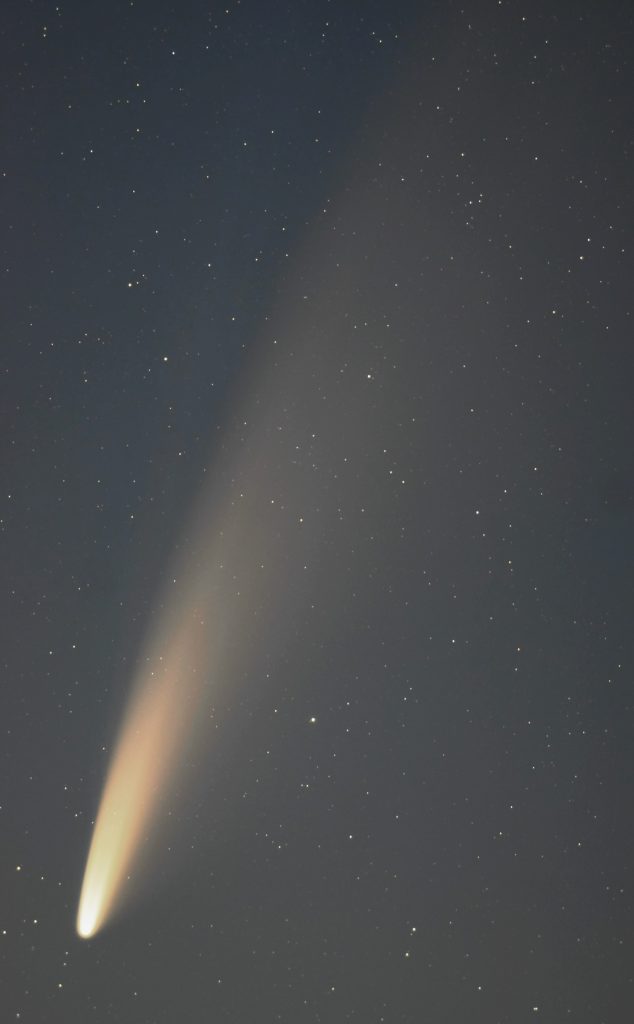

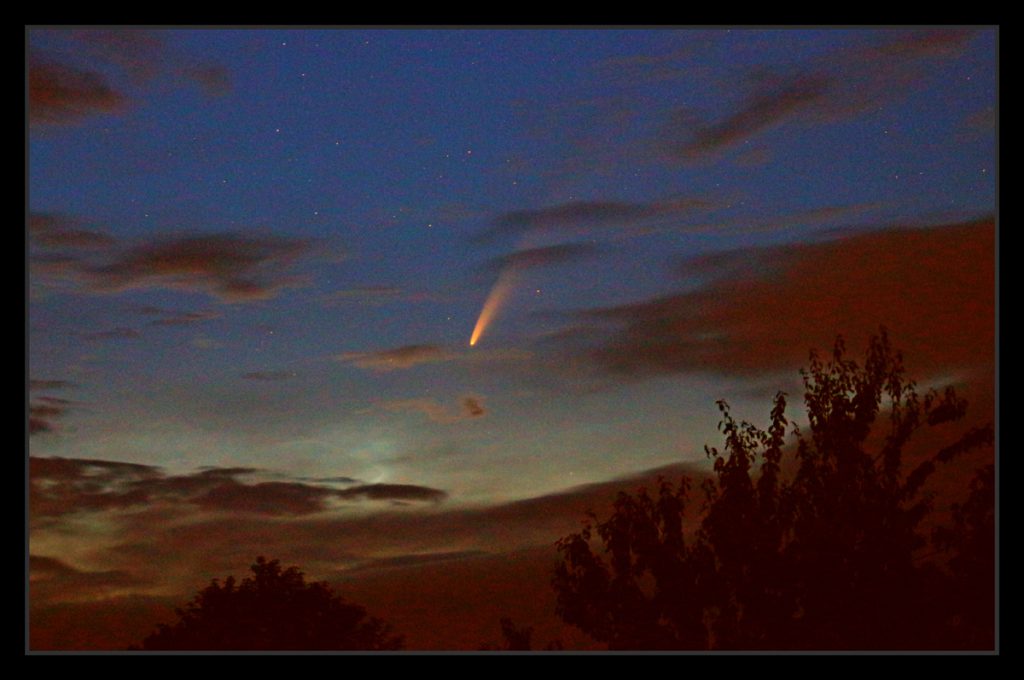
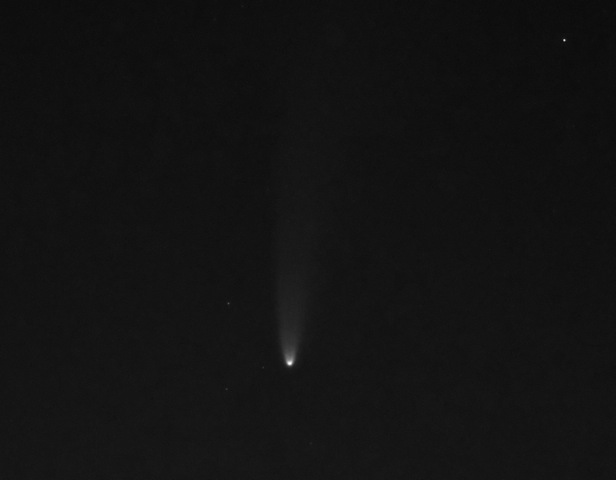
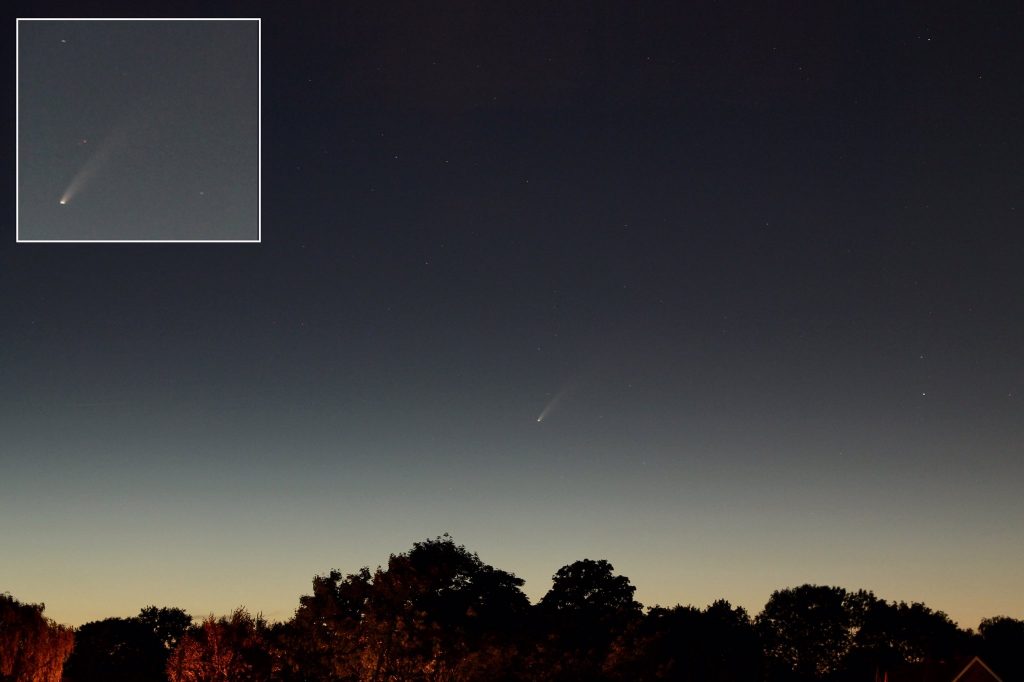
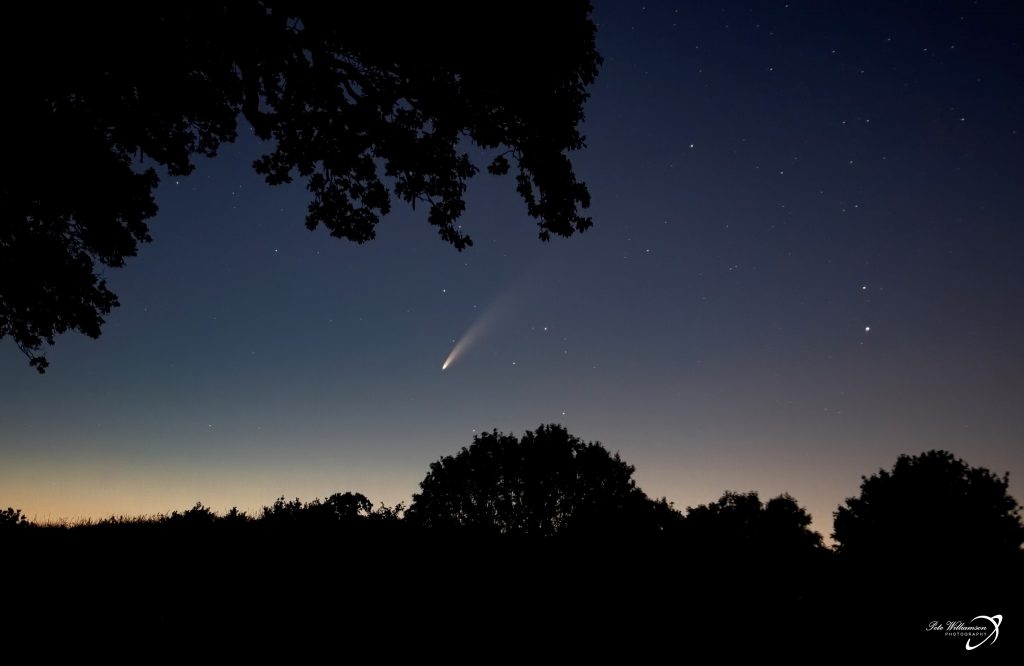
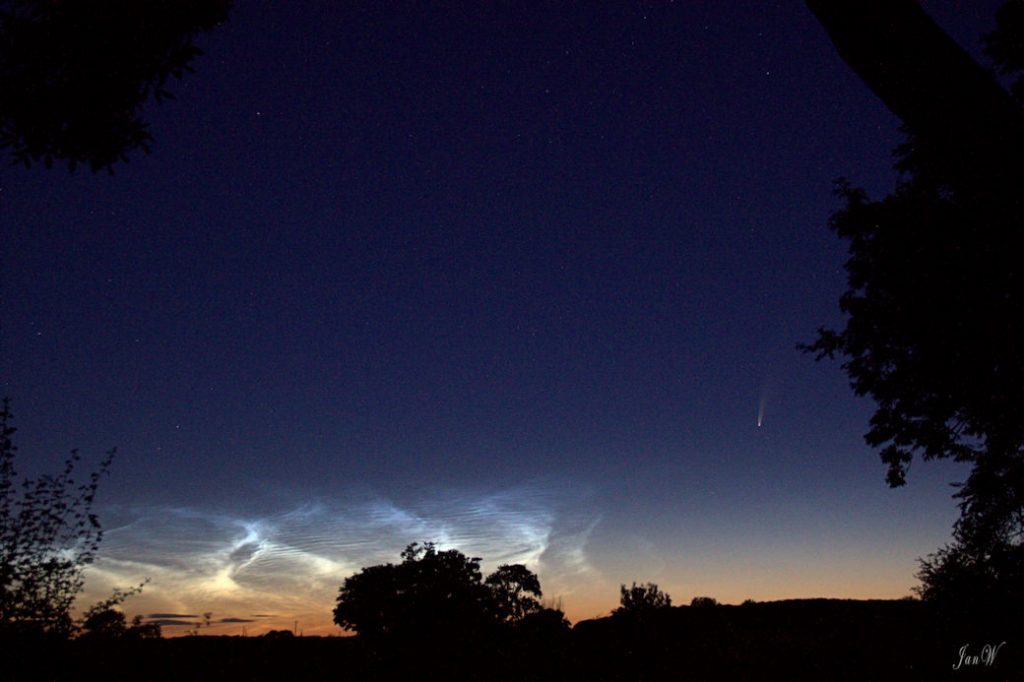
12-13 July


18 July