
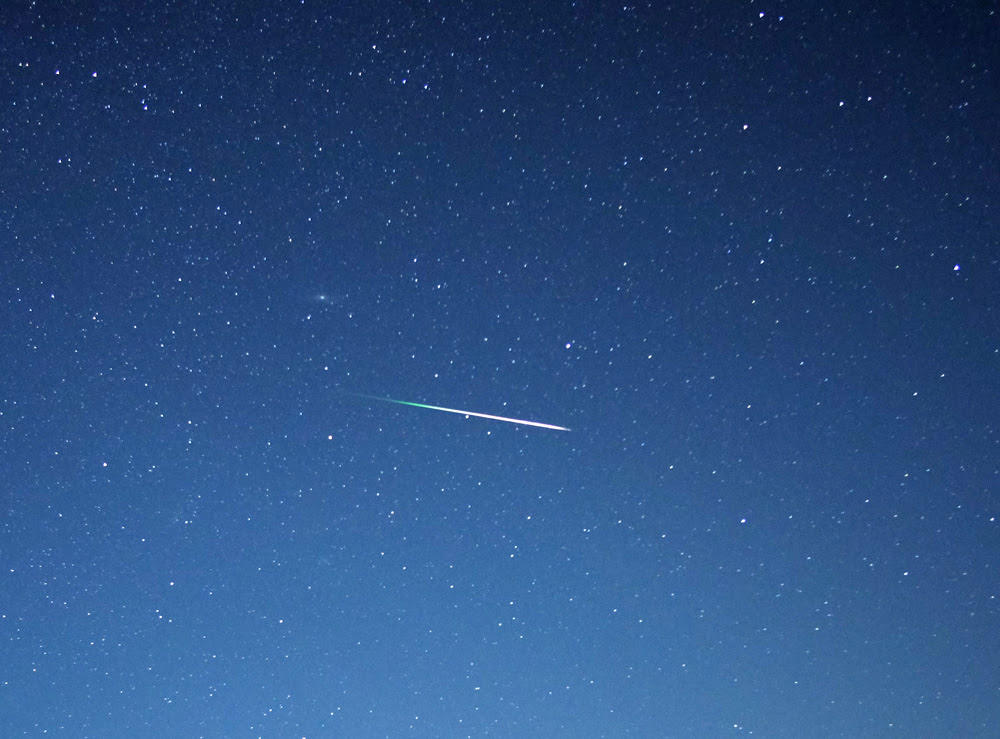
A bright Perseid beneath the Andromeda galaxy (M31), photographed by Paul Sutherland
The maximum of this year’s Perseid meteors was on Saturday–Sunday night, but they are still well worth observing. Although the Perseids are surpassed slightly in activity by December’s Geminids, the milder August nights lead to the Perseids being the more popular target for observers.
The peak of activity is quite broad, so if you get clear skies in the next few days you could still see substantial numbers. The shower officially finishes around 24 August, and rates do decline more sharply after maximum, but substantial numbers could be seen over the next few days.
The waning Moon rises later and later each night, although at this time of the year it is only about 30 minutes later each night, and by Wednesday 16th it rises after midnight. However, even after moonrise you can minimise its effects by observing in a direction away from the eastern horizon where the Moon will rise, keeping it out of your field of vision. Do continue for as long as you can, as rates increase through the night as the radiant of the meteors rises.
Meteor Section Director Tracie Heywood writes: “Being rich in bright meteors makes the Perseid shower a good target for imaging. Video observers in particular will benefit – they can even record bright meteors with the Moon inside their field of view!â€
For full details of the event, and for links to observing tips, go to the section’s Perseid web page and see this news story.