
Solar Rotation Nos: 2252 to 2253
Two large sunspots were seen this month. AR2924 appeared in early January while AR292936 was seen in late January. There was a significant increase in sunspot activity this month. The southern hemisphere was much more spotted than the north. Three sunspot group appeared at high latitude.
Here are the solar highlights for January 2022 with a selection of images.
Sunspots
AR2916 appeared last month at -16° and on the 1st it was seen near the west limb. It seemed to be decaying and was not seen after the 5th.
AR2924 emerged over the east limb on the 5th at the high southern latitude of -32°. It quickly developed over the 6th and 7th, when it was classed type Dai with 12 spots, reaching type Ehi on the 8th and nearing the Central Meridian (CM). After that date it seemed to become much quieter as it headed westwards and going over the west limb by the 17th. It was one of the largest sunspots seen in Solar Cycle 25.
AR2925 came over the east limb on the 5th at the very high southern latitude of -34° and was seen following behind AR2924. It remained much the same as it crossed the solar disc (type Hsx) and went over the west limb on the 18th.
AR2926 was one of the few sunspots to appear on the northern hemisphere at +21° on the 11th. After an initial development peaking around the 14th it faded rapidly and was not seen after the 16th.
AR2927 appeared over the east limb at -20° on the 11th. It was initially quiet but suddenly developed up around the 16th before quickly fading and was not seen after the 20th.
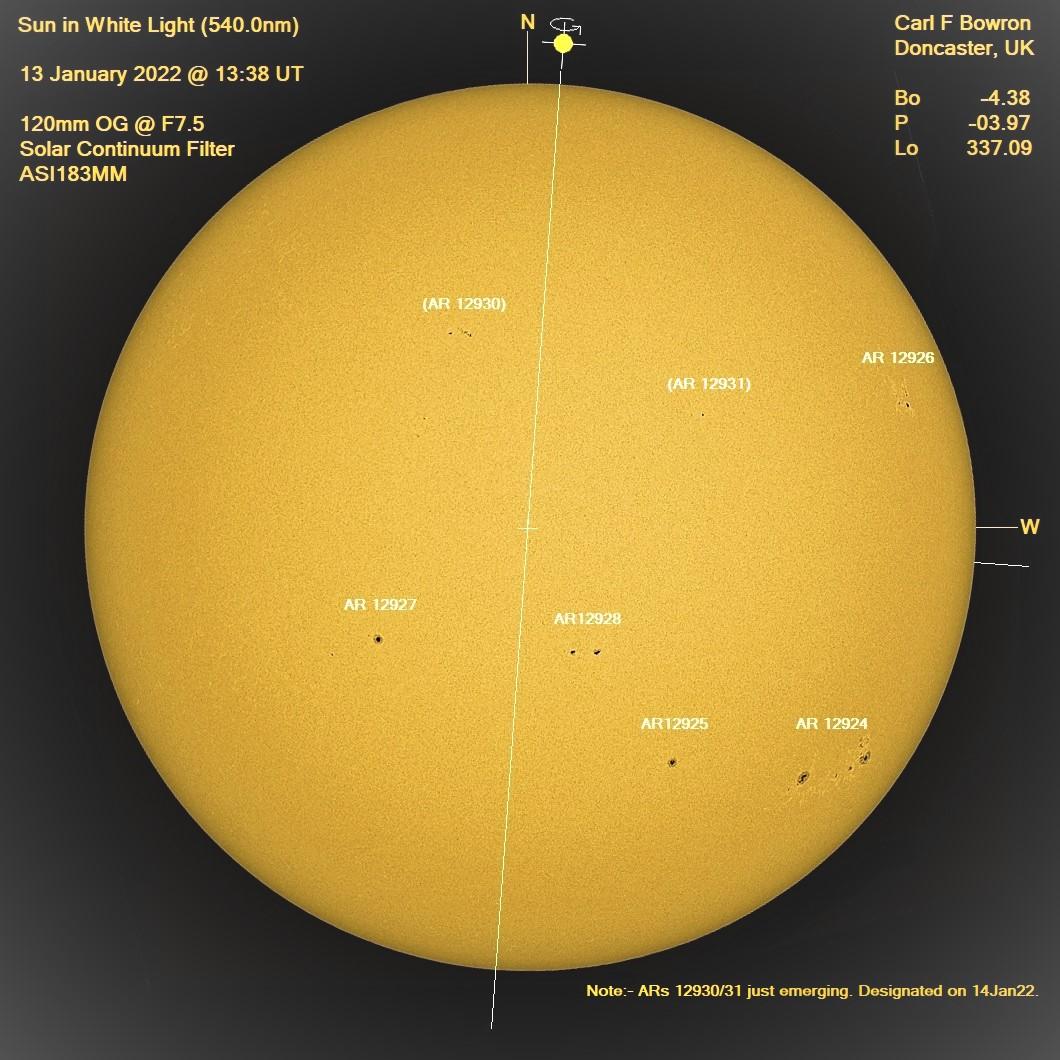
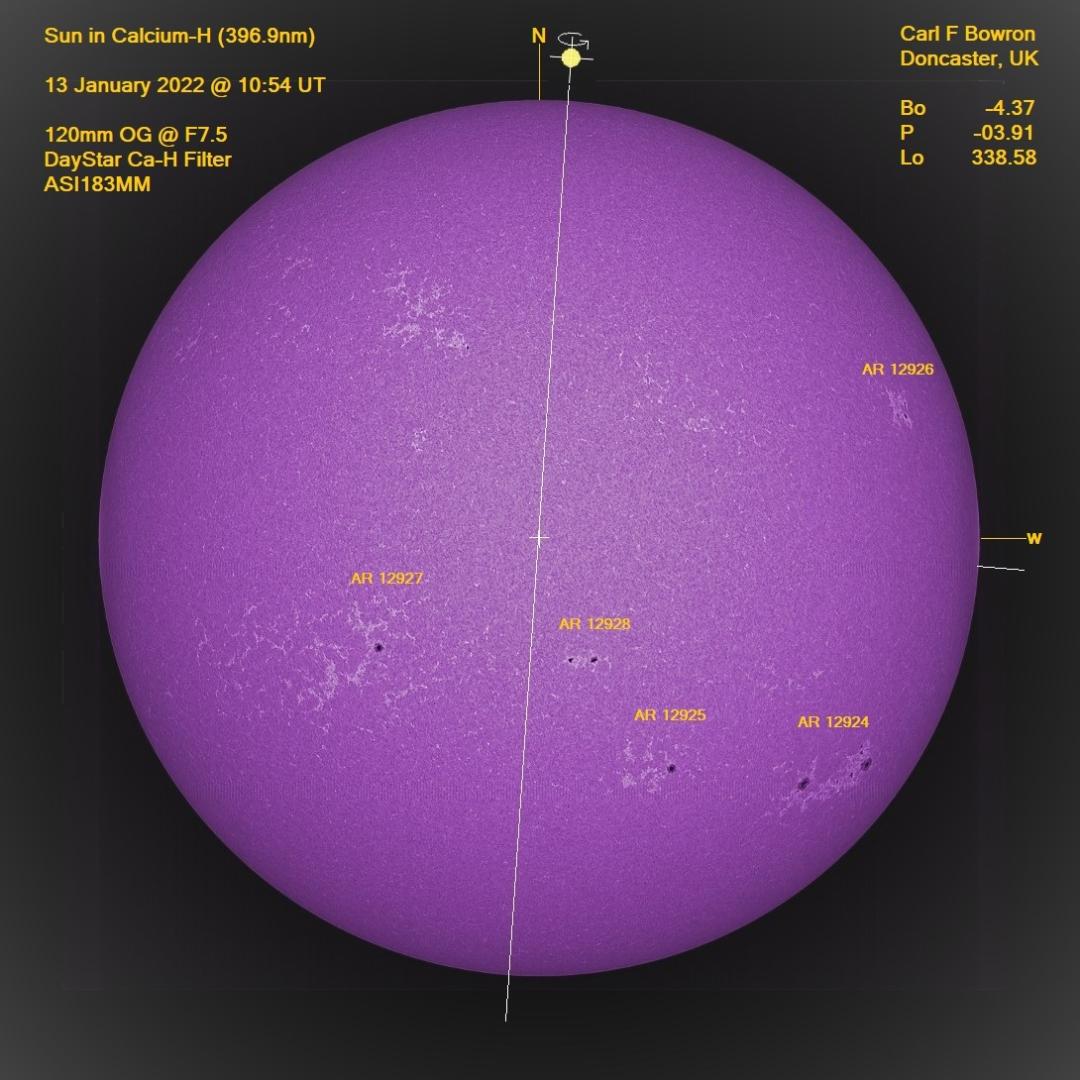
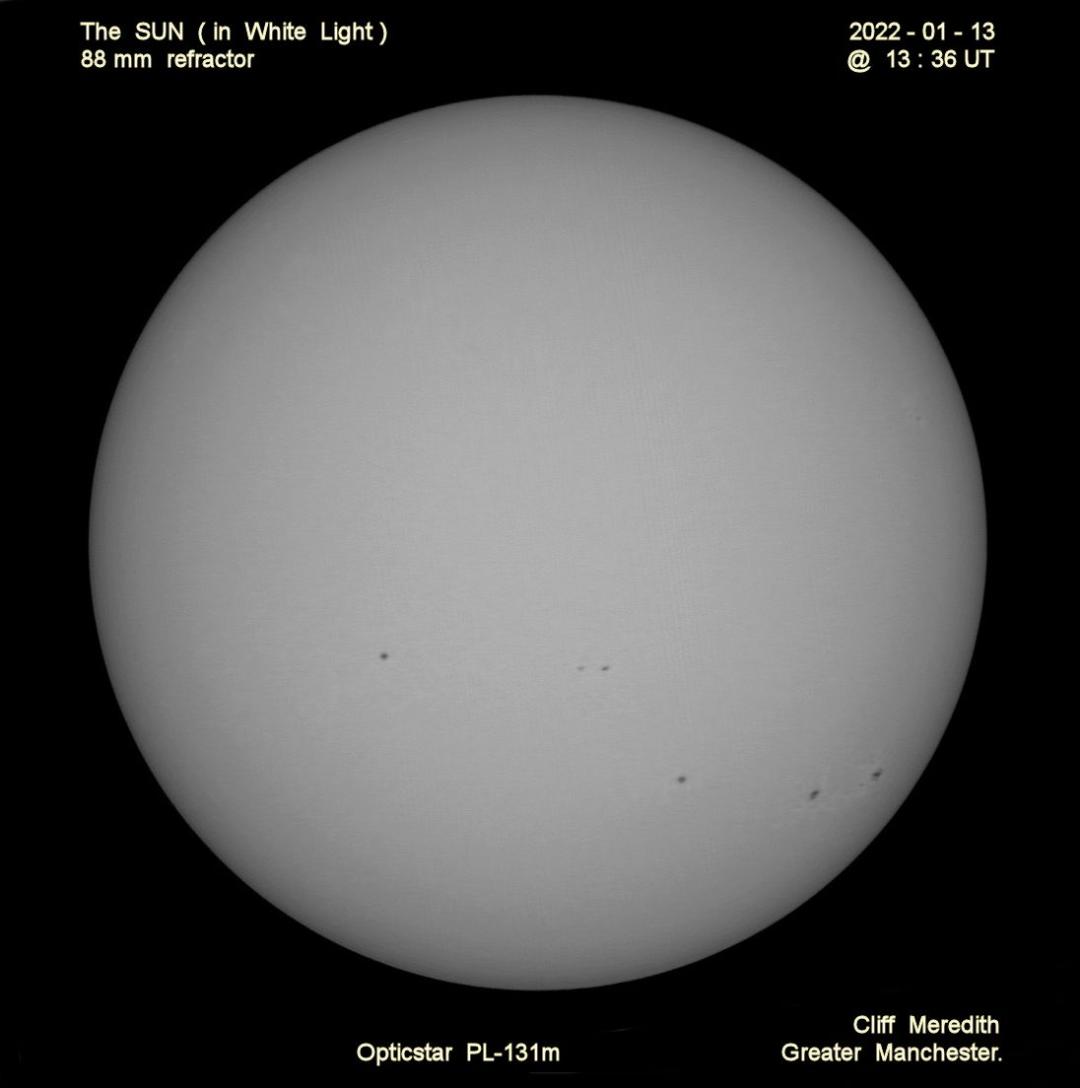
AR2929 popped into view near the CM on the 15th at +8 °. By this time most of the sunspot activity was seen west of the CM. It had developed by the following day to type Dhi but after that it seemed to decay as it headed west and was gone by the 22nd.
AR2932 came over the east limb on the 16th at the high northern latitude of -32°. It appeared to be decaying and had disappeared by the 19th.
AR2934 appeared over the east limb at -24° on the 21st It was fairly inactive reaching the CM around the 26th and was joined by AR2937 nearby from the 26th to about the 30th.

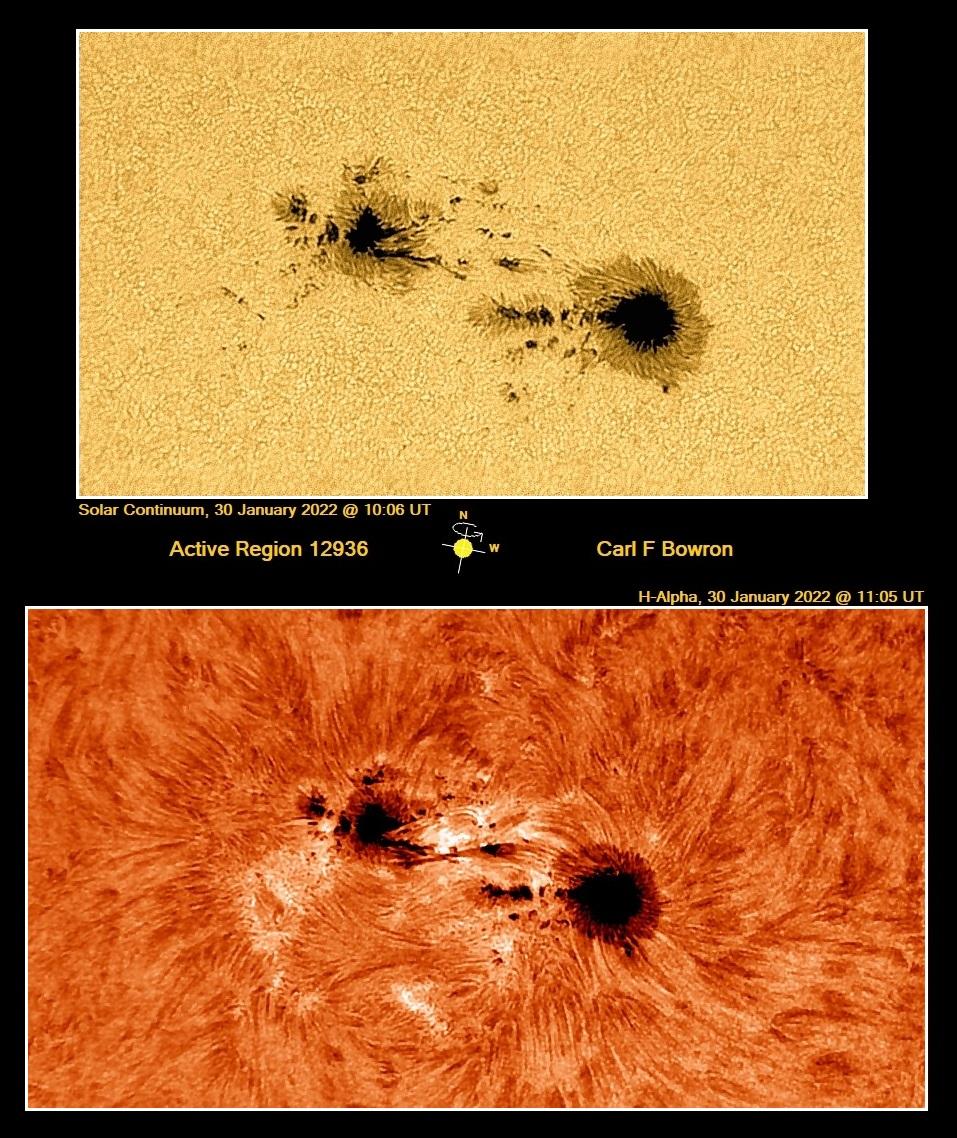
AR2936 first appeared over the east limb on the 26th at +16°. It developed rapidly over the following days as it headed westwards reaching type Dkc on the 29th. It was not until the 31st that it seemed to quieten down. It was one of the largest sunspots seen in the current Solar Cycle.
SPA Sunspot Mean Daily Frequency: 3.73 (was 2.04)
Relative Sunspot Number: 51.26 (was 30.20)
Solar Prominences, Plage, Filaments and Flares
Prominence, filament and plage activity were higher this month.
Three large prominences were seen along the east limb on the 1st and a brighter highly active prominence was seen on the southwest limb the same day.
Plenty of prominence activity was seen along the east limb on the 11th.

Numerous filament and plage activity was seen on the 11th and 12th and was largely associated with sunspots AR2924, 2925, 2926 and 2927. The 16th saw much filament and plage activity, mostly around AR2925, 2927, 2929, 2930 and 2933.
A large number of filaments were seen on the 20th some associated with AR2933 and 2934 but many appearing just on their own.

Numerous filaments (one very dark) were seen between AR2934 and the solar limb on the 27th.
A lot of plage were visible around AR2936 as it neared the CM on the 31st.
SPA Prominence Mean Daily Frequency: 3.39 (was 2.83)
Congratulations to Alan Heath who observed 16 days, to Michael Fullerton on 23 days and to Alan Heath 22 days and Jonathan Shanklin 21 days.
Detailed count records of Active Regions and Relative Sunspot Numbers came from: Simon Brown, Michael Fullerton, Roger Heard, Alan Heath, Ian Lee, Jonathan Shanklin, Brendan Shaw and Bob Steele.
Images and drawings were supplied by: Carl Bowron, Ian Lee and Cliff Meredith.
I’m very grateful to Alan Heath for his annual solar summary for 2021 in which he recorded his lowest MDF of 0.25 in January and the highest MDF of 1.96 in September using a 3-inch refractor. One naked eye sunspot was recorded in early July with another suspected in early to mid October. At the end of last year Alan had clocked-up a grand total of 13,962 solar observations since he started observing the Sun.
A warm welcome to Roger Heard who has just joined the Solar Section.
Geoff Elston